

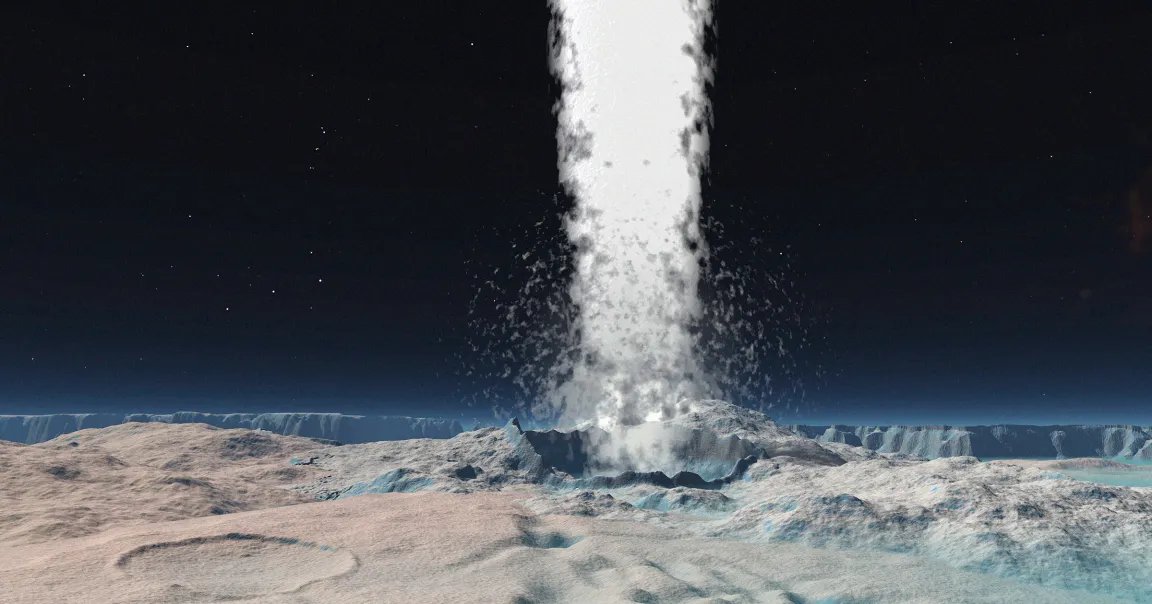
Astronomers have reported that the distant celestial body 3I/ATLAS may be exhibiting active ice volcanism, a rare phenomenon that could provide critical insights into the behavior of icy objects in our solar system and beyond. The observations, based on recent telescope data, suggest that volatile compounds beneath the surface are erupting through cracks, forming plumes reminiscent of miniature volcanic activity.
3I/ATLAS, an interstellar object that captured global attention when first detected, has fascinated scientists due to its unusual trajectory and composition. Unlike typical asteroids, evidence now points to active geological processes, including the potential eruption of water ice, carbon dioxide, or other volatile ices. These eruptions are not only visually striking but could also reshape our understanding of the object’s internal structure.
Researchers emphasize that ice volcanos, or cryovolcanoes, are largely observed on moons and dwarf planets within the solar system, such as Enceladus or Pluto. Seeing such activity on an interstellar visitor like 3I/ATLAS is highly unusual and suggests that the object may have retained significant internal heat or chemical activity despite traveling through space.
The eruptions are being tracked using a combination of ground-based telescopes and space observatories. Early reports describe jets of vapor and dust shooting into space, altering the object’s brightness and creating temporary tails that can be studied to infer composition. These observations could help scientists understand how icy interstellar objects evolve and interact with their environments.
Experts are cautious but excited about the implications. “If confirmed, this could be the first time we’ve seen active ice volcanism on an interstellar object,” said a planetary scientist familiar with the data. “It opens up fascinating questions about the thermal histories and chemical dynamics of bodies formed in distant star systems.”
Further studies are planned to monitor changes in 3I/ATLAS over the coming months, aiming to determine the frequency, scale, and composition of the eruptions. Observations may also shed light on whether such activity is unique to this object or if it could be common among icy interstellar travelers.
The potential discovery of erupting ice volcanoes on 3I/ATLAS underscores the surprises the universe continues to offer, reminding astronomers that even seemingly inert objects can harbor complex and dynamic processes.












Leave a Reply