

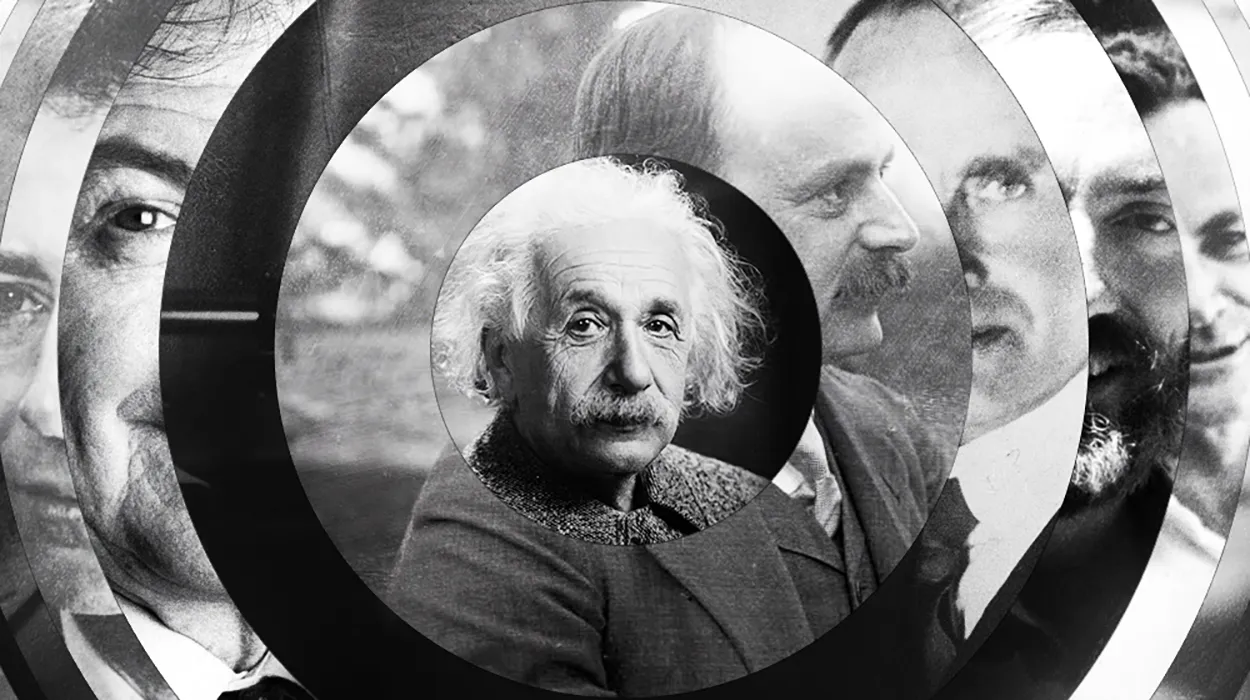
On September 14, 2015, physicists achieved what Albert Einstein had predicted a century earlier: the detection of gravitational waves passing through space-time. This watershed moment marked the birth of gravitational-wave astronomy and forever changed how we observe the universe.
The Groundbreaking Moment
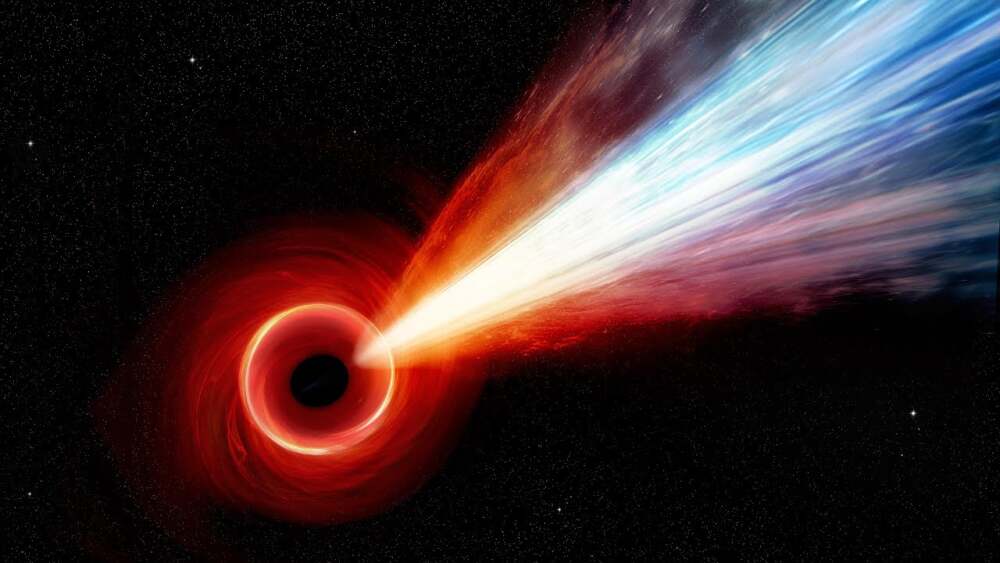
At 09:50 UTC, twin observatories in the United States—one in Louisiana and one in Washington State—registered a nearly imperceptible signal. This signal arose from two black holes, each tens of times more massive than our Sun, spiraling into each other in a distant galaxy some 1.3 billion light-years away. The violent merger sent ripples through space-time, which finally washed over the detectors on Earth. This event is now known as GW150914.
How It Worked
The observatories use an instrument called a laser interferometer. It measures minute changes in distance—so small that the disturbance is far tinier than the width of an atom. Two laser beams travel down long perpendicular arms, reflect off mirrors, and return. Under normal conditions, the beams recombine in a perfectly synced fashion. But when a gravitational wave passes, it stretches one arm slightly and compresses the other, causing a change in the timing of the beams’ return. The signal detected was matched to the prediction of two black holes merging and the subsequent “ring-down” of the newly formed black hole after coalescence.
Why It Was Historic
- It was the first direct confirmation that gravitational waves exist, not just in theory.
- It proved that black hole binaries (pairs of black holes orbiting each other) actually merge, something previously only theorized.
- It opened a new way to observe the universe: not through light or electromagnetic radiation, but by listening to space-time itself.
Aftermath & Scientific Impact
- Scientists later confirmed Einstein’s general theory of relativity in regimes of extremely strong gravity and high speed—conditions not testable before this event.
- The detection was instrumental in earning the 2017 Nobel Prize in Physics for those who led the efforts to build the sensitive detectors, develop the theory, and confirm the signal.
- Since then, dozens more gravitational wave events (from merging black holes, neutron stars, and mixed systems) have been detected, greatly expanding our understanding of the most extreme phenomena in the cosmos.
What It Teaches Us
- The universe can be “heard” in addition to being seen. Gravitational wave observatories allow us to sense events that emit little or no light.
- Even in silence we get signals. These waves carry information about energies, masses, spins, and distances of collision events that otherwise may never be observable.
- Scientific perseverance pays off. This discovery was built on decades of theory, experimentation, engineering—many believing the effect might never be measurable.
Looking Ahead
In the years since, detector sensitivity has improved, additional observatories have joined the global network, and researchers have begun studying not just the strongest signals but fainter, more frequent events. Gravitational wave astronomy promises more surprises: new types of sources, deeper probes into early cosmic history, and possibly even insight into phenomena beyond standard physics.
Bottom line: September 14 remains a landmark date in science. The detection of gravitational waves wasn’t just a win for Einstein—it opened a new sense with which humanity can perceive the universe.










Leave a Reply