

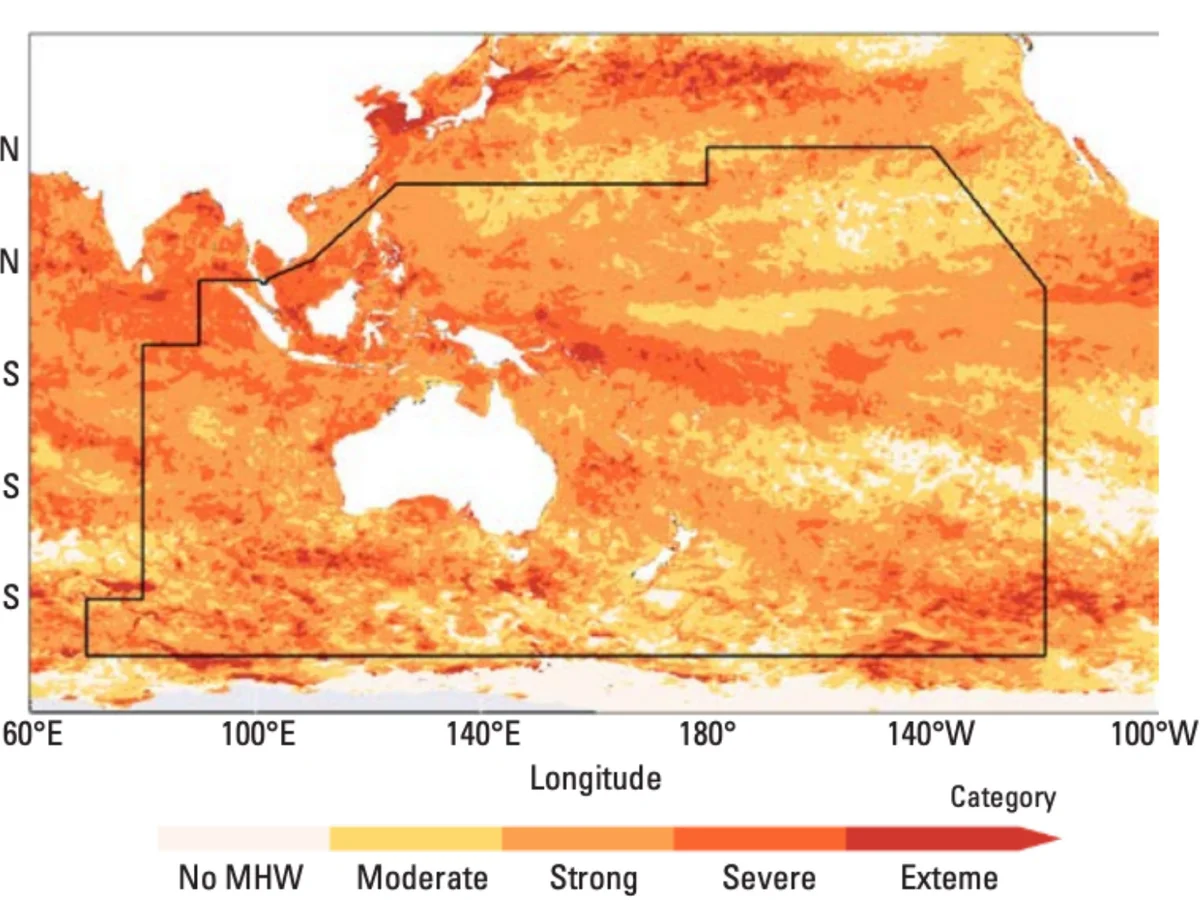
Australia’s first comprehensive National Climate Risk Assessment has issued a stark warning about the mounting threats posed by climate change. The report highlights that rising sea levels, extreme heat, and environmental degradation are set to profoundly impact the nation’s population, economy, and ecosystems in the coming decades.
According to the assessment, approximately 1.5 million Australians living in coastal regions are at risk of flooding by 2050, with this number potentially doubling to 3 million by 2090 if global temperatures continue to rise. Coastal areas in Queensland and Victoria are particularly vulnerable, with projections indicating that sea levels could rise up to 54 centimeters under a 3°C warming scenario. This could result in nearly 200 days of coastal flooding annually, threatening homes, infrastructure, and local economies.
The report also raises concerns about escalating heatwaves and their impact on public health. Cities such as Sydney and Darwin may experience a dramatic increase in heat-related fatalities, potentially rising by over 400%. Extreme heat events are expected to increase from current levels to as many as 18 days per year in Sydney under higher warming scenarios, posing serious risks to vulnerable populations and straining healthcare systems.
Economic consequences are equally alarming. Disaster recovery costs could reach $40 billion annually by 2050, even under moderate warming scenarios. Additionally, at least 17 ecosystems are already showing signs of collapse, while agriculture faces declining crop yields and livestock productivity due to rising temperatures and extreme weather events. Biodiversity loss and ecosystem degradation further compound these challenges.
In response, government officials have emphasized the urgent need for climate action. Plans are underway to announce a 2035 emissions reduction target, aiming for a 43% cut by 2030 and achieving net-zero emissions by 2050. However, achieving these goals will require substantial investment in renewable energy, infrastructure adaptation, and collaborative efforts across all sectors of society.
Australia now stands at a critical juncture. The National Climate Risk Assessment underscores the urgent need for decisive and sustained action to mitigate climate impacts and adapt to the challenges already unfolding. Without immediate measures, the nation faces profound environmental, economic, and societal consequences that could shape its future for generations.
















Leave a Reply