

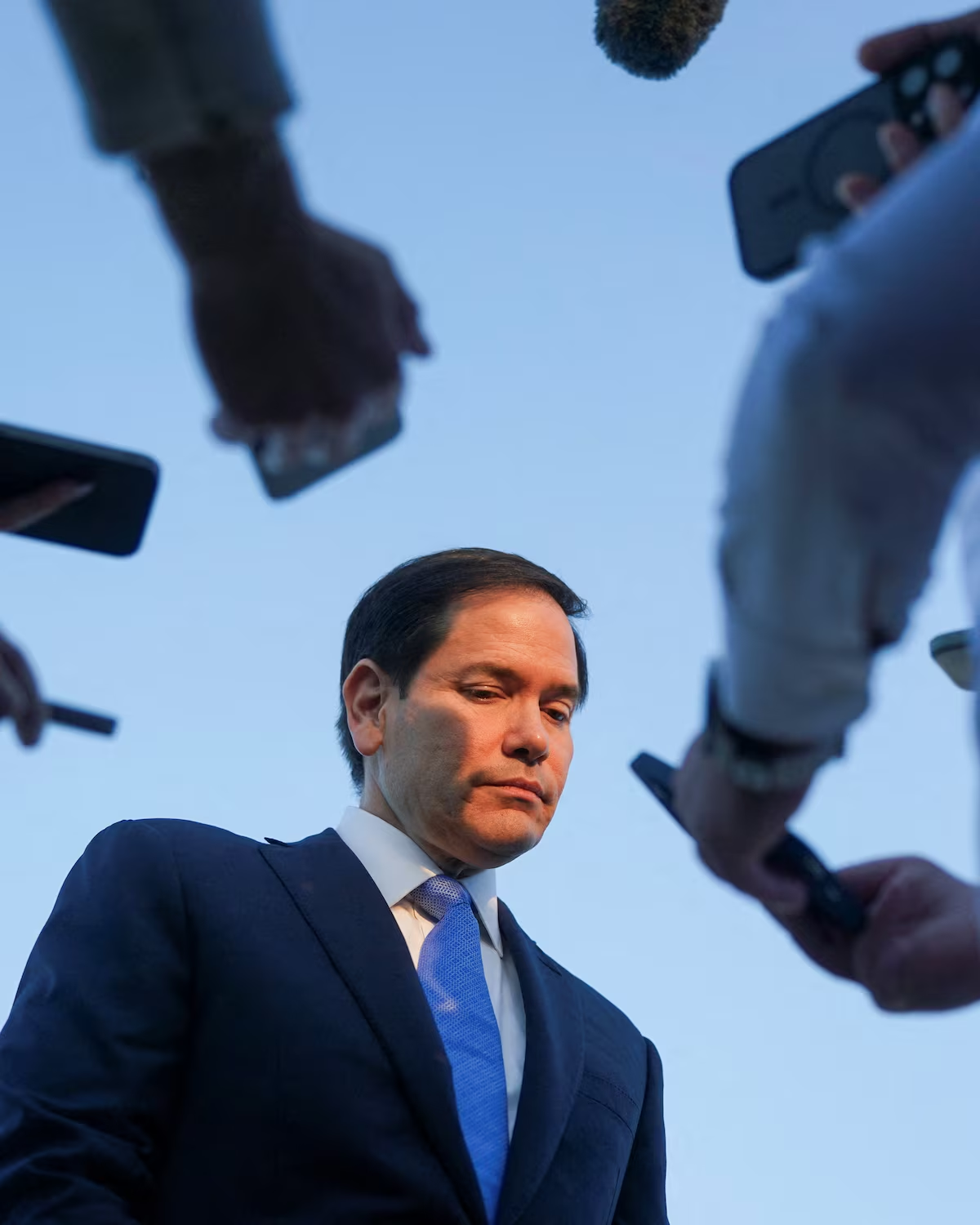
Doha — The United States and Qatar are approaching the final stages of an enhanced defence cooperation agreement, a senior US official announced amid growing regional tension following a controversial strike in Doha. The agreement seeks to deepen military collaboration and reinforce Qatar’s strategic role in regional diplomacy and security.
What sparked the shift
The move toward strengthening US-Qatar defence ties comes after an Israeli airstrike targeted Hamas political leaders in Doha last week, triggering international condemnation. The strike, seen as particularly provocative, has heightened concerns about sovereignty and raised questions about the protection of Qatar’s territory.
Qatar condemned the attack in strong terms, describing it as “cowardly and treacherous”, but signalled its determination not to abandon its mediation efforts in the Israel-Hamas conflict, often working in concert with the United States and Egypt.
Key developments
- US Secretary of State Marco Rubio, travelling from Tel Aviv to Doha, confirmed that the two countries are “on the verge” of finalising the enhanced defence agreement. He emphasized the urgency in reaching a ceasefire in Gaza and praised Qatar’s capacity to act as mediator.
- Qatari leaders stressed that, while the idea of deeper cooperation with the US is not new, recent events have accelerated its necessity. Qatar’s government has made it clear that protecting its sovereignty has become a priority in response to the attack.
- The talks include discussions not only of military cooperation but also unwanted spillover effects of the Israeli strike—primarily its impact on civilian safety, diplomatic efforts, and regional stability.
Broader implications
This potential pact could reshape security dynamics in the Gulf region. As host to one of the largest US military bases in the Middle East, Qatar is already a critical partner for Washington. Enhancing the cooperation agreement could reassure Qatar and similar states about their defence security, especially with perceived risks to sovereignty.
Some observers see this move as part of a wider recalibration by Gulf states, who are expressing concern about unilateral actions by neighbouring countries and are seeking stronger guarantees of protection and diplomatic support from major powers.
Challenges ahead
Finalizing such an agreement is rarely simple. Key sticking points likely include definitions of responsibility, how quickly the US would respond to any threats, limitations on operations within Qatari territory, and assurances that Qatar’s role as mediator will be respected.
Additionally, any deal must address regional sensitivities: neighbouring countries are watching closely, and there is widespread concern that heightened militarization could further inflame tensions.
What to watch
- The exact terms of the defence cooperation agreement: especially clauses related to intelligence sharing, base access, rapid response capability, and designation of threats.
- How Israel responds, especially given its declared intent to target Hamas leaders “wherever they are.” Such posture increases the stakes for partner states when diplomacy and military strategy intersect.
- How this influences Qatar’s mediation role in Gaza: whether the new defence agreement strengthens its negotiating position, or whether it risks compromising neutrality in eyes of Hamas, Israel, or regional allies.
Conclusion
The ongoing discussions between the United States and Qatar mark a crucial inflection point in Gulf region security. In the wake of the Doha attack, Qatar appears to be solidifying its expectations of guaranteed protection and clear support, while maintaining its mediating role in the Gaza conflict. For the US, confirming this enhanced defence agreement may signal a renewed commitment to regional partners and a response to critiques about unilateral operations that undermine diplomatic trust.








Leave a Reply