

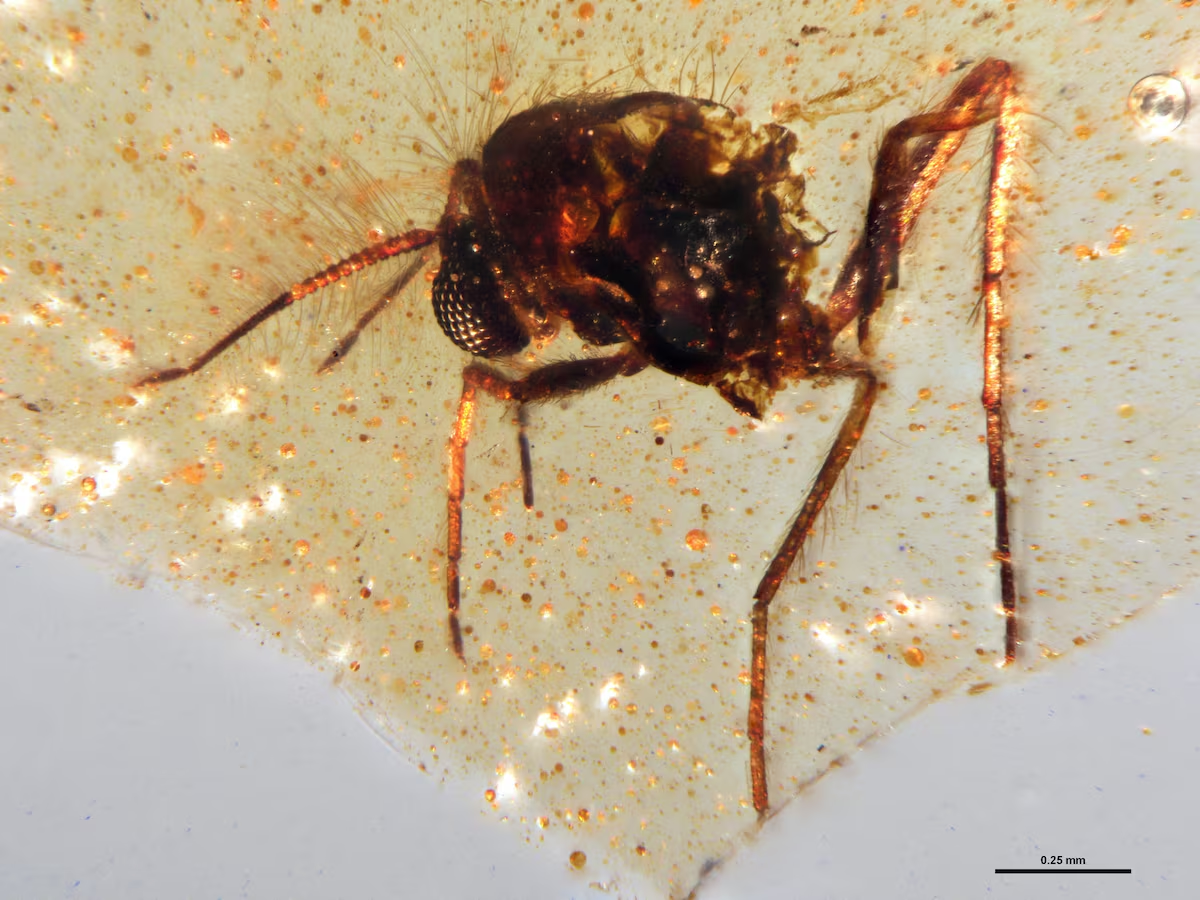
Scientists in Ecuador have made a groundbreaking discovery in the Amazon rainforest: a massive amber deposit containing fossilized insects and plant material dating back roughly 112 million years to the Cretaceous Period. This remarkable find is the largest known amber deposit from the age of dinosaurs discovered in South America and provides an unprecedented glimpse into the ancient ecosystems of Gondwana, the prehistoric supercontinent that included today’s South America, Africa, Antarctica, and Australia.
Unearthing a Lost World
The amber was found near the town of Archidona in Napo Province, deep in Ecuador’s northeastern Amazon region. Researchers describe the deposit as exceptionally rich, containing hundreds of fossilized insects preserved in stunning detail. Among the discoveries are tiny midges, flies, wasps, beetles, and even fragments of a spider’s web. Each specimen offers a snapshot of life in the tropical forests that existed more than 100 million years ago, frozen in time by the resin that would eventually fossilize into amber.
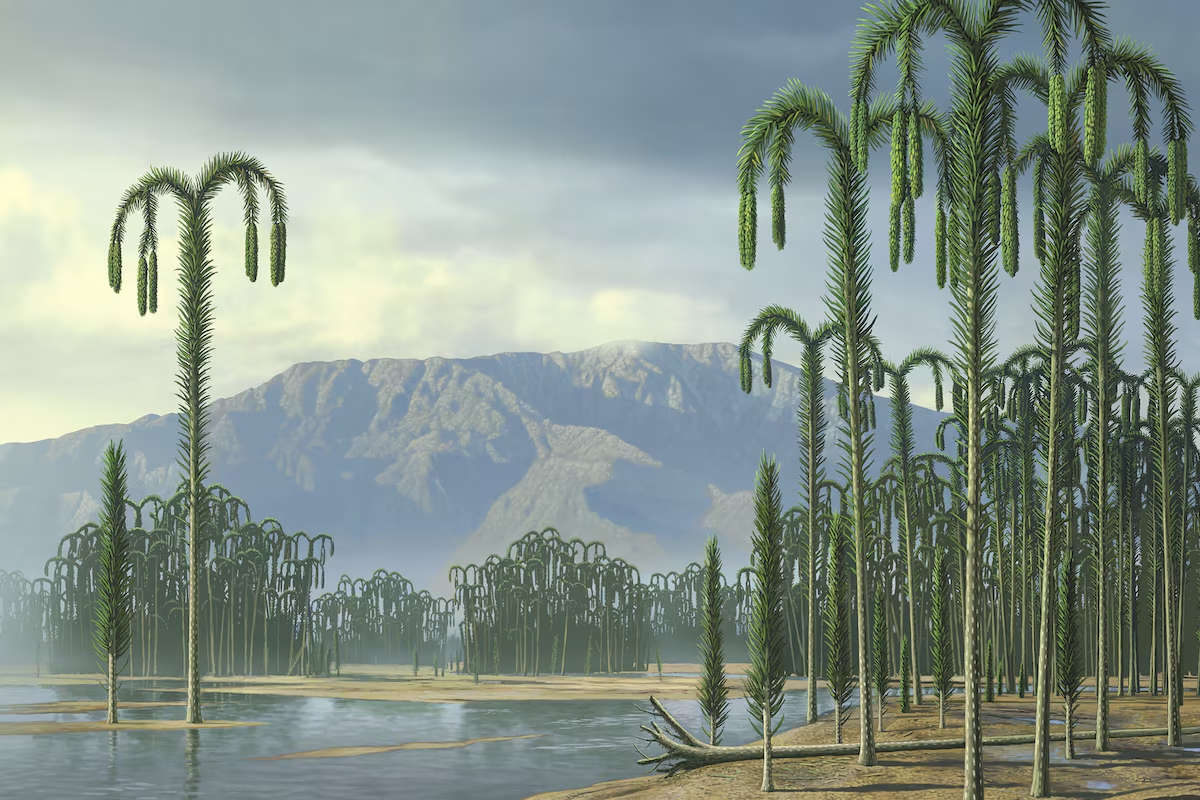
In addition to insects, plant material was preserved in the surrounding sediment, offering crucial insights into the types of vegetation that dominated during this period. The preserved plants show a mix of ancient gymnosperms and early flowering plants (angiosperms), documenting a key phase in the evolution of Earth’s flora.
Amber: Nature’s Time Capsule
Amber is fossilized tree resin, capable of preserving organisms in near-perfect condition. Unlike other fossilization processes, amber can capture soft-bodied creatures, tiny hairs, delicate wings, and even microscopic details that rarely survive in rock or sediment. In the Ecuadorian specimens, insects retain lifelike clarity, with some appearing as though they were trapped only yesterday. This high level of preservation allows scientists to study morphology, behavior, and even ecological interactions that occurred more than 100 million years ago.
Insights into Prehistoric Biodiversity
The diversity of organisms found in the amber is staggering. Blood-feeding midges provide indirect evidence that dinosaurs or other large vertebrates inhabited the region, highlighting interactions between insects and prehistoric animals. Wasps, beetles, and flies show evolutionary traits still present in modern species, offering clues about how these groups developed over millions of years.
Plant fossils indicate that flowering plants were beginning to dominate certain forest ecosystems. Researchers estimate that angiosperms made up roughly 37% of the flora at the time, representing a critical transition from gymnosperm-dominated forests to mixed angiosperm-rich habitats. This transition had far-reaching effects on the evolution of insects, herbivores, and the broader ecosystem.
Ecological and Evolutionary Implications
The Ecuador amber discovery sheds light not only on biodiversity but also on the dynamics of ancient tropical forests. Scientists can now study predator-prey relationships, pollination, and parasitic interactions from the Cretaceous period in unprecedented detail. Fossilized webs, tiny insects, and plant matter together paint a picture of a complex ecosystem with intricate food webs and evolutionary pressures.
Understanding these relationships helps scientists reconstruct the ancient environment and climate of the Amazon region. The presence of certain insect species, combined with the preserved flora, suggests that the area was a lush, warm, and humid tropical forest, similar in some ways to modern-day Amazonian ecosystems.
Significance for Modern Science
This discovery is a major milestone for paleontology in South America. It not only expands our knowledge of prehistoric biodiversity in Gondwana but also provides a rare opportunity to compare ecosystems across continents and time periods. The exceptionally well-preserved specimens allow researchers to examine evolutionary innovations, species interactions, and the early rise of flowering plants in a way that was previously impossible.
Furthermore, the Ecuador amber deposit demonstrates the importance of tropical regions in preserving biological history. Such discoveries are crucial for understanding how ecosystems respond to climate changes over geological timescales, offering potential insights into modern environmental challenges.
Looking Ahead
Scientists plan to continue exploring the Ecuador amber site, hoping to uncover even more diverse and rare specimens. Future studies may reveal additional insect species, fungal spores, pollen grains, and perhaps even tiny vertebrate remains. Each new finding has the potential to transform our understanding of life on Earth during the age of dinosaurs and the processes that shaped the evolution of modern ecosystems.
Conclusion
The amber discovery in Ecuador is more than a collection of ancient fossils; it is a time capsule from an era when dinosaurs roamed tropical forests and early flowering plants began to dominate the landscape. The extraordinary preservation of insects, plants, and other materials offers an unparalleled window into the complex web of life from over 100 million years ago. As scientists continue to study these specimens, we are poised to learn more about the origins of modern ecosystems, the evolution of species, and the intricate connections that have shaped life on our planet for eons.











Leave a Reply