

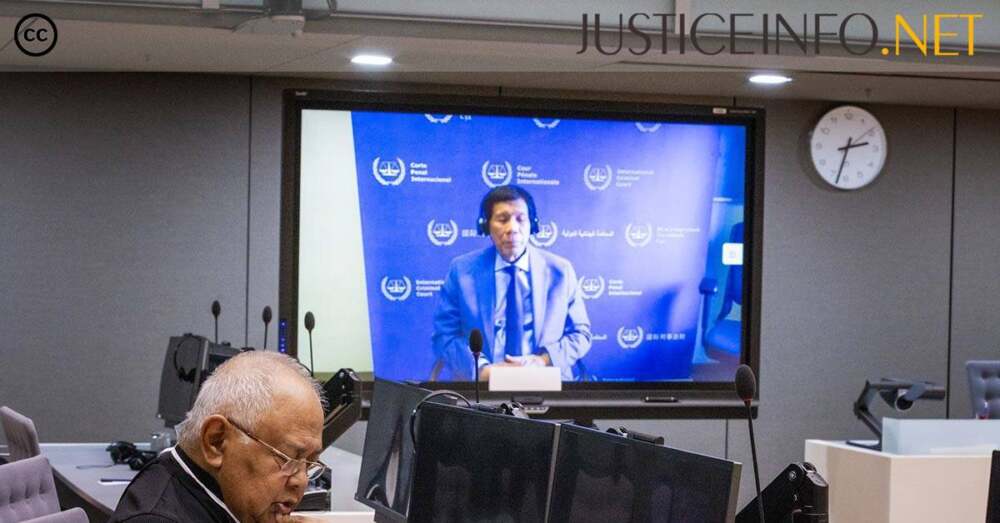
The Hague — The International Criminal Court (ICC) has formally charged Rodrigo Duterte, former President of the Philippines, with multiple counts of crimes against humanity tied to his controversial anti-drug campaign. The charges, made public in late September 2025, allege serious human rights abuses carried out during his years in power, both as mayor and as president.
Nature of the Allegations
According to the ICC’s charge sheet, Duterte is accused of being an indirect co-perpetrator in three distinct sets of killings:
- During Mayoral Tenure in Davao City (2013-2016): The ICC alleges 19 murders took place while Duterte was mayor, involving suspected criminals and drug offenders.
- Targeted Killings Early in His Presidency (2016-2017): Approximately 14 individuals are said to have been targeted in what are described as “high-value” hits.
- “Clearance Operations” (2016-2018): Around 43 killings allegedly occurred during broad anti-drug operations, often involving accused drug dealers or users in low-level roles.
The total number of alleged killings cited in the charges adds up to at least 76 individuals over that period.
Legal & Procedural Status
- Duterte was arrested in March 2025 under the authority of an ICC warrant and was transferred to the Netherlands, where he is being held in a detention facility under the court’s jurisdiction.
- A hearing that was set to move forward has been postponed. Judges are reviewing legal arguments from Duterte’s defense, which include claims that he is presently unfit to stand trial.
- Duterte has publicly denied ordering extrajudicial killings, though critics say his rhetoric and policy directions encouraged police and other officials to use lethal force with minimal legal restraint.
Political & Domestic Context
- Supporters of Duterte have criticized the charges and his arrest, arguing that the ICC is over-stepping and that the Philippines lost jurisdiction when it withdrew from the Rome Statute in 2019.
- The government under President Ferdinand Marcos Jr. has defended the cooperation with the ICC process, stating compliance with international obligations and insisting that legal procedures were properly followed.
- Families of those allegedly killed under Duterte’s anti-drug operations have expressed relief at the possibility of accountability. Many say they have long awaited recognition and justice for loved ones who died in operations that reportedly lacked transparency or due process.
Implications & Forward Look
- The case is being closely watched globally as a test of international justice mechanisms, especially in situations involving heads of state accused of large-scale human rights violations.
- Even though the Philippines formally withdrew from the ICC prior to some of the alleged crimes, legal experts note the court retains jurisdiction over crimes committed while the country was still a party to the Rome Statute.
- The trial is expected to be lengthy. Legal observers anticipate more delays as defense arguments are heard, evidence is reviewed, and questions of mental fitness or procedural fairness are resolved.
This development marks a major moment in transitional justice and signals that no leader may be entirely above scrutiny under international law. Let me know if you want a breakdown of how different countries are reacting, or how this might impact Duterte’s political legacy.









Leave a Reply