

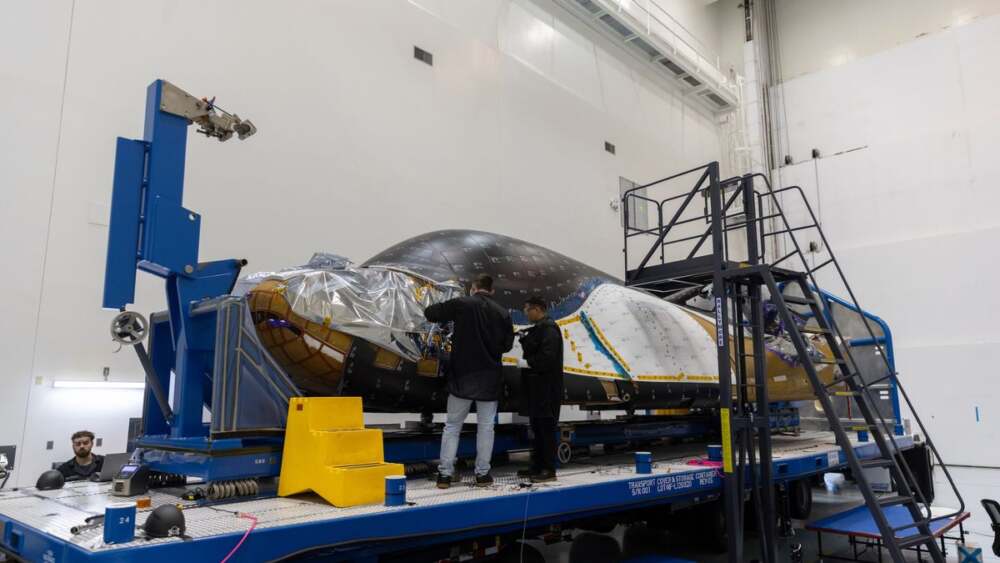
NASA and Sierra Space have made a significant change to the agreement for the Dream Chaser spacecraft, raising serious questions about whether the vehicle will ever perform its originally planned cargo-resupply missions to the International Space Station (ISS). What was once a firm commitment has been restructured into a more tentative path forward, with the ISS future of Dream Chaser now uncertain.
From Resupply Guarantee to Demonstration Flight
Originally awarded in 2016 under NASA’s Commercial Resupply Services-2 (CRS-2) program, Dream Chaser was promised a minimum of seven missions to deliver cargo to the ISS. These would have included “firm fixed price” task orders, ensuring that several missions were locked in from the outset.
Under the new arrangement, those guarantees have been removed. Dream Chaser will no longer be contractually obligated to complete those resupply flights. Instead, the spacecraft is now slated to undertake a free-flying orbital demonstration mission—that is, operating independently in orbit without docking or delivering to the ISS. This first flight is expected no earlier than late 2026, and there is concern it may slip into 2027.
Why the Shift?
There are multiple factors prompting the change in contract:
- Technical Delays and Development Hurdles: Dream Chaser has faced repeated postponements. Early schedule slips, integration delays, hardware readiness issues, and certifications have pushed back the ISS flight timeline many times.
- Safety and Risk Management: Docking or resupply missions to the ISS carry high stakes, especially when dealing with a vehicle whose flight history is comparatively limited. NASA appears to be wary of risking an unproven vehicle in close proximity to a crewed space station.
- Timeline Pressure from ISS Decommissioning: The ISS is scheduled for retirement around 2030-2031, which reduces the window in which Dream Chaser could carry out its resupply missions even under the best circumstances. Delays eat into that window.
- Flexibility for Both Parties: The updated contract gives Sierra Space more breathing room to finalize development, while letting NASA manage its expectations and liabilities. It also shifts more of the risk toward proving capability rather than fulfilling a fixed mission schedule.
What Has Been Retained & What Is Now Uncertain
- Retained: The demonstration mission option remains. NASA has said that after Dream Chaser successfully completes the orbital demo, it may still contract resupply missions. The capability of the spacecraft, as a spaceplane with runway landings, retains value in the agency’s eyes.
- Uncertain: The guaranteed ISS cargo flights—no longer guaranteed. There is no longer a fixed obligation that Dream Chaser must dock or deliver to the ISS. Mission timing, selection of cargo, and confirmation of flight readiness are all in question.
- Vehicle “Tenacity” & Free-flyer Demo: The vehicle (named “Tenacity”) which was in prelaunch preparations under the earlier schedule will now undertake the orbital demo without dock to station.
Implications for Dream Chaser & Sierra Space
- Revenue Risks: Without the guaranteed missions, Sierra Space loses predictable income, making funding, investor confidence, and long-term planning harder.
- Performance Pressure: The stakes are high for the demonstration flight. It must prove reliability, safety, and operational capacity. Any failure or major delay could undermine Dream Chaser’s odds of ever returning to the ISS in a logistics role.
- Competitive Landscape: Other proven ISS resupply providers (like SpaceX’s Cargo Dragon, Northrop Grumman’s Cygnus) continue to deliver, leaving fewer open slots and less patience for delay. Dream Chaser will have to outperform or at least match reliability and readiness.
- Broader Commercial Opportunities: Even if ISS missions are uncertain, Dream Chaser retains utility. Sierra Space may seek alternative contracts (commercial stations, national or international space agencies, defense/tech work) where a runway-landing spaceplane offers unique capabilities.
What to Watch Moving Forward
- Whether the orbital demonstration mission in late 2026 is on time, how well it performs, and whether it gathers the data NASA needs to reinstate docking / resupply options.
- Whether Sierra Space announces other mission contracts or partnerships outside of ISS resupply to make use of the technology.
- How NASA manages its cargo supply needs during the remaining years of ISS operation — will it rely entirely on existing providers, or keep Dream Chaser in the mix if performance is proven.
- Community, political, and budget responses to the delay and contract overhaul: ISS stakeholders, Congress, and related aerospace industry actors will weigh in.
Conclusion
Dream Chaser’s path has been altered significantly. What was once a well-defined roadmap to regular ISS resupply missions is now replaced with a path demanding proof and demonstration. The delay to the orbital demo and removal of guaranteed ISS flights puts its future in that role in jeopardy—but doesn’t entirely close the door. If the vehicle performs, if NASA is satisfied, and if timelines hold, Dream Chaser could still become an operational cargo provider. But it will need to deliver—and fast, given the ISS decommissioning timeline.













Leave a Reply