

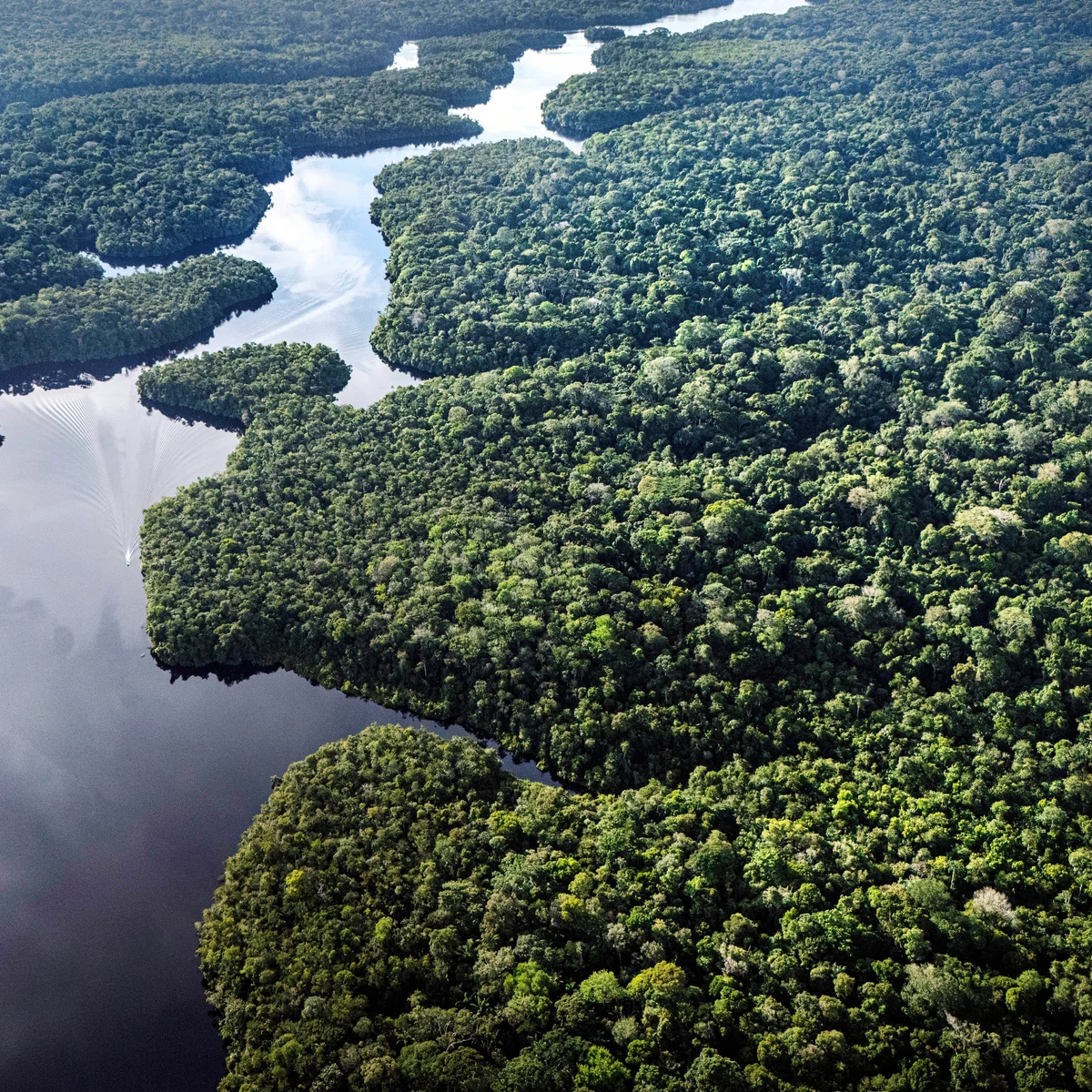
New research reveals that the largest trees in the Amazon are bucking expectations: instead of succumbing to rising temperatures and drought stress, many are continuing to grow larger, absorbing more carbon dioxide than previously thought. While this offers a hopeful glimmer in the fight against climate change, scientists caution that the gains depend heavily on preserving undisturbed forest ecosystems.
The Unexpected Growth Trend
The study, conducted across nearly two centuries of forest monitoring plots, found that average basal area—the cross-sectional size of tree trunks—has increased by about 3.3% per decade. This trend holds across trees of varied sizes, but it is especially pronounced among the forest giants. These massive trees, although few in number, dominate carbon storage and biomass cycling in the Amazon.
The driving force? Elevated atmospheric carbon dioxide (“CO₂ fertilization effect”) appears to act like a growth fuel in intact tropical forests. More CO₂ in the air enhances photosynthesis and water-use efficiency in plants, enabling more biomass accumulation when other conditions (water, nutrients) are favorable.
Why Giant Trees Matter More Than You Think
- Disproportionate carbon storage: Although giant trees represent only a small fraction of tree numbers, they are responsible for a large portion of carbon sequestration in the forest. An increase in their size means more carbon locked away in wood, branches, and roots.
- Hydrological functions: These mature trees play critical roles in atmospheric water recycling. Their deep root systems tap groundwater, helping maintain moisture regimes in dry periods.
- Forest structure & stability: Giants often serve as structural anchors in the canopy. Their presence helps stabilize microclimates and supports biodiversity by creating habitat complexity.
But these advantages come with caveats: large trees are vulnerable to wind damage, pathogens, droughts, and edge effects, especially when forests are fragmented or degraded.
Resilience, Not Invincibility
While the findings suggest that some Amazon trees are more resilient to climate stress than expected, the researchers emphasize that this resilience is conditional—largely tied to forest integrity. When forests are intact and protected from logging, fire, and fragmentation, the beneficial CO₂ effect seems stronger. In contrast:
- Fragmented forests often lose their carbon gains. Isolated patches face more extreme microclimates, edge exposure, and species shifts.
- Disturbed landscapes (e.g. burned, logged, or encroached) can shift from carbon sinks to carbon sources, where decomposition and tree mortality release more CO₂ than new growth captures.
- Extreme events like prolonged droughts, heatwaves, and large-scale fires can overwhelm even well-adapted trees, reversing progress.
Therefore, the long-term carbon uptake hinges on preventing deforestation, limiting forest fragmentation, and safeguarding mature forests.
The Broader Climate Equation
These new insights come amid growing concern that forests worldwide are struggling to keep pace with emissions. While intact tropical forests have historically absorbed a significant portion of human-generated CO₂, recent trends indicate weakening sinks in many regions due to climate stress and land-use change.
The Amazon’s continued growth in its undisturbed areas offers a hopeful counterexample, but it’s not enough on its own. If deforestation and degradation continue unchecked, the forest’s ability to function as a global carbon buffer may decline.
What to Watch — Indicators for the Future
- Tree mortality rates: If giant trees begin dying faster than new growth replaces them, the carbon balance will shift negatively.
- Forest fragmentation: Mapping how much the Amazon is broken into smaller patches will help predict which areas remain resilient and which are tipping toward degradation.
- Extreme climate events: How the forest responds to droughts, heat stress, and fires in upcoming years will test the limits of its resilience.
- Carbon flux monitoring: Advanced observation networks (e.g. tall towers, satellite sensors) will help detect whether sections of forest transition from sinks to sources.
- Conservation policies: Whether governments and regional leaders increase protection for mature forests or accelerate road-building, deforestation, or agricultural expansion will likely tip the balance.
Final Thoughts
The discovery that Amazon’s biggest trees are still growing and absorbing more carbon is a rare piece of good news in climate science. It suggests that, under the right conditions, tropical forests can maintain strength even under rising stress. Yet this is not a guarantee—it is a fragile phenomenon built on the foundation of forest integrity.
To preserve this unexpected victory, humanity must commit to protecting forests, curbing deforestation, and respecting nature’s role in maintaining climate balance. The giants of the Amazon are telling us: we can gain, but only if we act wisely and urgently.















Leave a Reply