


In a discovery that is reshaping scientific understanding of planetary formation, astronomers have observed a rogue planet devouring gas and dust at a rate so immense it rivals the early growth of stars. The object, officially designated Cha 1107-7626, sits about 620 light-years from Earth in the constellation Chamaeleon and is currently absorbing roughly six billion metric tons of material per second.
This extraordinary event has stunned researchers worldwide, as it challenges the long-held boundaries that separate planets from stars.
What Makes Rogue Planets Different?
Unlike most planets, which orbit stars, rogue planets float freely through space, unbound by stellar systems. Some were likely ejected from their original solar neighborhoods by gravitational interactions; others may have formed in isolation from giant clouds of dust and gas.
Cha 1107-7626 is massive—estimated to be between five and ten times the size of Jupiter—yet still falls short of the threshold needed to ignite nuclear fusion in its core. That limitation makes it a planet, not a star, but its behavior tells a more complicated story.
A Planet Acting Like a Star
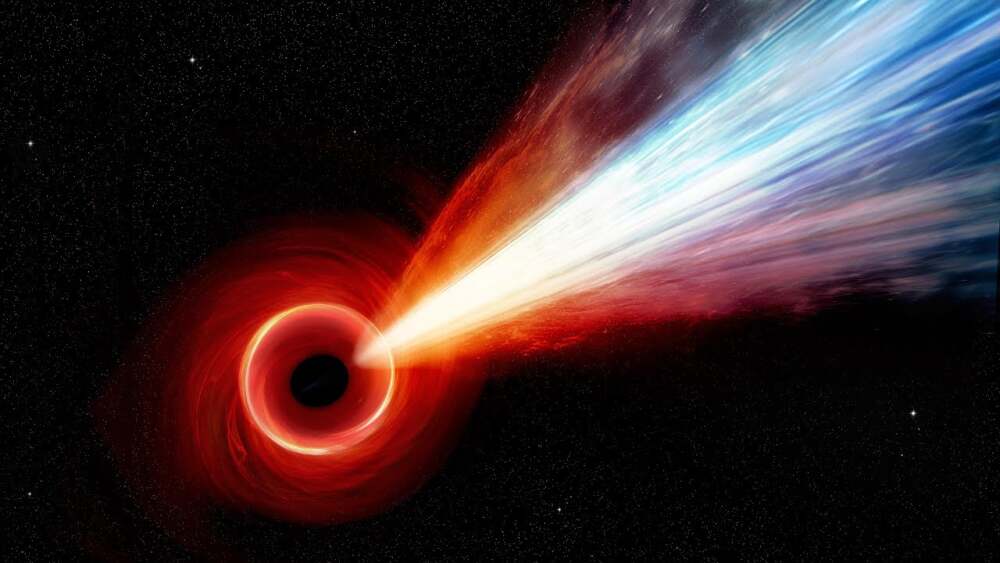
What has scientists especially intrigued is how this young planet behaves more like a protostar than a traditional planet. Astronomical observations revealed enormous streams of material funneling into the planet’s atmosphere through what appear to be magnetically controlled channels.
This process mirrors the way newborn stars feed from surrounding gas clouds. Cha 1107-7626, however, is not a star—it simply does not have the mass to sustain hydrogen fusion. The discovery raises new questions about whether planets and stars share more developmental overlap than previously imagined.
The Science Behind the Discovery
The finding was made using the European Southern Observatory’s Very Large Telescope (VLT) in Chile, one of the most advanced observatories in the world. By studying light spectra emitted from the region, astronomers detected heating events, changes in surrounding chemical composition, and bursts of energy consistent with rapid accretion.
Notably, the appearance of water vapor in the disc surrounding the planet suggests that intense heating is reshaping its environment. This is a hallmark trait of star-like growth but unprecedented for a planetary-mass body.
What shocked researchers further was the variability of the event. In August, the planet’s feeding rate spiked by nearly eight times the average level, indicating periods of “growth spurts” where Cha 1107-7626 is consuming even more material in bursts.
Why This Discovery Matters
- Challenges Definitions of Planets vs. Stars
The planet’s extreme behavior suggests the line between planetary growth and stellar formation is not as clear as textbooks imply. Scientists may need to rethink classification systems for such hybrid objects. - A New Window into Planet Formation
Cha 1107-7626 offers a rare chance to study the physics of accretion—how planets gather material from surrounding gas and dust—at magnitudes never before seen. - Possibility of Hidden Populations
If one rogue planet is undergoing such dramatic feeding, there may be many others across the galaxy still waiting to be discovered. - Implications for Exoplanet Studies
Understanding these processes could help explain the diversity of exoplanets found around distant stars, many of which exhibit characteristics that don’t fit neatly into existing models.
What Comes Next?
Scientists plan to continue monitoring Cha 1107-7626 to determine how long this feeding phase lasts and whether the planet’s growth will eventually stabilize. Future missions and space telescopes could provide sharper images of the surrounding disc, offering further clues about the flow of gas and dust.
Some astronomers are even speculating whether such worlds could eventually accumulate enough mass to straddle the line between planet and brown dwarf—a category that sits between planets and stars.
A Glimpse Into the Universe’s Wild Diversity
The discovery of Cha 1107-7626 highlights just how strange and varied our universe truly is. Worlds exist that defy classification, behaving in ways that challenge our deepest assumptions. What seems like a planet in one sense can behave like a star in another.
For the scientific community, this rogue planet is not merely a curiosity—it’s a laboratory in the cosmos, revealing secrets about the earliest stages of planetary and stellar life cycles. For the public, it’s a reminder that the universe is far more dynamic, mysterious, and awe-inspiring than we ever imagined.










Leave a Reply