

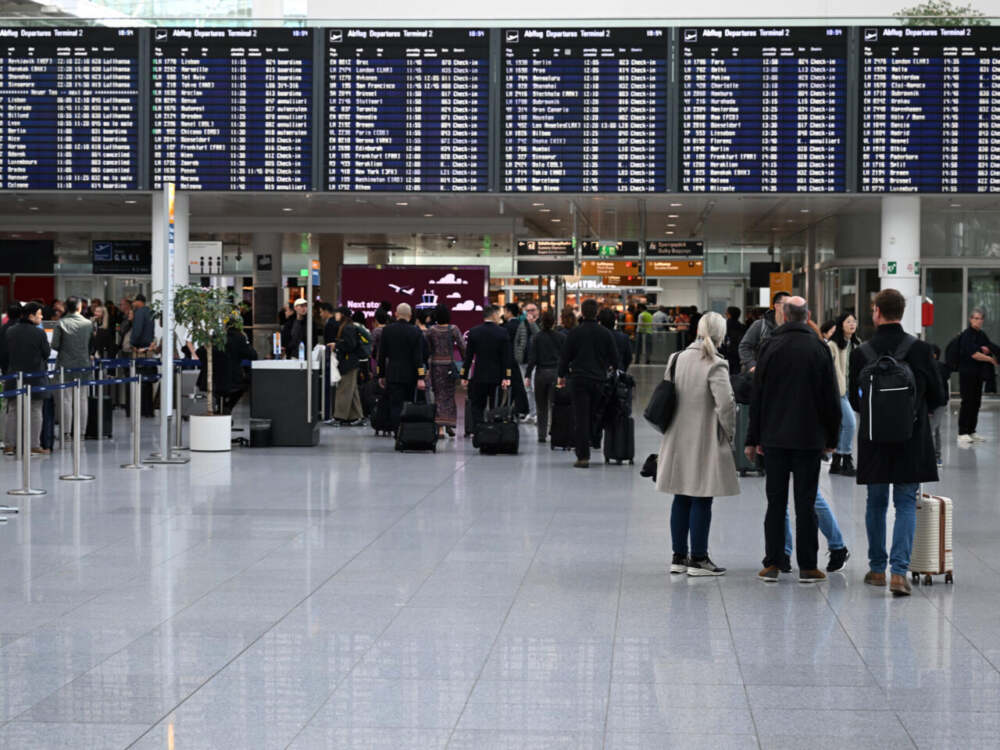
Munich Airport, one of Europe’s busiest aviation hubs, faced another severe disruption late Friday after multiple drone sightings forced officials to suspend all flight operations for several hours. It was the second such incident in less than 24 hours, reigniting fears about the growing vulnerability of European airspace to unmanned aerial vehicles.
Chaos Returns to the Runways
Air traffic controllers ordered both runways closed after pilots and ground staff reported drones hovering near restricted airspace. The sudden suspension left aircraft circling overhead while others were redirected to alternate airports, including Frankfurt, Vienna, and Zurich. Inside Munich’s terminals, thousands of travelers were left stranded, with departure boards filled with “canceled” and “delayed” notices.
Airport officials confirmed that more than 80 flights were affected, with at least 23 diverted, 12 arrivals canceled, and dozens of departures delayed. An estimated 6,500 passengers were impacted by the shutdown, many of them forced to spend the night in the terminal as hotel accommodations quickly filled up.
Pilots and Passengers Left Frustrated
Passengers described the scene as one of growing frustration and fatigue. “We were already boarded when the pilot announced we had to stay put due to drones near the runway,” said one traveler bound for London. “People thought it would be a short delay, but hours later, we were still on the plane waiting.”
A British Airways pilot reportedly told passengers that drones were spotted near both the takeoff and landing zones, prompting police helicopters to take to the skies in search of the culprits. Authorities later confirmed that flights resumed briefly before another wave of sightings forced an additional shutdown early Saturday morning.
Authorities Scramble to Respond
German federal police launched an investigation into the origin and purpose of the drones but have yet to identify any suspects. Officials are now working with the national cybersecurity agency and aviation regulators to determine whether the incidents were coordinated.
This disruption marks the latest in a series of unexplained drone incursions that have disrupted airports and military installations across Europe in recent months. Similar events have been reported in Denmark, Norway, and the Baltic states, sparking speculation about potential foreign interference or cyber sabotage.
Security analysts say the frequency and timing of these incidents suggest a deliberate attempt to test European defenses. “These are not random hobbyist drones,” said one European defense expert. “They appear to be part of a coordinated effort to probe weak points in civilian infrastructure.”
Political Tensions Over Airspace Security
The incident has reignited debate within Germany over how to handle aerial threats in civilian zones. Under current laws, police forces do not have full authority to destroy or disable drones flying near airports unless there is a direct, proven threat to life.
Bavarian state officials have called for expanded powers allowing police to request military assistance for rapid drone interception. Interior Minister Nancy Faeser said the government is reviewing emergency legislation that would streamline responses to such threats and improve coordination between law enforcement and air defense units.
“Our airspace must not be left undefended,” Faeser said in a statement. “We are facing a new type of security challenge, and we must be ready to meet it.”
Growing Pressure on Europe’s Aviation System
Munich’s repeated shutdowns come as Europe’s aviation industry continues to recover from years of pandemic-related disruption. Airlines, already struggling with labor shortages and scheduling constraints, now face an additional and unpredictable obstacle: rogue drones.
The economic toll of such incidents can be significant. A single hour of runway closure at a major European airport can cost millions of euros in lost fuel, staffing, and rerouting expenses. For passengers, the impact is equally personal — missed connections, canceled vacations, and hours of uncertainty.
Airline representatives are urging governments to accelerate the rollout of anti-drone technologies, including radar systems, jammers, and automated detection networks. Some airports in France and the United Kingdom have already begun testing these measures, but widespread deployment remains slow due to regulatory hurdles.
Broader European Implications
The Munich drone crisis underscores a growing regional issue: Europe’s skies are becoming a new frontier for hybrid warfare and disruption. With drones increasingly inexpensive and difficult to trace, officials fear they could be used not only for nuisance or espionage but also as tools for political pressure or misinformation campaigns.
Analysts warn that the lack of a unified European response is leaving countries to manage the threat individually, often with limited resources. Calls are mounting for the European Union to establish a continent-wide airspace defense protocol, integrating surveillance and rapid response systems across member states.
What Comes Next
As flights gradually resumed Saturday morning, airport officials promised to review safety procedures and coordinate with national authorities to prevent future incidents. Yet for many travelers and aviation experts, the sense of vulnerability lingers.
“The technology to stop drones exists,” said a former German Air Force officer, “but the bureaucracy to approve its use is lagging far behind. Until that changes, these disruptions will keep happening.”
The latest episode at Munich Airport serves as a stark warning that Europe’s air infrastructure—once considered one of the most secure in the world—is now being tested by a new, elusive threat. The skies above may be busier than ever, but they’re also becoming far less predictable.
















Leave a Reply