

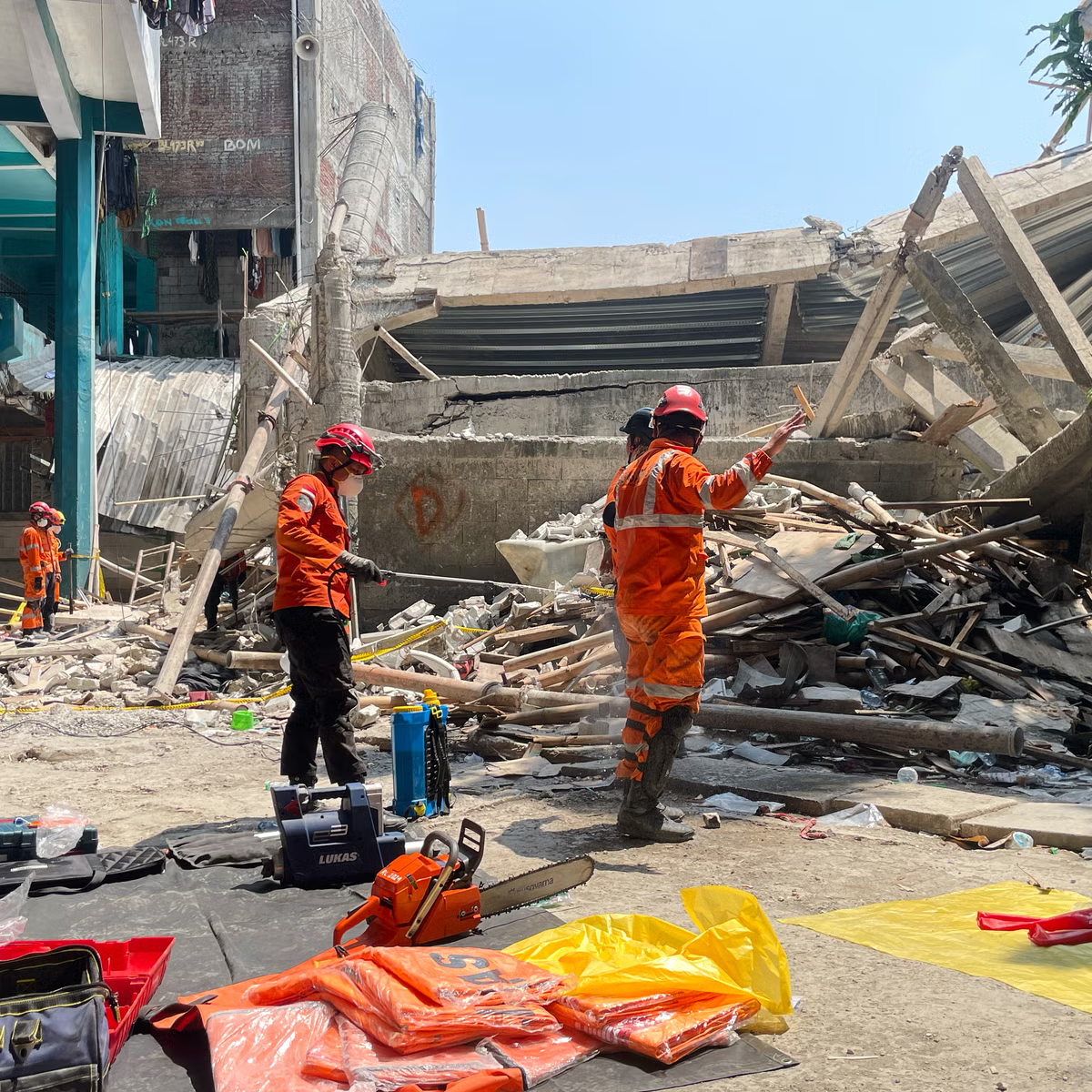
Sidoarjo, East Java — October 6, 2025:
What began as an ordinary day of study and prayer turned into a national tragedy in Indonesia when the Al-Khoziny Islamic boarding school in East Java collapsed on Friday afternoon, killing at least 50 people and injuring dozens more. As rescue teams dig through the wreckage, authorities and grieving families are struggling to understand how such a catastrophe could occur inside one of the country’s most common — yet least regulated — types of educational institutions.
A Day of Prayer Turns to Horror
The disaster struck suddenly during Asr prayers, when hundreds of students and teachers were gathered in the school’s main hall. Witnesses described a low rumble before the building’s upper floors caved in, crushing those below. Survivors recalled screams, dust, and chaos as chunks of concrete and twisted metal rained down.
“I heard the sound of the roof cracking,” said 16-year-old student Ahmad Rifqi, one of the few who escaped with minor injuries. “Before I could run, the walls fell around me. I don’t know how I survived, but many of my friends didn’t.”
The building collapsed in a matter of seconds. Those closest to the exits managed to flee, while dozens were trapped inside. The school’s dormitories and classrooms — many housed in the same compound — were left in ruins.
Rescuers Work Through the Night
By Monday morning, rescue workers had recovered at least 50 bodies from the rubble, with 13 people still missing. Heavy machinery, cranes, and excavators were brought in to clear debris, while rescue teams worked tirelessly alongside volunteers and relatives.
Search teams used drones, motion sensors, and sniffer dogs to locate survivors, but as hours passed, hope faded. Emergency responders described the operation as “one of the most challenging” they have faced due to unstable debris and narrow spaces.
Local hospitals, overwhelmed by the number of casualties, have set up temporary tents to treat the injured. Grieving families have gathered outside morgues, waiting for news, while forensic teams struggle to identify victims. Authorities have begun collecting DNA samples from family members to match with recovered remains.
A Pattern of Neglect
Preliminary reports suggest the building’s collapse was caused by structural failure linked to illegal or substandard construction. Investigators suspect that the upper floor was added recently without proper reinforcement or government inspection.
Officials revealed that the Al-Khoziny Islamic boarding school may not have possessed a valid building permit. This revelation has reignited debate over Indonesia’s lax enforcement of safety regulations — particularly in pesantren, the Islamic boarding schools that serve millions of students across the archipelago.
Experts say many of these schools are built rapidly and cheaply, often funded by local communities or private donors without professional engineering input. While some meet safety standards, countless others operate without compliance certificates or oversight.
“Many pesantren grow organically — they start small, then expand as donations come in,” explained civil engineer Arif Nugroho, who has worked on education infrastructure projects in East Java. “Unfortunately, construction quality is often compromised. When structural loads are added without recalculating foundations, tragedy is inevitable.”
National Outcry and Political Pressure
As news of the disaster spread, Indonesians took to social media to express anger and sorrow. Hashtags calling for justice for the victims and school safety reform began trending across platforms. The government faced immediate criticism for its failure to enforce building codes, especially in religious institutions that educate millions of children.
President Joko Widodo expressed condolences to the victims’ families and ordered a full investigation. “We must ensure this never happens again,” he said in a televised address. “All schools, including religious boarding institutions, must follow the same safety standards.”
The Ministry of Religious Affairs has also announced a nationwide audit of Islamic boarding schools to identify unsafe structures. However, similar promises have been made after past tragedies — with little change.
In 2022, a dormitory fire at a pesantren in Medan killed 14 students. A year later, a roof collapse in South Sulawesi injured dozens. Each incident sparked outrage, but systemic reform has remained elusive.
Human Stories Behind the Numbers
As the rescue continues, heartbreaking stories are emerging from survivors and families.
One mother, Siti Aminah, spent three days outside the school gate waiting for word about her 13-year-old son. On Monday, she received confirmation that his body had been found. “He wanted to memorize the Quran and become a teacher,” she said through tears. “He was the light of our home.”
Volunteers have set up makeshift shelters near the site, offering food, water, and psychological support. Religious leaders from across Indonesia have visited to pray for the victims and urge authorities to prioritize child safety.
Calls for Reform Grow Louder
The collapse has sparked a wider conversation about Indonesia’s education infrastructure crisis. Many experts argue that the government’s focus on expanding access to education has not been matched by adequate investment in safe buildings, teacher training, and inspection systems.
The Indonesian Institute of Civil Engineering has called for mandatory third-party inspections for all educational structures, whether public, private, or religious. They also urge the government to establish a national database of school safety certifications, updated annually.
Community leaders are echoing those demands. “This tragedy exposes our collective negligence,” said local activist Hafiz Abdullah. “We cannot preach about protecting children’s futures while sending them to unsafe schools.”
The Long Road Ahead
As rescue operations wind down, attention turns to accountability. The East Java police have launched a criminal investigation into possible negligence by contractors and school administrators. If found responsible, they could face charges under Indonesia’s building safety and criminal negligence laws.
Reconstruction plans are already being discussed, but survivors and families insist that justice must come first. “We don’t need new buildings before we know who allowed this to happen,” said one parent at a vigil held outside the wreckage.
Psychologists warn that the emotional toll on survivors and witnesses will linger long after the debris is cleared. Local authorities have promised long-term trauma counseling and compensation for affected families.
A Nation Reflects
Indonesia’s rapid development has brought both prosperity and peril. The Al-Khoziny tragedy is a grim reminder that progress built on weak foundations — literally and figuratively — can come at a terrible cost.

















Leave a Reply