

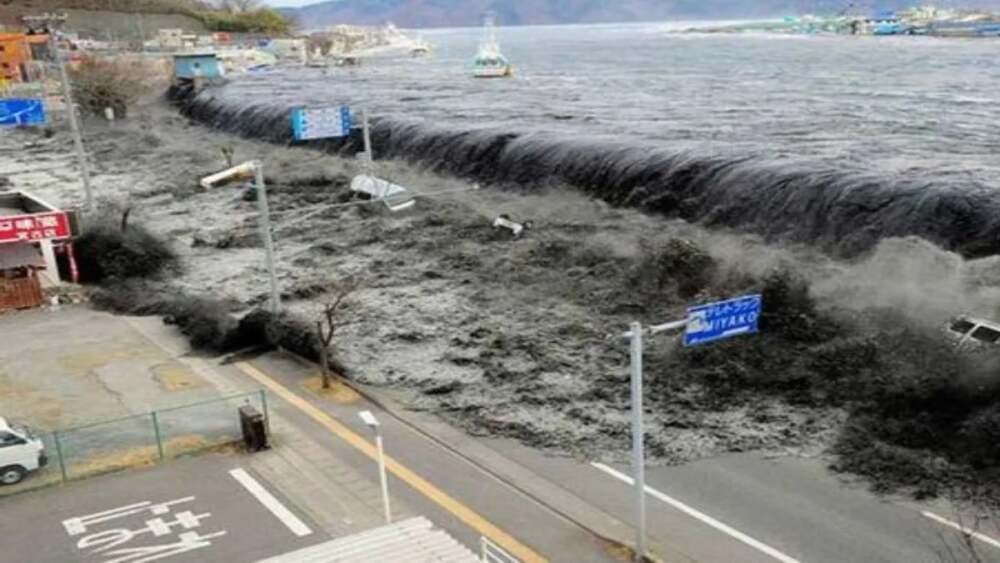
A strong earthquake struck off the northeastern coast of Japan on Sunday evening, rattling buildings across a wide area, disrupting transportation, and sparking a tsunami advisory that sent thousands of residents fleeing to higher ground. Although no major tsunami occurred and early reports indicate minimal damage, the quake served as a stark reminder of Japan’s vulnerability to natural disasters and its ongoing vigilance since the catastrophic 2011 Tohoku earthquake.
Details of the Quake
The Japan Meteorological Agency (JMA) reported that the quake had a preliminary magnitude of 6.9, with its epicenter located off the coast of Iwate Prefecture. It struck just after 5:00 p.m. local time at a relatively shallow depth of about 20 kilometers beneath the seabed—shallow enough to generate concern for potential tsunami waves. The tremor was felt strongly across the Tohoku region and as far away as Tokyo, where high-rise buildings swayed for several seconds.
Within minutes, authorities issued a tsunami advisory for the northern coastline, warning of possible waves up to one meter high. Sirens echoed through coastal towns, and emergency messages urged residents to evacuate low-lying areas immediately. Fishermen rushed to secure boats, and trains were halted as part of Japan’s automated safety protocols.
Immediate Impact and Response
In several ports, small tsunami waves—ranging between 10 and 30 centimeters—were observed within an hour of the earthquake. While these were well below the level capable of causing damage, officials maintained the advisory for several hours until they were confident no larger waves would follow.
Power outages briefly affected parts of Iwate and Miyagi prefectures, but electricity was quickly restored. Public transportation systems, including sections of the Shinkansen bullet train network, temporarily suspended services to inspect tracks and equipment. Airports in the affected regions also halted operations for safety checks before resuming normal schedules.
Local television networks broadcast live footage of residents calmly evacuating coastal areas, a testament to Japan’s well-rehearsed emergency procedures. Many communities have designated evacuation centers located on elevated ground, established in the years following the devastating 2011 disaster.
No Major Damage or Injuries Reported
By late evening, the JMA confirmed that there were no reports of significant damage or casualties. However, local officials warned that aftershocks could continue for several days, and they urged the public to remain cautious. Firefighters and rescue crews conducted patrols in vulnerable areas to ensure no one was trapped or injured in remote communities.
The Onagawa Nuclear Power Plant and other facilities along the coast reported no irregularities. Japan’s Nuclear Regulation Authority reaffirmed that radiation levels remained normal, emphasizing that the country’s nuclear systems were designed to automatically shut down in the event of major seismic activity.
Government Response and Public Reassurance
Prime Minister Fumio Kishida held an emergency meeting with the disaster management team in Tokyo soon after the quake. In a televised statement, he urged citizens to stay calm but alert. “Our first priority is the safety of the people. We are closely coordinating with local governments and emergency agencies to assess the situation,” he said.
The government deployed rapid response teams to northern Japan to evaluate infrastructure, including highways, bridges, and public utilities. Officials confirmed that all major transportation arteries remained operational and that emergency communication lines were intact.
Historical Context and Preparedness
Japan sits on the Pacific Ring of Fire, where several tectonic plates meet, making it one of the most seismically active nations in the world. The country experiences hundreds of measurable quakes each year, though most are minor.
This latest earthquake revived memories of the magnitude 9.0 quake and tsunami that struck the Tohoku region in 2011, claiming nearly 20,000 lives and triggering a nuclear crisis at the Fukushima Daiichi plant. Since then, Japan has significantly enhanced its disaster preparedness systems, from early warning networks to stricter building codes designed to withstand intense shaking.
Experts noted that the quick and orderly response to Sunday’s quake reflected the country’s ongoing investment in disaster readiness. Japan’s early warning system detected the quake within seconds, automatically sending alerts to millions of mobile phones and broadcasting warnings on television and radio. Trains were brought to a stop within moments, a safety feature credited with preventing accidents during strong quakes.
Voices from the Ground
Residents of Iwate Prefecture described a frightening but controlled situation. “The shaking was strong but brief,” said one shop owner in the coastal city of Ofunato. “We immediately heard the tsunami sirens and went uphill as we’ve practiced many times before. Everyone knew what to do.”
In nearby Miyako, a local fisherman said he and his colleagues rushed to secure their boats. “The memory of 2011 is still fresh for us,” he explained. “We don’t take any chances when the sea warning sounds.”
Aftershocks and Ongoing Monitoring
Seismologists have warned that additional tremors could occur in the coming days, some potentially strong enough to cause localized damage. The JMA continues to monitor seismic activity and sea-level changes closely. Residents are being advised to stay away from coastal areas until authorities confirm that all risks have subsided.
Disaster response agencies are also conducting inspections of infrastructure such as dams, power stations, and communication lines to ensure there are no delayed impacts from the quake.
A Reminder of Resilience
While this earthquake resulted in limited disruption, it served as a reminder of Japan’s constant exposure to natural hazards—and the importance of preparedness. For many, the swift response and lack of widespread damage demonstrated how far the nation has come since past tragedies.
As the tsunami advisory was lifted late Sunday night, people began returning to their homes, grateful that the worst had been avoided. Yet, as one resident put it, “We can never be too relaxed. The earth here always reminds us who’s in charge.”

















Leave a Reply