

Strategic Partnership to Drive Expansion
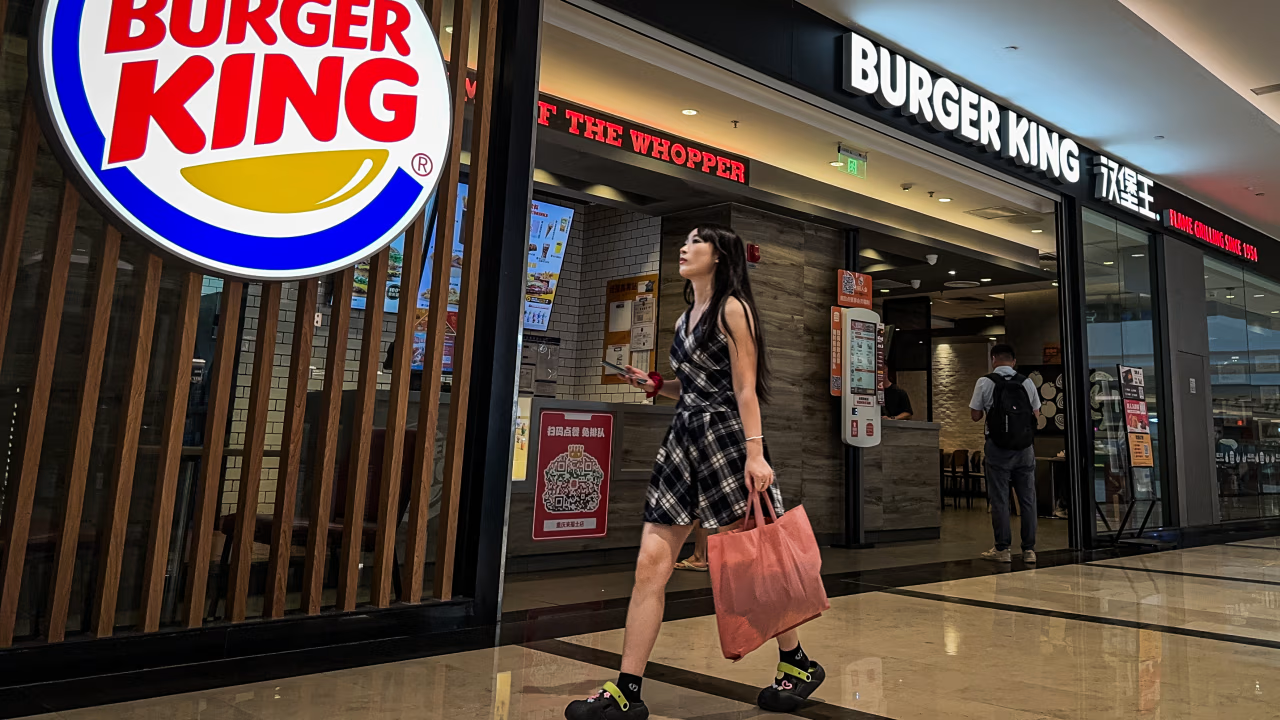
Burger King’s parent company has announced a landmark joint venture with a leading Chinese investment firm to accelerate the fast-food chain’s growth across China. The agreement involves a significant capital injection aimed at opening new restaurants, enhancing marketing efforts, introducing menu innovations, and improving operational efficiency. Under the partnership, the local firm will hold the majority stake, while Burger King retains a minority share and board representation, allowing both parties to leverage their strengths.
Ambitious Growth Targets
Burger King China currently operates around 1,200–1,300 outlets. Through this joint venture, the company aims to:
- Double its number of restaurants within the next five years.
- Expand to more than 4,000 locations over the next decade.
- Position China as a central component of Burger King’s global growth strategy.
Why China Is a Priority
China’s fast-food market continues to grow rapidly, fueled by urbanization, rising disposable incomes, and evolving consumer tastes. The joint venture allows Burger King to:
- Tap into local market expertise and consumer insights.
- Expand efficiently through an asset-light model that leverages local capital.
- Compete effectively with both international and domestic fast-food chains in an increasingly competitive sector.
Operational Focus Areas
The joint venture will focus on:
- Restaurant Expansion: Opening outlets in first-, second-, and third-tier cities to maximize market coverage.
- Menu Innovation: Developing products tailored to Chinese preferences, including limited-time offerings to drive engagement.
- Digital and Delivery Integration: Strengthening online ordering, delivery partnerships, and loyalty programs to meet modern consumer expectations.
- Marketing and Brand Positioning: Reinforcing Burger King’s brand presence through targeted campaigns and localized messaging.
Challenges and Risks
Despite the promising outlook, Burger King faces several challenges in China:
- Competition: Both global and local fast-food brands are aggressively expanding, increasing the pressure to differentiate.
- Consumer Behavior: Economic fluctuations or changes in spending patterns could impact growth.
- Execution Risks: Scaling rapidly requires careful site selection, supply chain management, staffing, and quality control.
- Regulatory Environment: Navigating local regulations and ensuring alignment with corporate standards is critical for long-term success.
Implications for Global Strategy
This joint venture signals a strategic shift for Burger King’s global operations, emphasizing collaboration with local partners to accelerate growth in high-potential markets. A successful expansion in China could significantly enhance revenue, market share, and brand influence, while providing a blueprint for future international growth initiatives.
Conclusion
The new partnership represents a bold commitment to the Chinese market, combining local expertise with Burger King’s global brand strength. With ambitious expansion targets and a clear operational plan, the company is poised to significantly increase its footprint and compete more effectively in one of the world’s most dynamic fast-food markets. Success will hinge on execution, market responsiveness, and maintaining a balance between global brand standards and local adaptation.















Leave a Reply