

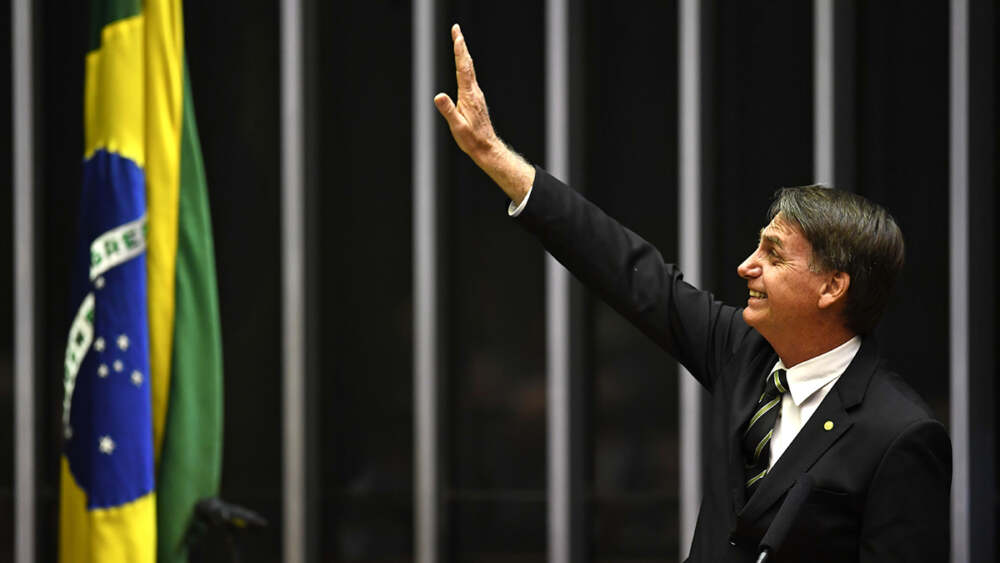
Brazil plunged deeper into political uncertainty on Saturday as former president Jair Bolsonaro was taken into preventive custody by federal authorities. The arrest, carried out at his residence in Brasília, marks one of the most consequential moments in Brazil’s post-dictatorship history and intensifies the nation’s already sharp political divide.
A Sudden End to Months of House Arrest
Bolsonaro, 70, had been serving house arrest following his conviction in connection with an alleged plot to overturn the 2022 election results. Despite restrictions, he remained a central figure in national politics, frequently issuing statements through allies and maintaining influence among far-right groups.
The shift from house arrest to formal detention was triggered by concerns over potential disruptions ahead of a planned gathering of his supporters. Authorities viewed the mobilization as a possible catalyst for instability and feared attempts to obstruct law enforcement operations.
Additionally, officials reported irregularities involving Bolsonaro’s electronic monitoring equipment. Investigators suggested the possibility of intentional tampering, raising alarm about potential flight plans or coordinated efforts to challenge his detention.
A Verdict That Shook the Country
Bolsonaro’s conviction earlier this year was unprecedented. A panel of Supreme Court justices found him guilty of multiple offenses including:
- Conspiring to undermine democratic institutions
- Coordinating efforts to delegitimize the presidential transition
- Leading an organized attempt to retain power through illegal means
The ruling also cited evidence of discussions among Bolsonaro’s inner circle regarding emergency decrees, military involvement, and strategies to block the electoral process.
For many Brazilians, the verdict was a strong message that even the most powerful figures are subject to the rule of law. For others, particularly Bolsonaro’s supporters, the sentencing was seen as politically motivated and disproportionate.
Health Concerns and Defense Arguments
Bolsonaro’s legal team has insisted that his health conditions justify more lenient detention. Since surviving a stabbing during the 2018 presidential campaign, he has undergone several surgeries and experienced recurring complications.
His attorneys argue that long-term imprisonment poses a significant medical risk. They have requested his return to house arrest or transfer to a specialized medical unit. However, the Supreme Court has shown little inclination to soften its stance, noting the gravity of the crimes and the potential national security risks.
A Support Base Ready to Mobilize
Bolsonaro’s arrest has galvanized his core supporters, many of whom see him as a victim of judicial persecution. Leaders within his political movement have already issued calls for nationwide demonstrations, urging followers to show solidarity.
This mobilization raises concerns for security agencies, who fear possible clashes, road blockades, or attempts to replicate the January 8, 2023 riots that targeted government buildings in Brasília.
Meanwhile, opposition groups have welcomed the arrest as a reaffirmation that Brazil’s institutions can withstand pressures from extremist forces. They argue that Bolsonaro’s actions after the 2022 election destabilized the nation and that accountability is essential for democratic recovery.
A Judiciary Under Intense Pressure
The Brazilian Supreme Court has become a central player in the unfolding crisis. Critics argue that its reach has expanded too far, while supporters insist that the judiciary is simply carrying out its constitutional duty.
Justice Alexandre de Moraes, who has overseen many of the cases involving Bolsonaro and his allies, has faced both praise and threats. His decisions — including Saturday’s detention order — are shaping the trajectory of Brazilian politics in ways few judges have before.
What This Means for Brazil’s Political Landscape
Bolsonaro’s imprisonment leaves a vacuum within Brazil’s conservative movement. While he remains influential, his ability to shape elections or organize campaigns is now severely restricted. This may pave the way for new right-wing leaders, including members of his own family, to assume more prominent roles.
On the left, President Luiz Inácio Lula da Silva’s administration now faces the challenge of navigating potential protests while ensuring stability and avoiding further polarization.
A Nation at a Crossroads
Brazil now finds itself in a delicate moment. The arrest of a former president is historic — but it also risks igniting unrest in a deeply divided society.
Whether this moment strengthens Brazil’s democracy or pushes the country toward further instability will depend on what happens next: the response from Bolsonaro’s supporters, the actions of political leaders, and the ability of institutions to maintain order without overreach.
For now, the country watches closely as one of its most influential and controversial political figures begins the next phase of a dramatic legal and political battle — one that is far from over.








Leave a Reply