
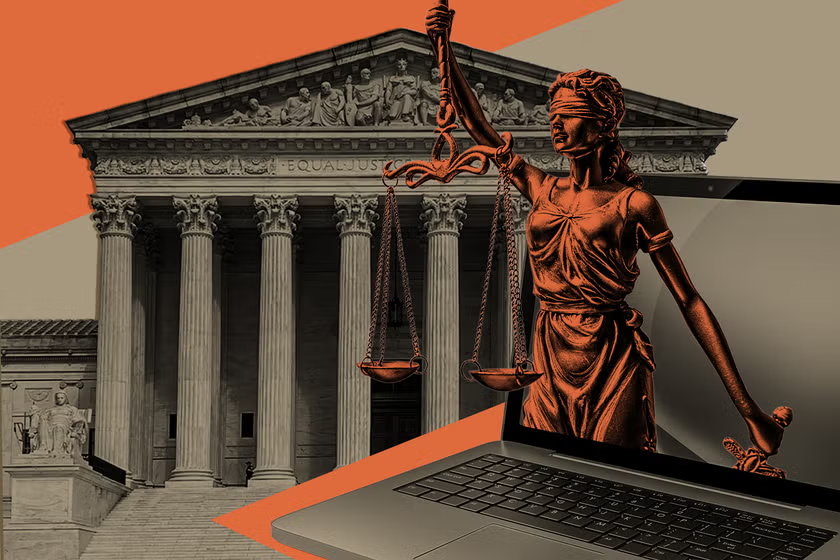
The U.S. Supreme Court has taken up a landmark copyright case that could have significant implications for internet service providers (ISPs) and content distribution on the internet. The case, which involves major corporations including Sony and Cox Communications, centers on the responsibilities of ISPs regarding copyright infringement by their users.
Background of the Case
At the heart of the dispute is the question of whether internet providers can be held liable for copyright violations committed by their subscribers. Copyright holders argue that ISPs should take stronger measures to prevent illegal distribution of copyrighted content, while service providers maintain that they should not be automatically responsible for user actions, citing the safe harbor protections under the Digital Millennium Copyright Act (DMCA).
Key Legal Issues
The Supreme Court will examine several critical legal questions:
- Liability Standards: To what extent can ISPs be held accountable for copyright infringement committed by their users?
- Safe Harbor Protections: How broadly do DMCA provisions shield service providers from legal responsibility?
- Preventive Measures: What obligations, if any, should ISPs have in actively monitoring or controlling content shared on their networks?
Potential Industry Impact
Legal experts warn that the court’s decision could reshape how ISPs operate and enforce copyright rules. A ruling imposing broader liability could lead providers to implement stricter monitoring, content filters, and enforcement measures, potentially affecting user privacy and internet freedom. Conversely, a ruling favoring ISPs could strengthen the current framework of protections, allowing for more open and less regulated internet services.
Perspectives from Stakeholders
- Content Creators: Rights holders advocate for stronger enforcement to combat piracy and protect intellectual property.
- Service Providers: Companies like Cox argue that overbroad liability could stifle innovation, increase operational costs, and limit service accessibility.
- Consumer Advocates: Privacy and digital rights groups emphasize the need to maintain user freedoms and avoid invasive surveillance measures.
Looking Ahead
The case is expected to attract widespread attention from the tech industry, legal experts, and consumer advocacy groups. Its outcome may set a precedent for how digital content is regulated and how responsibilities are shared between providers and users in the internet ecosystem.
Conclusion
The Supreme Court’s consideration of this copyright case highlights the evolving challenges of protecting intellectual property in the digital age. The ruling could have far-reaching consequences for internet providers, content creators, and consumers alike, potentially redefining the balance between copyright enforcement and online freedom.















Leave a Reply