

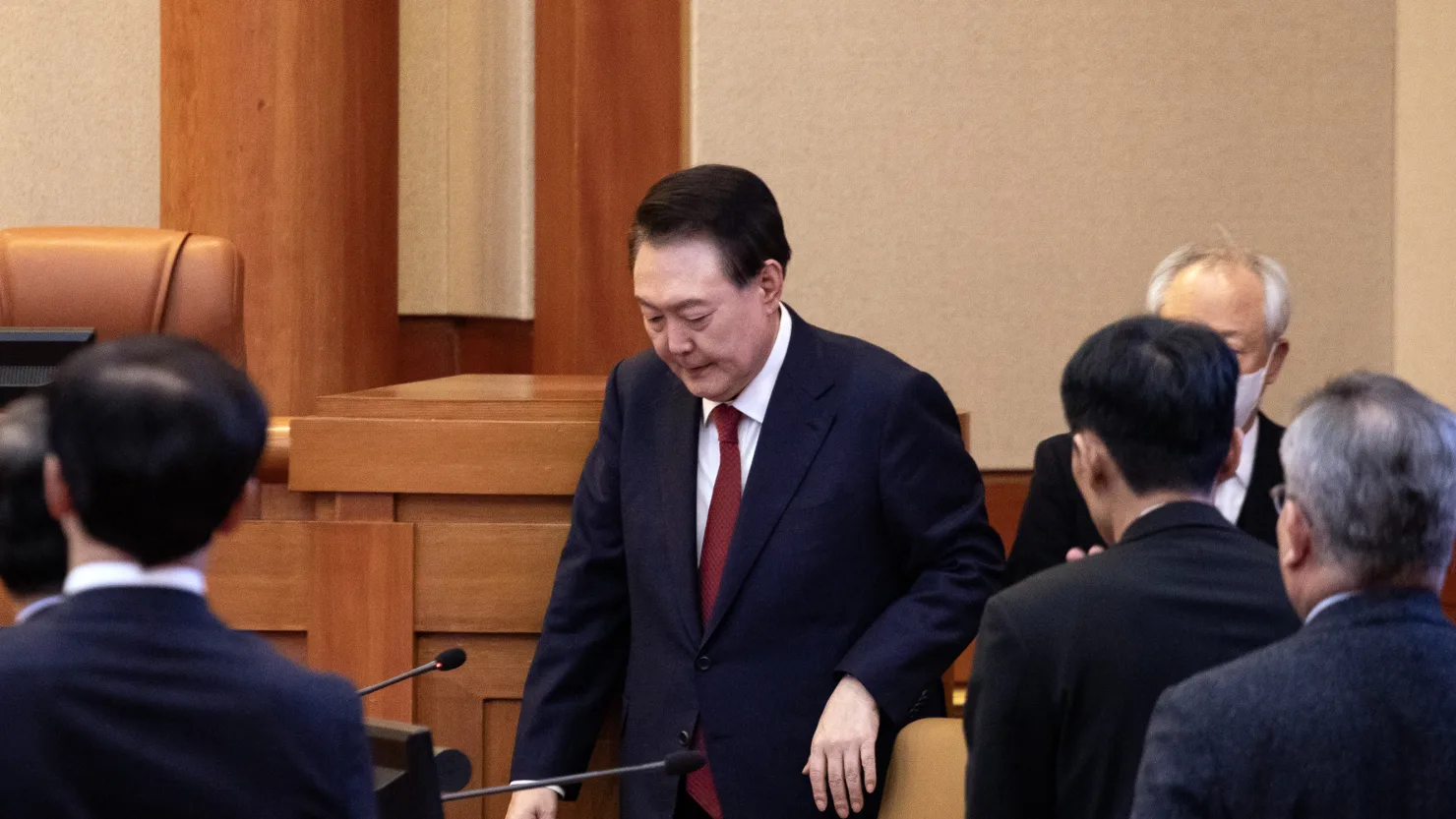
South Korean prosecutors have accused former president Yoon Suk Yeol of attempting to provoke North Korea as part of a strategy to justify the possible declaration of martial law, a revelation that has sent shockwaves through the country’s political establishment and raised serious concerns about the abuse of executive power.
According to prosecution filings, investigators believe Yoon and senior figures within his administration explored actions that could sharply escalate tensions with Pyongyang, calculating that a national security crisis would provide legal and political grounds to impose emergency rule. Martial law in South Korea grants sweeping authority to the executive, including restrictions on civil liberties and expanded military control over public order.
Alleged Strategy Behind the Provocation Claims
Prosecutors allege that during periods of intense domestic pressure—marked by political deadlock, public protests, and falling approval ratings—Yoon discussed measures that could heighten confrontation with North Korea. These measures allegedly included aggressive military posturing, inflammatory public messaging, and covert discussions about responses that could trigger retaliation from the North.
Investigators argue that the goal was not merely deterrence, but the creation of a crisis severe enough to be framed as an imminent national threat. Such a scenario, prosecutors say, could have been used to legitimize extraordinary powers under South Korea’s constitution.
Yoon has strongly denied the allegations, calling them politically motivated and insisting that all actions taken during his presidency were aimed solely at protecting national security.
Legal and Constitutional Implications
The accusations strike at the heart of South Korea’s democratic safeguards. Martial law has a dark legacy in the country, having been used by authoritarian governments during the Cold War era to suppress dissent and consolidate power. Since South Korea’s democratic transition, the idea of invoking martial law has been considered a last resort, reserved only for extreme circumstances such as war or national collapse.
Legal experts say that if prosecutors can prove intent to manufacture a security crisis, it could amount to grave constitutional violations, including abuse of power and dereliction of democratic duty. Some analysts suggest the case could redefine legal limits on presidential authority in matters of national defense.
Political Fallout at Home
The allegations have triggered fierce debate in South Korea’s National Assembly. Opposition lawmakers have accused Yoon of endangering national security for political survival, while members of his conservative camp argue the claims are speculative and undermine confidence in the country’s defense posture.
Public reaction has been sharply divided. For many South Koreans, the notion that a president might deliberately escalate tensions on the Korean Peninsula is deeply unsettling, given the catastrophic consequences of miscalculation. Others warn against drawing conclusions before the legal process is complete.
Regional and International Concerns
The case has drawn attention beyond South Korea’s borders. Any deliberate provocation of North Korea carries risks not only for the peninsula but for regional stability involving major powers such as the United States, China, and Japan. Diplomatic observers note that even limited incidents between the two Koreas can spiral rapidly, making allegations of intentional escalation especially alarming.
Former officials and security analysts have stressed that deterrence strategies must be transparent, proportional, and defensive in nature. If proven otherwise, they warn, such actions could erode trust among allies and weaken South Korea’s international standing.
What Happens Next
Prosecutors are continuing to examine internal documents, communications, and testimony from former officials to determine whether the alleged plans advanced beyond discussion. While no charges have yet been finalized, the investigation is expected to intensify in the coming months.
As South Korea watches the case unfold, the controversy has reopened fundamental questions about civilian control of the military, the limits of presidential power, and the enduring scars left by past authoritarian rule. For many citizens, the outcome will be a critical test of the country’s commitment to accountability and democratic norms.









Leave a Reply