

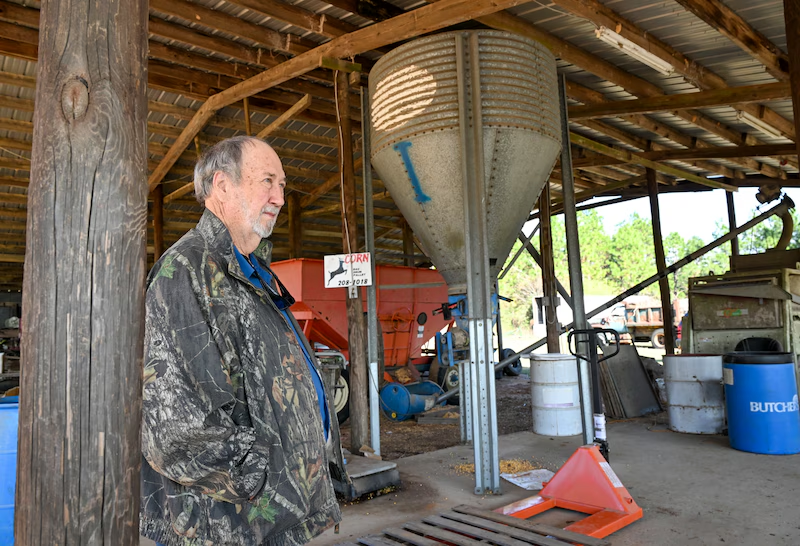
A growing number of U.S. farmers and agricultural workers are reporting cases of Parkinson’s disease, raising alarm over potential connections to the widespread use of certain pesticides. Many affected individuals point to long-term exposure to neurotoxic chemicals as the likely culprit behind the debilitating condition, sparking both medical and legal investigations.
Parkinson’s Among Farmers: A Rising Concern
Parkinson’s disease, a progressive neurological disorder, affects the central nervous system, leading to tremors, stiffness, slowed movement, and impaired coordination. While the disease can arise due to genetic factors, environmental exposure—particularly to pesticides and herbicides—has increasingly been recognized as a significant risk factor.
Farmers exposed to chemicals in the field over decades report higher-than-average incidences of Parkinson’s compared to the general population. Symptoms often begin subtly, including mild tremors or difficulty with fine motor tasks, but gradually worsen, impacting daily life and work capabilities.
The Pesticide in Question
Studies and anecdotal evidence suggest that specific neurotoxic pesticides, widely used in U.S. agriculture, may interfere with dopamine-producing neurons in the brain, a hallmark of Parkinson’s disease. These chemicals, often applied to crops like corn, soy, and cotton, are believed to accumulate in the body over time, particularly when protective measures are insufficient.
Farmers affected by the disease describe years of daily exposure without adequate safety equipment, including inhalation of aerosolized particles and skin contact during mixing or application.
Medical Research and Evidence
Researchers have observed a statistical correlation between pesticide exposure and Parkinson’s risk, though proving direct causation remains challenging due to variables like genetics, lifestyle, and other environmental factors. Recent studies highlight:
- Elevated rates of Parkinson’s among rural farming communities.
- Stronger links in individuals exposed to specific classes of pesticides, such as organophosphates and paraquat.
- Early-onset Parkinson’s symptoms appearing in individuals with decades of cumulative exposure.
Neurologists emphasize the importance of long-term monitoring and protective measures for agricultural workers, including personal protective equipment (PPE), proper handling procedures, and periodic health screenings.
Legal and Regulatory Developments
The connection between pesticides and Parkinson’s has prompted lawsuits from affected farmers seeking compensation and stricter regulations. Some states are considering banning or restricting the most harmful chemicals, while advocacy groups push for federal oversight to prevent further occupational health crises.
The Environmental Protection Agency (EPA) has initiated studies to assess the neurotoxic risks of widely used agricultural chemicals, although critics argue that regulatory action has historically lagged behind scientific evidence.
Impact on the Farming Community
For farmers, the disease carries profound personal and economic consequences. Many are forced to reduce work hours or retire early, while facing medical costs for symptom management and ongoing treatment. Families often bear the emotional burden of caregiving, and rural healthcare systems struggle to provide specialized neurological support.
Moving Forward
Experts urge a multipronged approach to protect agricultural workers:
- Enhanced safety protocols for pesticide application.
- Substitution with safer alternatives wherever possible.
- Ongoing research to better understand the mechanisms linking pesticides to neurological disease.
- Awareness campaigns to educate farmers about early symptoms and prevention strategies.
While the debate over causation continues, the mounting evidence linking pesticides to Parkinson’s underscores the urgent need for protective measures, regulatory action, and healthcare support for farmers nationwide.

















Leave a Reply