

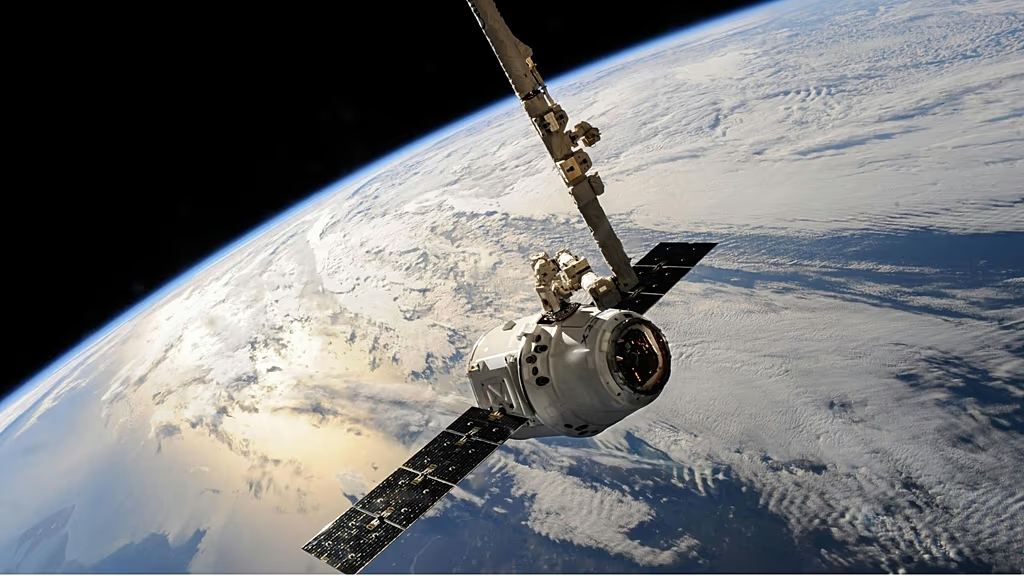
A recent incident in low Earth orbit has highlighted the growing risks of space congestion. Elon Musk’s SpaceX Starlink satellites narrowly avoided a collision with two Chinese satellites, raising concerns among aerospace experts about orbital traffic management and the potential hazards posed by the increasing number of active satellites.
The Near-Miss Event
According to aerospace analysts, the near-collision occurred when multiple Starlink satellites were passing through a region crowded with operational Chinese communications and Earth observation satellites. Automated collision-avoidance systems detected the threat in time, allowing the Starlink satellites to execute evasive maneuvers, preventing what could have been a catastrophic orbital incident.
SpaceX officials reportedly confirmed that no satellites were damaged and that the maneuver was routine but emphasized the incident as a reminder of the challenges of coordinating orbital traffic in an increasingly busy space environment.
Growing Orbital Congestion
The incident underscores the rapid expansion of commercial satellite constellations. SpaceX’s Starlink network alone now consists of tens of thousands of satellites, while China, the U.S., and other nations continue launching satellites for communication, navigation, and Earth observation purposes.
Experts warn that without careful coordination, satellite collisions could generate space debris, which poses long-term risks for both commercial and scientific missions. Even small fragments can travel at tens of thousands of kilometers per hour, threatening satellites, space stations, and crewed missions.
Collision-Avoidance Measures
Starlink satellites are equipped with autonomous navigation systems capable of detecting potential collisions and executing automated adjustments. These systems use radar and tracking data to calculate risk and maneuver satellites when necessary.
In this instance, the Starlink network successfully avoided the Chinese satellites, demonstrating the effectiveness of automated collision-avoidance protocols. However, the incident highlights the need for international coordination as orbital traffic increases.
Global Implications
This near-miss is not just a technical issue—it also carries geopolitical and strategic implications. As space becomes increasingly commercialized and militarized, incidents involving satellites from different nations could escalate tensions or spark diplomatic disputes.
International space agencies and commercial operators have been advocating for:
- Shared tracking databases for real-time satellite positioning
- Standardized orbital traffic rules
- Improved debris mitigation protocols
Experts emphasize that proactive measures are essential to ensure the long-term sustainability of orbital space.
Looking Ahead
With the number of active satellites expected to grow exponentially over the next decade, incidents like the Starlink near-collision are likely to become more frequent unless global standards are adopted. Aerospace authorities are calling for enhanced collaboration between nations and companies to monitor, coordinate, and regulate satellite movements.
The Starlink incident serves as a stark reminder that Earth’s orbit is a finite and increasingly crowded resource, and responsible stewardship is crucial to prevent catastrophic collisions in the years ahead.
















Leave a Reply