

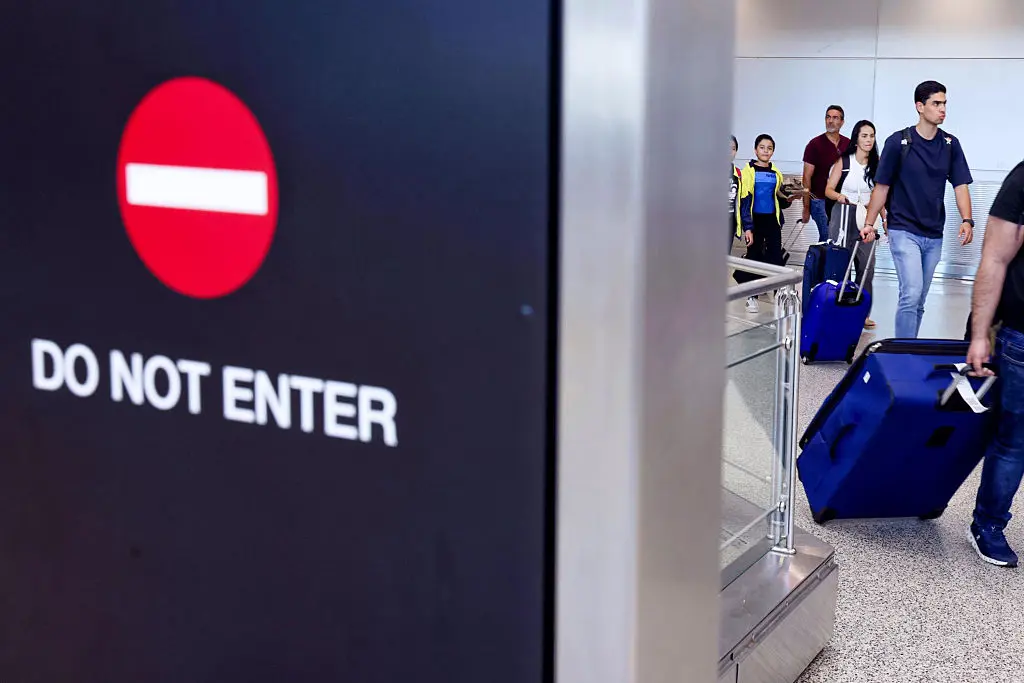
The United States has significantly widened its travel restrictions under an expanded policy announced by former President Donald Trump, bringing dozens of countries under new immigration and entry limits. The move revives and broadens earlier travel bans, introducing full entry prohibitions for some nations and partial visa restrictions for others, based on U.S. government assessments of security cooperation, identity verification, and visa overstay rates.
In total, 39 countries and one governing authority are affected under the expanded measures.
Countries Under a Full U.S. Travel Ban
Citizens of the following countries are barred from entering the United States and from receiving new immigrant or non-immigrant visas, with limited exceptions such as diplomats or cases deemed to be in the U.S. national interest:
- Afghanistan
- Burkina Faso
- Chad
- Equatorial Guinea
- Eritrea
- Haiti
- Iran
- Laos
- Libya
- Myanmar (Burma)
- Niger
- Republic of the Congo
- Sierra Leone
- Somalia
- South Sudan
- Sudan
- Syria
- Yemen
In addition, individuals traveling on documents issued by the Palestinian Authority are also subject to a full entry ban under the expanded policy.
Countries Facing Partial Travel and Visa Restrictions
Nationals from the following countries are not completely banned but face tighter screening, limits on certain visa categories, or restrictions on immigrant and non-immigrant travel:
- Angola
- Antigua and Barbuda
- Benin
- Burundi
- Cuba
- Dominica
- Gabon
- Gambia
- Ivory Coast
- Malawi
- Mauritania
- Nigeria
- Senegal
- Tanzania
- Togo
- Tonga
- Venezuela
- Zambia
- Zimbabwe
These partial restrictions may affect tourist, student, business, or immigrant visas, depending on individual circumstances and visa type.
Why These Countries Were Included
According to U.S. officials, the expanded travel ban is based on concerns such as:
- Weak identity verification systems
- Limited information-sharing with U.S. authorities
- High rates of visa overstays
- Security and governance challenges
The administration has stated that the list may be revised over time, with countries potentially removed if they meet U.S. security and cooperation benchmarks.
Global Reaction and Impact
The expansion has drawn strong reactions worldwide. Supporters argue it strengthens national security and immigration enforcement, while critics say it disproportionately impacts developing nations, refugees, and families with cross-border ties. Immigration advocates warn the policy could disrupt education, employment, and humanitarian pathways for thousands of people.
As the measures take effect, governments, travelers, and international organizations continue to assess the long-term diplomatic and human impact of the expanded ban.









Leave a Reply