

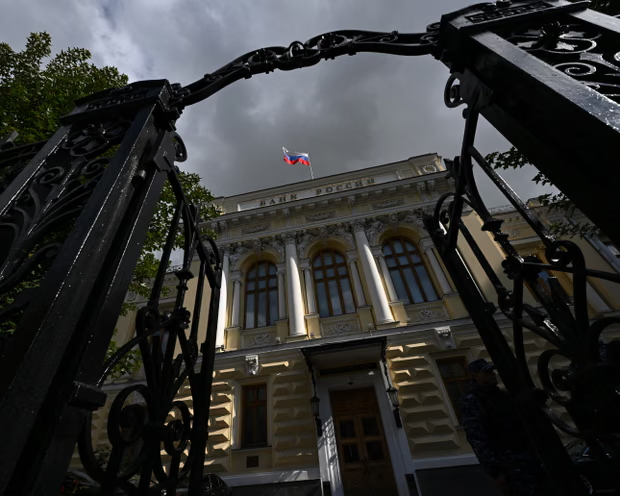
As the war in Ukraine drags on, a new and contentious battle is unfolding inside the European Union—this time over money. Specifically, tens of billions of euros in Russian state assets frozen across Europe since the invasion of Ukraine. While there is broad agreement that Russia should ultimately pay for the destruction it has caused, EU governments are sharply divided over whether and how those frozen funds can be used to support Ukraine right now.
What Assets Are Frozen—and Where
After Russia launched its full-scale invasion of Ukraine, the EU and its allies froze vast amounts of Russian financial assets held in Western jurisdictions. A large share of these funds belongs to the Russian central bank and is immobilized in European financial institutions, particularly clearing houses that hold government bonds and cash reserves.
The frozen assets themselves cannot be freely accessed or moved, but they continue to generate interest and profits. It is these profits—rather than the original capital—that have become the focal point of the current dispute.
The Case for Using the Money
Several EU countries argue that Russia, as the aggressor, should bear responsibility for helping rebuild Ukraine. Supporters of the plan say using the profits from frozen Russian assets would provide Ukraine with a steady source of funding for military support, reconstruction, and basic state functions—without directly dipping into EU taxpayers’ pockets.
Proponents also argue that focusing on the profits, rather than seizing the assets outright, reduces legal risk and sends a strong political signal that aggression carries financial consequences.
Why Some EU States Are Nervous
Opponents within the EU warn that even using profits sets a dangerous precedent. They argue that central bank assets are protected under international law and that bending those rules could undermine trust in Europe’s financial system. Countries with major financial centers worry that foreign states might pull reserves out of the EU if they fear political confiscation in future disputes.
There are also concerns about retaliation. Critics caution that Russia could respond by seizing Western assets still located on its territory, escalating economic damage beyond Ukraine.
Legal Grey Areas
At the heart of the row is a legal question: does freezing assets give governments the right to redirect the income they generate? EU lawyers have been tasked with designing a framework that can withstand court challenges while remaining consistent with international law.
Some legal experts say the extraordinary circumstances of Russia’s invasion justify exceptional measures. Others counter that weakening long-standing protections could have lasting consequences well beyond the current conflict.
A Compromise Taking Shape
To bridge the divide, EU leaders have increasingly focused on a middle-ground approach: keeping the principal frozen but channeling the windfall profits into a special fund for Ukraine. This approach aims to balance moral responsibility with financial and legal caution.
Even so, the plan requires unanimous agreement among EU member states, making negotiations slow and politically delicate.
Why It Matters
The debate is about more than Ukraine. It touches on the credibility of international law, the safety of global financial systems, and the EU’s willingness to take bold steps in response to war on its borders. How Europe resolves this issue could shape future sanctions regimes and redefine what frozen assets really mean in times of conflict.
For Ukraine, the outcome could determine access to billions of euros at a critical moment. For the EU, it is a test of unity, resolve, and the balance between principle and pragmatism.










Leave a Reply