

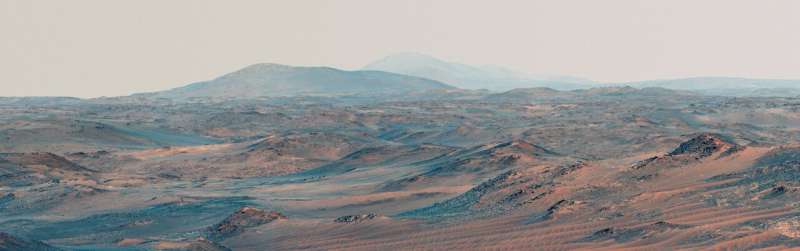
NASA’s Perseverance rover is gearing up for an extended mission on the Martian surface, ready to traverse miles of terrain and conduct unprecedented scientific exploration in the years ahead. The rover, which has been operational since its landing in February 2021, continues to exceed expectations in durability and scientific capability.
Miles of Exploration Ahead
Engineers and mission planners are charting new routes across Jezerro Crater, where Perseverance has been studying sedimentary rocks, ancient river deltas, and potential biosignatures. Over the coming years, the rover is expected to cover several more kilometers, venturing into previously unexamined regions of the crater.
“Perseverance was designed to last at least one Martian year, but its systems are performing so well that we’re confident it can explore for many more years,” said a NASA spokesperson. “Every mile it travels expands our understanding of Mars’ history and potential for life.”
Science Goals for the Road Ahead
Perseverance’s mission is multifaceted, combining geology, astrobiology, and planetary science. Key objectives for the coming years include:
- Sample Collection: The rover continues to gather rock and soil samples to be returned to Earth by future missions. These samples may hold clues to past microbial life.
- Atmospheric Studies: Perseverance is analyzing Mars’ thin atmosphere to understand climate evolution and the loss of water over billions of years.
- Terrain Mapping: Using high-resolution cameras and LiDAR, the rover will map the Martian surface in 3D, helping future missions navigate safely.
- Technological Demonstrations: The rover continues to support experiments, including the Ingenuity helicopter, which tests aerial exploration on Mars.
Engineering Resilience
Perseverance’s extended mission is made possible by its robust engineering. Its RTG nuclear power source ensures steady energy supply, while advanced mobility systems allow it to traverse sand, rocks, and slopes. The rover’s instruments have also shown remarkable longevity, with minimal degradation despite the harsh Martian environment.
A Glimpse into Mars’ Past and Future
By exploring new terrain and collecting additional samples, Perseverance aims to reveal Mars’ geological and climatic history. Scientists hope to understand how the planet transitioned from a warmer, wetter environment to the arid, frozen world we see today. This knowledge will inform the planning of future human missions and the search for life beyond Earth.
Looking Ahead
As Perseverance prepares to roll farther across Jezero Crater, the mission promises to deliver years of groundbreaking discoveries. Each mile traversed, each sample collected, and each image captured brings humanity closer to answering fundamental questions about the Red Planet and its potential to host life.
The rover’s journey is a testament to human ingenuity, perseverance, and the enduring quest to explore the cosmos.















Leave a Reply