

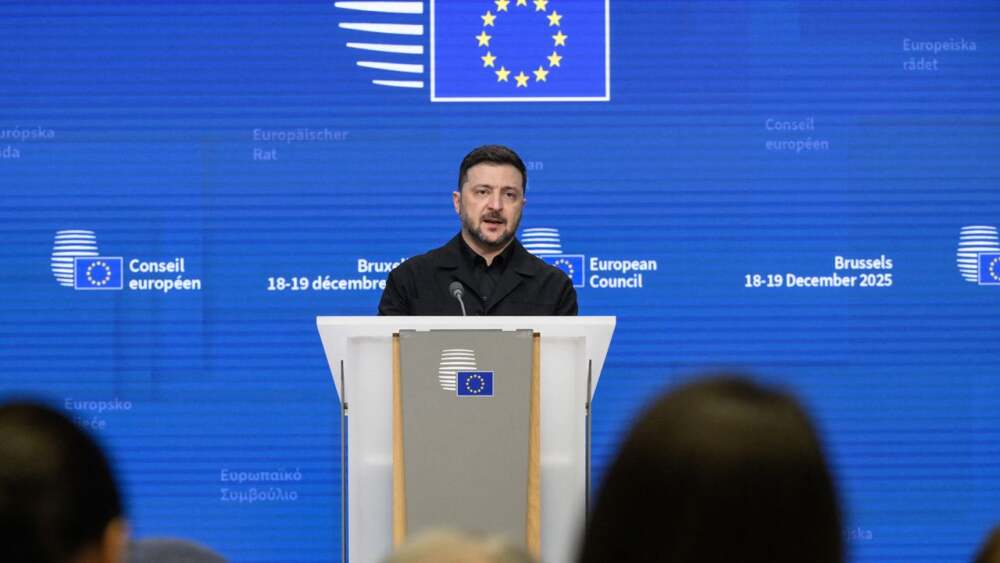
European Union leaders have reached a long-awaited agreement to secure continued financial support for Ukraine, ending weeks of political deadlock at a moment when Russian President Vladimir Putin was addressing the nation in his annual end-of-year news conference.
The funding deal, approved after intense negotiations among EU member states, ensures that Ukraine will continue to receive vital economic assistance to maintain government operations, stabilize its currency, and support reconstruction efforts amid the ongoing war. The agreement was seen as a critical test of European unity, particularly as divisions within the bloc had delayed approval and raised concerns about the sustainability of long-term aid.
European officials described the compromise as a reaffirmation of the EU’s commitment to Ukraine’s sovereignty and security. The package is designed to provide predictable, multi-year funding, allowing Ukrainian authorities to plan budgets and essential services despite the uncertainty of the conflict. Diplomats involved in the talks said safeguards were included to address concerns from skeptical member states over oversight and transparency.
The timing of the agreement coincided with President Putin’s annual televised news conference, during which he sought to project confidence and resilience at home. Speaking for several hours, Putin defended Russia’s actions in Ukraine, portrayed the conflict as a prolonged struggle with the West, and insisted that Russia’s economy and military remained strong despite sanctions and battlefield setbacks.
In his remarks, Putin dismissed Western support for Ukraine as unsustainable, suggesting that political fatigue and economic pressures would eventually weaken European resolve. He also framed Russia as open to negotiations, while repeating demands that Kyiv and its allies have previously rejected as unacceptable.
Analysts noted the contrast between the two developments: while Putin emphasized endurance and defiance, the EU’s agreement signaled that European backing for Ukraine remains intact heading into the next phase of the war. The deal also comes as Ukraine faces mounting challenges, including infrastructure damage, energy shortages, and uncertainty over future military assistance from international partners.
Ukrainian officials welcomed the EU decision, calling it a crucial lifeline during a difficult winter period. They stressed that continued financial stability is as essential as military aid, enabling the government to pay salaries, pensions, and emergency services while defending the country.
The parallel events highlighted the broader geopolitical struggle shaping the conflict. As Russia seeks to influence perceptions through messaging and diplomacy, the EU’s funding agreement underscored a strategic choice to translate political statements into concrete financial commitments.
With no immediate end to the war in sight, European leaders acknowledged that maintaining unity will remain a challenge. Still, they framed the deal as evidence that, despite internal disagreements, the bloc is prepared to sustain support for Ukraine as long as necessary.








Leave a Reply