

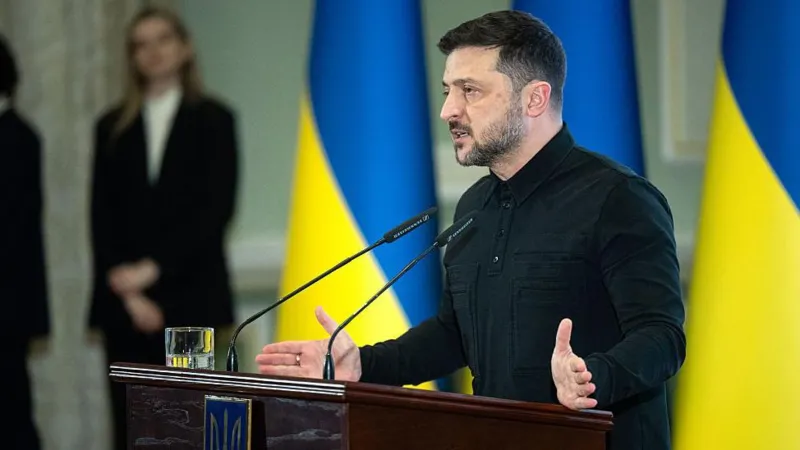
Ukrainian President Volodymyr Zelensky has outlined a new peace initiative that includes the possible creation of demilitarised zones, marking a notable evolution in Kyiv’s approach to ending the war with Russia. While Ukrainian officials insist the plan does not compromise national sovereignty, the proposal suggests a willingness to explore security arrangements aimed at reducing active fighting and protecting civilians.
According to people familiar with the discussions, the concept of demilitarised areas would involve clearly defined buffer zones along contested front lines, monitored by international observers and subject to strict enforcement mechanisms. The goal would be to limit the presence of heavy weapons and combat units, lowering the risk of escalation while political negotiations continue.
Balancing Peace and Security
Zelensky has repeatedly stated that any peace plan must guarantee Ukraine’s long-term security and territorial integrity. In recent remarks, he emphasized that demilitarised zones would not mean freezing the conflict or legitimizing occupation, but rather creating space for diplomacy without daily military clashes.
“These measures are about saving lives and creating conditions for a just peace,” a senior Ukrainian official said, adding that Kyiv remains firm on its demand for the withdrawal of foreign troops from Ukrainian territory.
The proposal reflects mounting pressure to find pathways toward de-escalation as the conflict stretches on, exacting a heavy toll on Ukraine’s economy, infrastructure, and population.
International Role and Oversight
Central to the plan is the involvement of international partners. Ukrainian diplomats are advocating for robust monitoring by neutral observers, potentially under a multinational or United Nations-backed framework. Such oversight would be designed to verify compliance, investigate violations, and provide transparency to both sides.
Western allies have reacted cautiously, welcoming any effort to reduce civilian harm while stressing that Ukraine must negotiate from a position of strength. Some officials privately acknowledge that demilitarised zones could help stabilize volatile areas, but warn they would require ironclad guarantees to prevent abuse or covert militarization.
Moscow’s Likely Response
Russia has not formally responded to the latest elements of the peace proposal, but analysts expect skepticism. Previous attempts at ceasefires and buffer arrangements have collapsed amid accusations of violations. Critics argue that demilitarised zones could be exploited if not backed by credible enforcement and consequences for breaches.
Ukrainian officials appear aware of those risks and have signaled that any agreement would need clear timelines, enforcement mechanisms, and international backing before implementation.
A Tactical Adjustment, Not a Retreat
Supporters of Zelensky’s approach say the proposal represents a tactical adjustment rather than a retreat from Ukraine’s core objectives. By putting forward a detailed framework for demilitarised zones, Kyiv may be seeking to demonstrate flexibility to international partners while maintaining firm red lines on sovereignty and security guarantees.
As diplomatic efforts continue behind the scenes, the plan underscores a growing recognition that military and political strategies must move in parallel. Whether demilitarised zones can serve as a bridge toward a broader settlement remains uncertain, but the initiative signals Kyiv’s intent to keep diplomacy alive even as the war continues.











Leave a Reply