

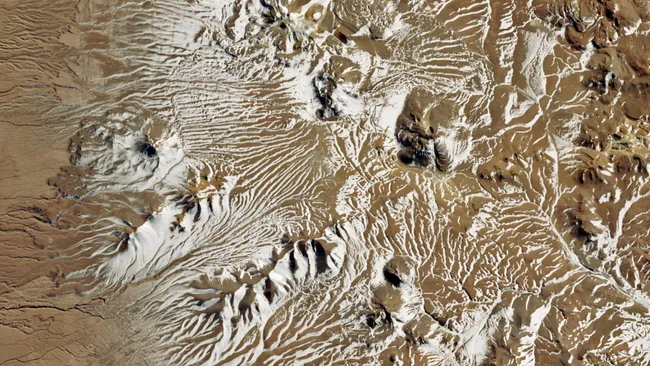
In an extraordinary meteorological event, a rare dusting of snow has covered parts of the Atacama Desert in Chile, one of the driest regions on Earth. The snowfall, which surprised local residents and scientists alike, has temporarily shut down one of the world’s most significant radio telescopes, highlighting both the fragility and the scientific importance of infrastructure in extreme environments.
A Meteorological Anomaly
The Atacama Desert is famous for its extreme aridity, with some areas receiving less than 1 millimeter of rainfall per year. Snowfall in this desert is exceedingly rare, and the event has prompted meteorologists to study the unusual weather patterns that caused it. Experts point to a combination of unusually cold temperatures, moisture from the Pacific Ocean, and shifting atmospheric currents as contributing factors.
Satellite imagery captured by Earth observation programs shows a thin but striking layer of white covering areas that are typically barren and brown. Scientists emphasize that while the snowfall is light, it is a stark deviation from the region’s usual climate and could offer insights into atmospheric variability and the effects of climate change on desert ecosystems.
Impact on the Radio Telescope
The snowfall forced a temporary shutdown of the Atacama Large Millimeter/submillimeter Array (ALMA), one of the largest and most advanced radio observatories in the world. ALMA consists of 66 high-precision antennas spread across the desert plateau, designed to study the cold universe by detecting radio waves from distant galaxies, stars, and planetary systems.
The antennas are sensitive to moisture, and even a light coating of snow can interfere with their operations. Engineers and technicians halted observations to prevent potential damage to delicate equipment, including the antenna receivers and the sophisticated cooling systems required for high-precision measurements. While the shutdown is temporary, it underscores the vulnerability of cutting-edge scientific infrastructure to natural events, even in regions historically known for stable conditions.
Significance for Science and Environment
Beyond disrupting astronomical research, the rare snow has piqued the interest of ecologists and climatologists. Snowfall provides a temporary source of moisture in one of the most arid landscapes on Earth, which could influence microbial life, soil chemistry, and local flora. Scientists hope to study these short-lived environmental changes to better understand how life adapts in extreme conditions.
For the astronomical community, the event also highlights the importance of resilience and adaptive planning in high-tech observatories. Engineers continuously monitor weather conditions and have contingency protocols for rare events such as snowfall, strong winds, and sandstorms, ensuring that science can continue safely after environmental interruptions.
Global Perspective
The snow in the Atacama Desert serves as a reminder of the planet’s increasingly unpredictable weather patterns. While the desert has experienced occasional snowfall in the past, the intensity and frequency of such events appear to be shifting, prompting discussions about climate anomalies and their long-term effects on ecosystems, human infrastructure, and scientific research stations.
Conclusion
The rare snowfall in the Atacama Desert has captivated scientists, residents, and observers worldwide. While it has temporarily halted operations at one of the globe’s premier astronomical facilities, it also offers a unique opportunity to study environmental responses in one of Earth’s harshest landscapes. As the snow melts and life in the desert returns to its arid normal, researchers will continue to monitor its effects, gaining valuable insights into both climate variability and the resilience of human technology in extreme conditions.















Leave a Reply