

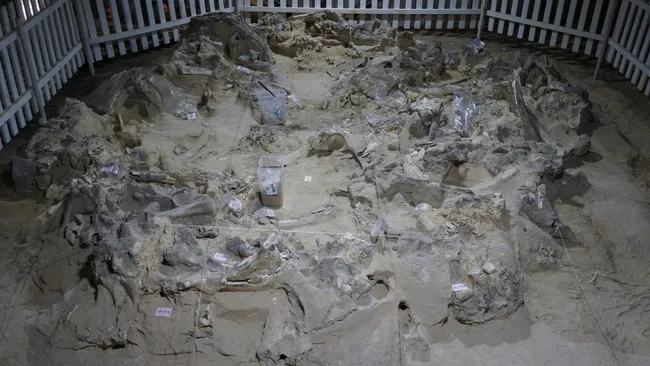
Archaeologists in Ukraine have uncovered evidence that humans living during the last Ice Age constructed dwellings out of mammoth bones and tusks nearly 18,000 years ago, providing a striking glimpse into prehistoric ingenuity and adaptation. The discovery sheds light on how early humans survived in extreme cold climates and offers new insights into the social and cultural life of Ice Age communities.
The Discovery
The site, located in the western region of Ukraine, has revealed the remains of several semi-subterranean structures meticulously built using the bones and tusks of woolly mammoths. These massive creatures, which roamed the mammoth steppe during the Upper Paleolithic period, provided both food and essential building materials for early humans.
Excavations indicate that the dwellings were circular or oval in shape, with walls formed by carefully arranged mammoth skulls, femurs, and tusks. The interior likely included hearths for warmth, storage spaces, and areas for sleeping, suggesting that these were not temporary shelters but well-organized living spaces capable of housing extended families or small communities.
Adaptation to Harsh Environments
During the Last Glacial Maximum, Europe experienced extremely cold temperatures, often plunging below -20°C in winter. In such conditions, natural shelters like caves were limited, and conventional wooden structures were insufficient to withstand heavy snowfall and frigid winds. Using mammoth bones provided both structural strength and insulation, allowing Ice Age humans to survive in one of the harshest climates on Earth.
“The ingenuity displayed by these prehistoric communities is astonishing,” said [Archaeologist Name], lead researcher on the excavation. “They were able to repurpose the remains of large animals not just for food, but to create durable, functional homes that could protect them from extreme cold.”
Cultural and Social Insights
The construction of mammoth bone dwellings also offers clues about the social organization and cultural practices of Ice Age humans. The scale and complexity of the structures suggest coordinated group labor and a degree of planning that points to sophisticated communal living.
Artifacts found within and around the dwellings—including stone tools, decorative ornaments, and evidence of butchery—indicate that these sites served as centers of daily life, food preparation, and possibly ritual activities. Researchers hypothesize that the use of mammoth bones in construction may have held symbolic significance, reflecting the importance of these animals in survival, culture, and spiritual beliefs.
Archaeological Significance
Discoveries like the Ukrainian mammoth bone dwellings are rare but invaluable, helping scientists reconstruct the lives of Ice Age humans. Similar sites have been found in other parts of Eastern Europe, including in Russia and Poland, but the Ukrainian finds are notable for their preservation and the apparent sophistication of the structures.
Radiocarbon dating confirms that the dwellings were in use approximately 18,000 years ago, placing them squarely in the late Upper Paleolithic period. This timing aligns with a period of rapid cultural and technological development among hunter-gatherer societies, including advances in tool-making, art, and social organization.
Implications for Understanding Human History
These findings challenge earlier assumptions about the capabilities of prehistoric humans, demonstrating that they could engineer durable and practical shelters using available resources—even in environments previously thought too harsh for permanent settlement. The study of these dwellings also contributes to broader knowledge of human adaptation, resilience, and innovation during periods of climatic stress.
Conclusion
The mammoth bone dwellings of Ice Age Ukraine stand as a testament to human ingenuity and survival in the face of extreme conditions. Beyond their practical function, these structures reveal a culture capable of planning, collaboration, and symbolic expression, offering a window into a world that existed nearly 18,000 years ago. As archaeologists continue to study these remarkable sites, we gain a deeper appreciation for the resourcefulness and creativity of our earliest ancestors.

















Leave a Reply