

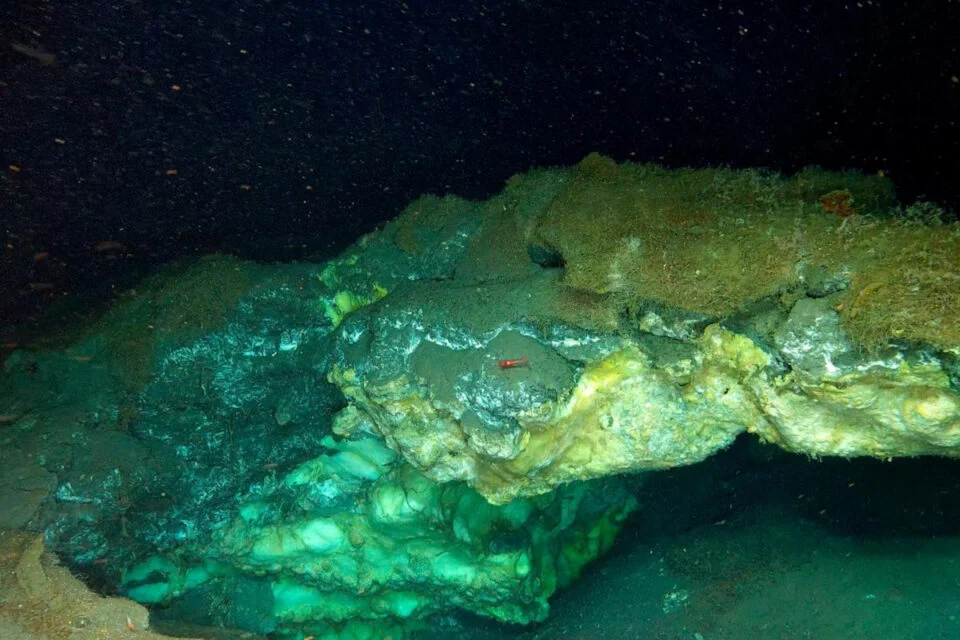
Scientists exploring the Arctic Ocean have uncovered the deepest hydrothermal vent ever recorded in the region, revealing an unexpected hotspot of life in one of Earth’s harshest environments. Located at depths exceeding 4,000 meters, the vent challenges previous assumptions about where complex ecosystems can exist and provides new insights into the adaptability of life under extreme conditions.
Hydrothermal vents are fissures on the seafloor that release mineral-rich, superheated water, creating unique habitats independent of sunlight. While vents in the Pacific and Atlantic oceans have been studied extensively, the Arctic’s extreme cold, thick ice cover, and logistical challenges have left it largely unexplored—until now.
A Hidden Oasis of Life
The newly discovered vent is remarkable not only for its depth but also for the diversity and abundance of life it supports. Remotely operated vehicles (ROVs) and deep-sea cameras captured dense colonies of tube worms, clams, and crustaceans thriving around the vent’s chimneys. Microbial mats, fueled by chemical energy from the vent fluids, form the base of a complex food web that sustains these communities.
“What’s striking is how vibrant this ecosystem is, despite the extreme pressures, near-freezing temperatures, and total darkness,” said Dr. Elena Sorensen, lead researcher of the expedition. “It’s a reminder that life can flourish in ways we’re only beginning to understand.”
Extreme Conditions, Extraordinary Adaptations
The Arctic vent presents unique challenges compared to vents in warmer oceans. The superheated water, reaching temperatures above 350°C (662°F), mixes with the near-freezing Arctic waters, creating sharp thermal gradients. Organisms here have evolved specialized proteins and metabolic pathways to survive rapid temperature shifts and chemical toxicity, offering a living laboratory for studying resilience and adaptation.
Microbes thriving near the vent convert sulfur and other minerals into energy, forming the foundation for larger animals such as shrimp, crabs, and mollusks. This chemosynthetic ecosystem operates entirely without sunlight, illustrating how life can persist in extreme environments—a discovery with implications for understanding life on other planets and icy moons like Europa and Enceladus.
Scientific Significance
The discovery of this vent expands knowledge of Arctic deep-sea geology and biology. Researchers are studying how vent activity contributes to mineral cycling and carbon sequestration in polar oceans. It also provides a baseline for monitoring the effects of climate change on fragile deep-sea ecosystems, as Arctic warming accelerates ice melt and alters ocean currents.
“This vent is a window into a largely hidden world,” Dr. Sorensen explained. “By studying it, we can learn about the limits of life on Earth and gain insights that may inform our search for life elsewhere in the solar system.”
The expedition underscores the importance of exploring extreme environments, not only to advance scientific understanding but also to inspire conservation efforts. The Arctic deep sea, once considered barren and inhospitable, is now recognized as a dynamic and biologically rich frontier worthy of protection.
As scientists continue to analyze samples and map the surrounding seafloor, this discovery is likely just the beginning. The Arctic’s hidden vents may harbor even more extraordinary ecosystems, reshaping how we understand life’s resilience on our planet.















Leave a Reply