

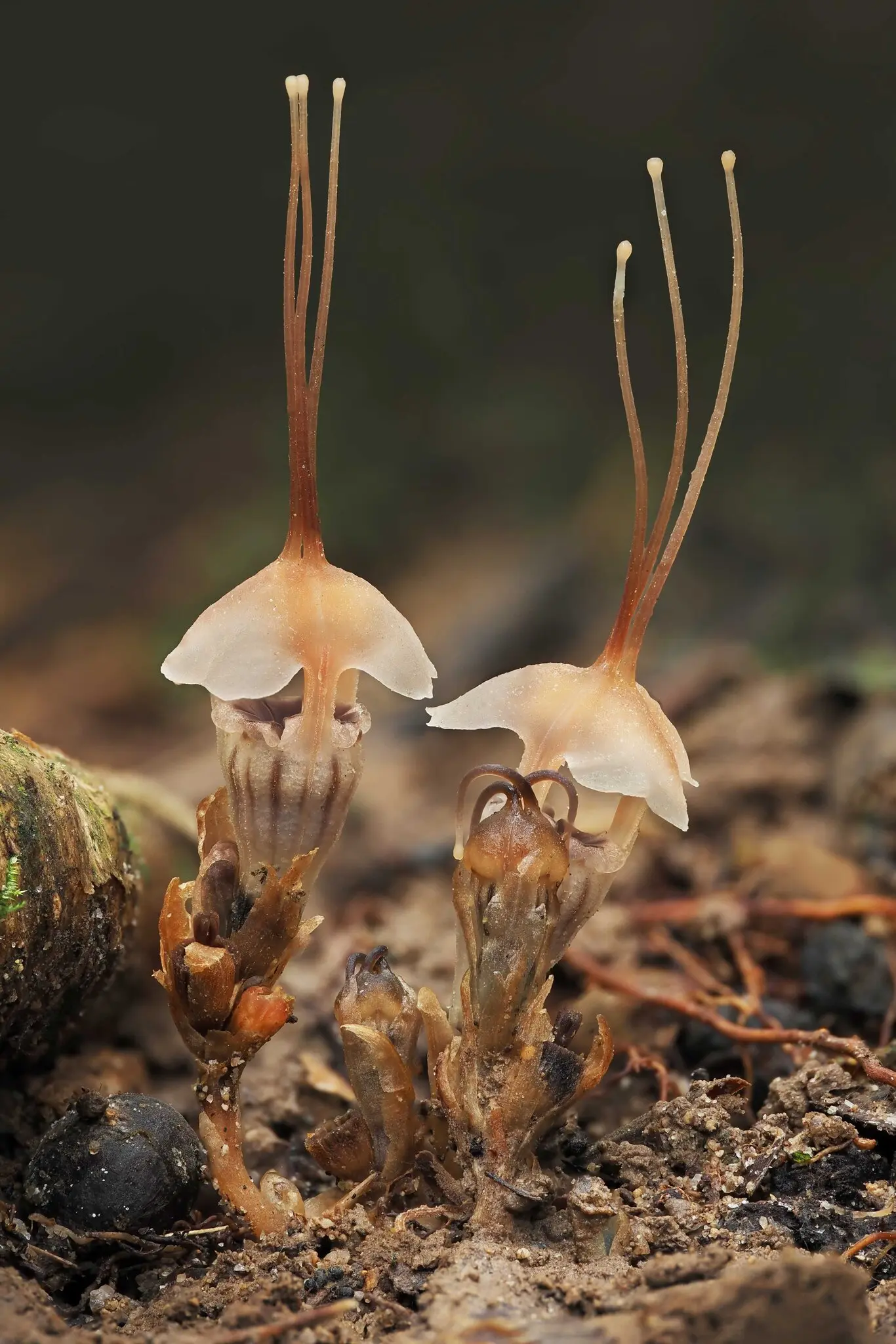
Botanists have unveiled a remarkable new plant species nicknamed the “Fairy Lantern”, a tiny yet captivating flower that has captured attention not just for its delicate appearance, but for its unusual parasitic lifestyle. Found deep within forested regions, this plant challenges conventional notions of how flora survives and interacts with its environment.
Unlike typical plants that rely on photosynthesis, the Fairy Lantern is a mycoheterotroph — a plant that obtains nutrients by parasitizing fungi in the soil. These fungi, in turn, often form mutualistic relationships with trees, meaning the Fairy Lantern indirectly siphons energy from nearby trees without ever producing chlorophyll or relying on sunlight. The result is a glowing, lantern-like flower that appears almost magical against the dim forest floor.
A Botanical Marvel
The Fairy Lantern’s delicate blossoms, often translucent and pale, hang elegantly from slender stems, giving the impression of tiny lanterns suspended in midair. Observers describe a ghostly luminescence, particularly in shaded areas, creating a surreal effect that has inspired its whimsical name. While small, each plant represents a complex ecological strategy honed over millennia, turning parasitism into a survival advantage.
“This species is a fascinating example of nature’s ingenuity,” said Dr. Leila Nguyen, a lead botanist on the discovery team. “It completely abandons photosynthesis yet thrives by forming relationships with soil fungi, illustrating the incredible diversity of life strategies in plants.”
Ecological Significance
The Fairy Lantern offers insights into the delicate balance of forest ecosystems. By tapping into fungal networks, the plant participates in a hidden web of energy exchange that links multiple species. Understanding these relationships can shed light on nutrient cycling, forest health, and the survival strategies of other cryptic species that remain largely unexplored.
Researchers emphasize that discoveries like this highlight the importance of preserving old-growth forests. Many mycoheterotrophic plants are highly sensitive to environmental disturbances, deforestation, and soil disruption. Protecting their habitats ensures that these unique species, and the intricate fungal networks they depend on, continue to thrive.
Mystique and Public Fascination
The Fairy Lantern has captured public imagination not only for its ecological quirks but also for its enchanting aesthetics. Nature photographers and plant enthusiasts are already dubbing it a “forest jewel,” and social media has helped spread images of the luminescent flowers worldwide. Its nickname and parasitic lifestyle spark curiosity and dialogue about the diverse strategies plants use to survive in competitive environments.
While the Fairy Lantern is small and easily overlooked, its discovery underscores a broader truth: even in well-studied ecosystems, nature still holds secrets waiting to be revealed. This tiny parasitic flower is a vivid reminder that the natural world is full of surprises, blurring the lines between fantasy and reality in our forests.

















Leave a Reply