

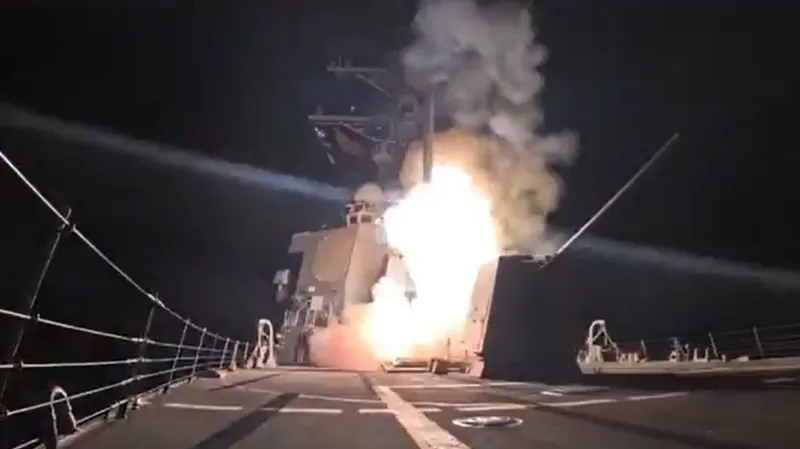
Nigeria has officially confirmed that the United States carried out targeted airstrikes against suspected ISIL-linked militants operating in the country’s northwest, marking a significant escalation in international involvement in a region long plagued by insecurity and armed violence.
According to Nigerian security officials, the strikes were conducted after intelligence sharing between Abuja and Washington identified remote militant camps believed to be used by fighters aligned with the Islamic State. The operations reportedly focused on sparsely populated areas where armed groups have taken advantage of difficult terrain and weak state presence to establish hideouts.
While Nigeria has faced insurgency for over a decade, the northwest has traditionally been associated more with banditry, kidnappings for ransom, and cattle rustling than with transnational jihadist groups. However, recent intelligence assessments suggest that ISIL has sought to exploit these criminal networks, offering funding, training, and ideological support in exchange for allegiance. Officials say the airstrikes were aimed at disrupting this growing convergence.
A spokesperson for Nigeria’s defense authorities stated that the government approved cooperation with foreign partners to prevent the northwest from becoming a new sanctuary for extremist organizations. The spokesperson emphasized that the strikes were “precise and intelligence-driven,” designed to minimize civilian harm while degrading the operational capacity of militant leaders.
U.S. officials, speaking through diplomatic channels, indicated that the action was part of a broader effort to prevent ISIL from expanding its footprint in West Africa. The group already maintains a strong presence in the Lake Chad Basin through its affiliate, commonly known as ISIL West Africa Province. Analysts warn that unchecked expansion into northwestern Nigeria could further destabilize the country and neighboring states.
Local residents in affected areas reported hearing explosions during the night, followed by heightened military patrols. Although casualty figures have not been officially released, Nigerian authorities claim several high-value targets were neutralized. Independent verification remains difficult due to restricted access and ongoing security operations.
The confirmation of U.S. strikes has sparked debate within Nigeria. Supporters argue that international assistance is necessary given the scale and sophistication of armed groups. Critics, however, caution that foreign military action could inflame anti-Western sentiment or lead to unintended consequences if civilian casualties occur.
Security experts note that airstrikes alone are unlikely to solve the crisis. They stress the importance of addressing underlying issues such as poverty, unemployment, arms trafficking, and weak local governance, which continue to fuel recruitment into both criminal gangs and extremist movements.
For now, Nigerian officials say cooperation with international partners will continue, but insist that sovereignty remains a priority. As the security landscape evolves, the strikes underscore growing concern that Nigeria’s complex internal conflicts are becoming increasingly intertwined with global extremist networks.









Leave a Reply