

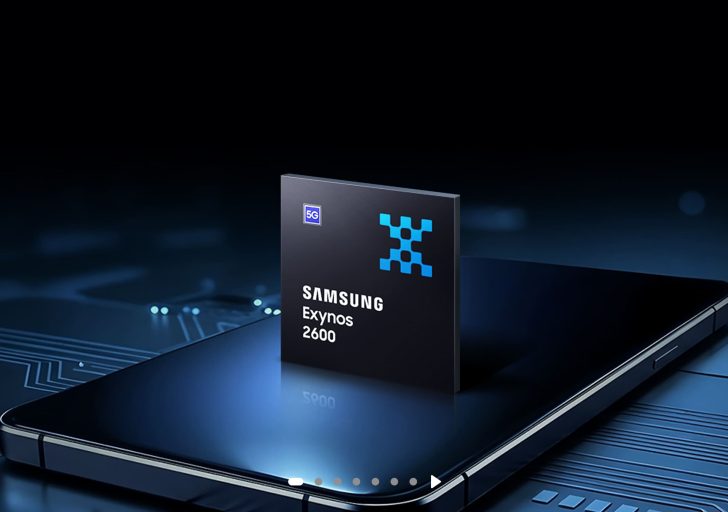
Samsung has introduced its latest System-on-Chip (SoC), the Exynos 2600, marking a major milestone in mobile and high-performance computing. The new chip is the first to integrate a customized version of AMD’s RDNA 4 graphics architecture, delivering a scaled-down but highly efficient variant that reportedly doubles compute performance compared to previous generations.
The Exynos 2600 is designed to meet the growing demand for advanced graphics and AI capabilities in smartphones, tablets, and other mobile devices. By leveraging AMD’s RDNA 4 design, Samsung aims to provide a powerful blend of energy efficiency and computational prowess, making it suitable for gaming, augmented reality, and AI-driven applications without sacrificing battery life.
Industry experts note that the collaboration between Samsung and AMD represents a convergence of mobile and desktop-class graphics performance. RDNA 4, originally developed for high-end desktop GPUs, has been optimized for the mobile environment, allowing the Exynos 2600 to deliver remarkable performance gains in a smaller, thermally efficient package. Samsung claims that the scaled-down RDNA 4 core enables up to 2x compute performance relative to previous Exynos GPUs, a leap that could redefine expectations for mobile graphics.
The SoC also integrates Samsung’s latest CPU cores, enhanced AI processing units, and advanced memory controllers to support demanding workloads. The combination of CPU, GPU, and AI acceleration ensures seamless multitasking, smooth gaming experiences, and faster processing for AI-based applications, including image recognition, natural language processing, and real-time analytics.
Analysts suggest that the Exynos 2600 could help Samsung strengthen its competitive position against rivals like Qualcomm and MediaTek, which have dominated the high-performance mobile chip market. The inclusion of AMD’s RDNA 4 architecture may also pave the way for more widespread adoption of desktop-grade graphics capabilities in mobile devices, bridging the gap between PC and smartphone performance.
Samsung emphasized that the chip’s architecture is designed with scalability in mind, allowing OEMs to deploy the SoC across a range of devices, from premium smartphones to tablets and gaming-focused gadgets. Early benchmarks reportedly show significant improvements in graphical rendering, AI inference, and energy efficiency, positioning the Exynos 2600 as a flagship solution for next-generation devices.
The Exynos 2600 launch is expected to intensify competition in the mobile SoC sector, particularly as consumers demand richer gaming experiences, higher AI performance, and extended battery life. Samsung’s integration of AMD’s advanced GPU technology signals a new era of collaboration between mobile and desktop computing, one where performance leaps may redefine what users expect from portable devices.
As the adoption of AI-driven apps, mobile gaming, and high-resolution media continues to grow, chips like the Exynos 2600 are likely to play a pivotal role in shaping the future of mobile computing, delivering desktop-grade performance in a compact, energy-efficient form factor.












Leave a Reply