

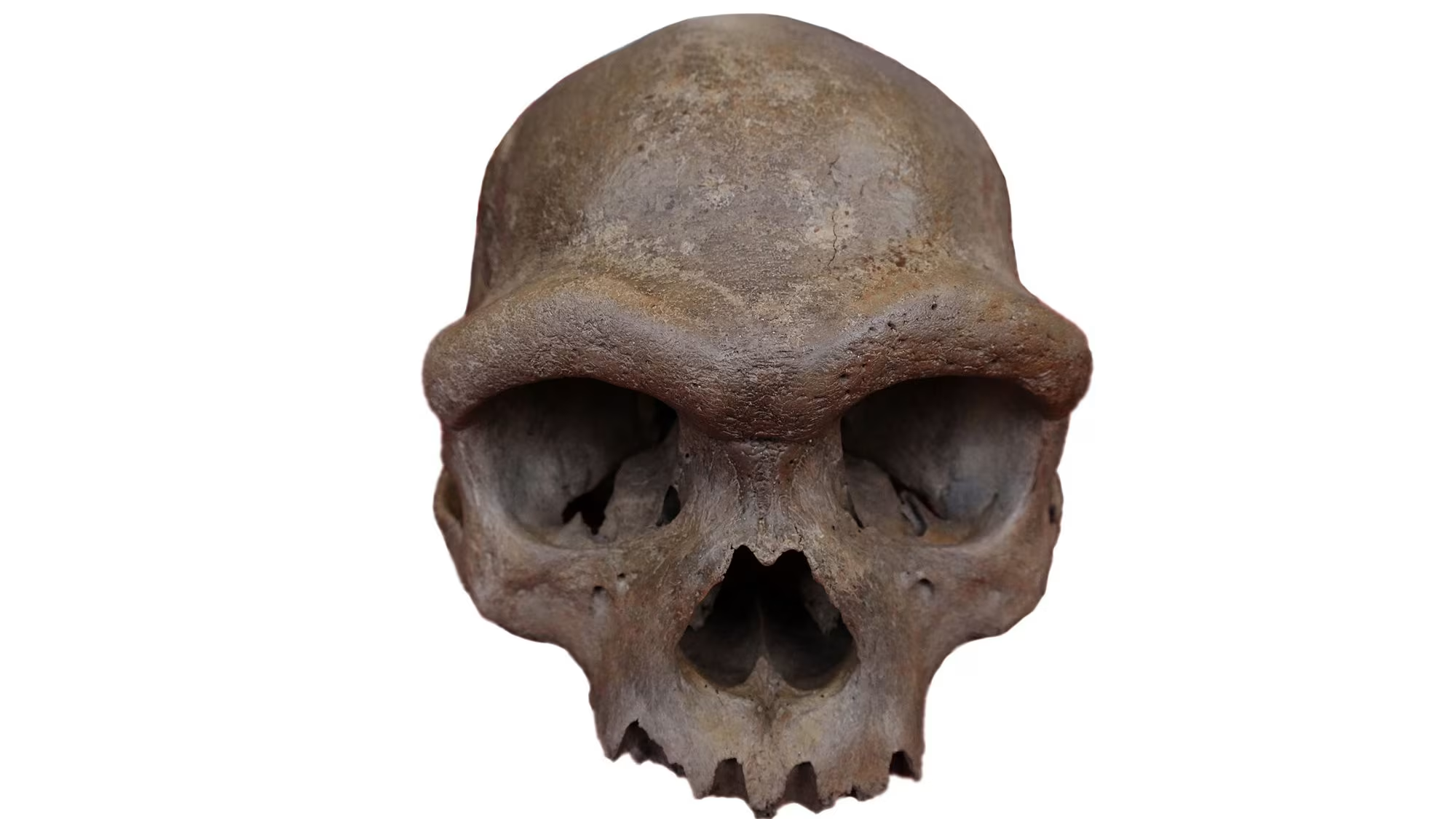
The study of human evolution has entered a groundbreaking phase in 2025, with a series of discoveries and technological advancements beginning to unravel one of science’s most enduring mysteries: how modern humans emerged and spread across the globe. Researchers report that recent findings are reshaping our understanding of migration patterns, interbreeding events, and the timeline of our species’ development.
One of the most significant contributions this year comes from advances in ancient DNA analysis. Scientists have successfully extracted and sequenced genetic material from previously inaccessible fossil specimens, providing unprecedented insight into the genetic makeup of early Homo sapiens and their interactions with other hominin species such as Neanderthals and Denisovans. The data suggest that interbreeding may have occurred more frequently and in more regions than previously thought, leaving subtle but critical imprints on modern human genomes.
Archaeological excavations across Africa, Asia, and Europe have complemented these genetic discoveries. Sites uncovered in 2025 have revealed tools, symbolic artifacts, and evidence of early social structures, indicating complex behavior and cultural development far earlier than prior estimates. These findings suggest that early humans were not only anatomically modern but also capable of advanced problem-solving and community organization.
Additionally, improvements in imaging and dating technologies have allowed researchers to refine the timeline of human migration. Sophisticated radiometric methods now provide more accurate dates for fossilized remains, while advanced 3D scanning reconstructs ancient skeletal structures in remarkable detail. These innovations have helped clarify how Homo sapiens dispersed from Africa, adapted to diverse environments, and coexisted with other hominins over tens of thousands of years.
The cumulative evidence from 2025 points to a more interconnected picture of human evolution. Rather than a linear progression from archaic species to modern humans, the emerging narrative emphasizes overlapping populations, frequent gene flow, and a mosaic of adaptive strategies. This challenges older models that presented human evolution as a straightforward path, highlighting instead a complex web of biological and cultural exchanges.
Researchers emphasize that while major pieces of the puzzle are falling into place, many questions remain. The origins of certain behavioral traits, the full extent of genetic contributions from extinct hominins, and the precise factors driving migration and adaptation continue to spark scientific debate. Nonetheless, 2025 marks a pivotal year, tipping the scales toward a deeper understanding of what it means to be human.
The discoveries also underscore the value of interdisciplinary collaboration, bringing together geneticists, archaeologists, anthropologists, and computational scientists. By integrating multiple lines of evidence, the scientific community is increasingly capable of reconstructing the nuanced story of our species’ past.
As research continues, the findings of 2025 are expected to influence not only academic study but also public understanding of human history. Museums, educational programs, and popular media may soon reflect a richer, more interconnected vision of human evolution, one that celebrates both our shared ancestry and the diversity of our early experiences across the globe.












Leave a Reply