

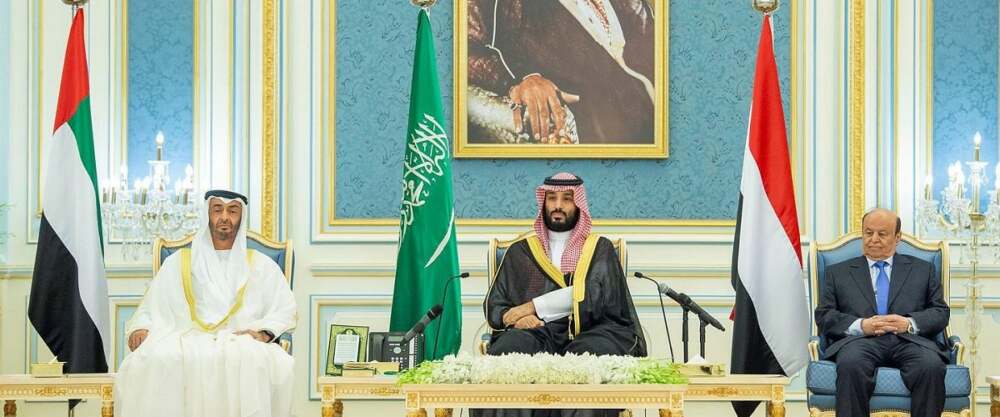
A long-simmering rift between Saudi Arabia and the United Arab Emirates has erupted into open confrontation in Yemen, exposing deep strategic differences between two former allies and adding a dangerous new layer to an already complex war. Once united by a shared goal of defeating the Houthi movement, Riyadh and Abu Dhabi are now backing opposing forces whose ambitions for Yemen’s future sharply diverge.
The latest escalation centers on Yemen’s eastern and southern regions, where Saudi military action has targeted forces supported by the UAE. These groups, most notably the Southern Transitional Council, advocate for autonomy or outright independence for southern Yemen. Saudi Arabia, by contrast, has consistently pushed for a unified Yemeni state under a central government aligned with its security interests.
This clash highlights how the Yemen conflict has evolved from a relatively clear-cut proxy war into a fragmented struggle involving competing regional agendas. Saudi Arabia views control of eastern provinces as critical to its border security and long-term influence. The UAE, meanwhile, has invested heavily in cultivating local partners, particularly in the south, to secure strategic ports, trade routes, and regional leverage.
The dispute is not merely ideological. Eastern Yemen contains vital energy infrastructure and oil resources, making territorial control economically and politically significant. Advances by UAE-backed groups into these areas have alarmed Riyadh, which sees such moves as undermining the balance of power and threatening its position in post-war Yemen.
For Yemenis, the fallout is grim. Years of war have already shattered the economy, displaced millions, and pushed large parts of the population into hunger and poverty. Renewed fighting between rival camps backed by powerful regional states risks intensifying displacement and further disrupting humanitarian aid flows. Aid agencies warn that any escalation between former coalition partners could deepen fragmentation and prolong civilian suffering.
Diplomatically, the confrontation underscores shifting power dynamics in the Gulf. Saudi Arabia and the UAE have increasingly pursued independent foreign policies, competing for regional influence from the Horn of Africa to the Middle East. Their divergence in Yemen reflects broader strategic recalculations, including differing approaches to regional security, economic ambition, and political Islam.
International observers fear that the rift could derail fragile efforts to stabilize Yemen. Instead of moving toward a comprehensive political settlement, the conflict risks splintering into parallel wars driven by rival external sponsors. Such a scenario would make reconciliation even harder and open space for extremist groups to exploit ongoing instability.
Despite public statements calling for restraint, trust between Riyadh and Abu Dhabi appears strained. Whether the two powers can manage their rivalry without turning Yemen into a battleground for intra-Gulf competition remains uncertain. What is clear is that the unity once projected by the Gulf coalition has fractured, reshaping the trajectory of one of the world’s most devastating conflicts.
As Yemen enters yet another volatile phase, the widening Saudi–UAE divide serves as a reminder that the war is no longer just about defeating a common enemy, but about competing visions for power, territory, and influence in the region.













Leave a Reply