

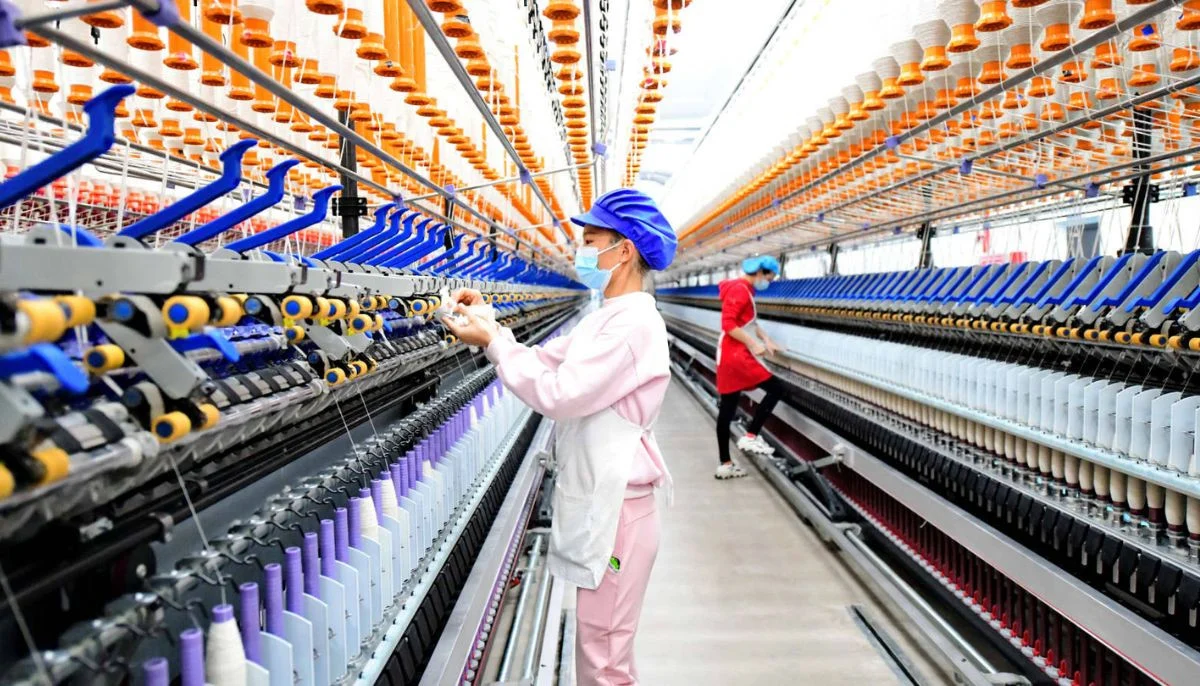
China’s industrial sector ended November 2025 on a worrying note, with corporate profits falling sharply, marking the steepest decline in more than a year. Industrial earnings dropped by approximately 13.1% year-on-year, signaling mounting challenges from weak domestic demand and persistent deflation that continue to pressure manufacturers across the country.
For the first eleven months of 2025, total industrial profits increased by only 0.1% compared with the same period in 2024, reflecting a sharp slowdown in economic momentum. While exports have maintained some resilience, domestic consumption and business investment remain sluggish, limiting growth and weighing heavily on corporate earnings.
Domestic Demand and Deflation Pressures
Soft consumer spending has been a key factor behind the profit slump. Despite government measures aimed at stimulating household consumption, retail growth has remained subdued, highlighting ongoing structural challenges in shifting China’s economy from investment- and export-led growth to a more consumption-driven model.
Deflation has further compounded difficulties for industrial firms. Factory-gate prices have remained in negative territory for several years, reducing profit margins even as production levels hold steady. This deflationary environment discourages price increases, intensifies competition, and limits incentives for expanding capacity or making new investments.
Sectoral Performance: Winners and Losers
Although the overall industrial picture is bleak, some sectors have demonstrated resilience. The automotive industry reported modest profit growth, supported by steady demand and improved efficiency. High-tech manufacturing also posted gains, reflecting the ongoing shift toward advanced and innovation-driven production.
However, these gains have been outweighed by severe declines in traditional and commodity-intensive sectors, such as coal mining and heavy industry, where profits have fallen sharply. This uneven performance underscores the structural transition occurring within China’s industrial economy.
Policy Response and Economic Outlook
China’s policymakers face a complex challenge in boosting domestic demand and countering deflation without creating financial imbalances. Targeted fiscal measures, support for small and medium enterprises, and policies to improve consumer confidence are being considered to help stabilize profits. Longer-term initiatives aim to encourage innovation, reduce overcapacity in legacy industries, and strengthen social safety nets, all designed to foster sustainable growth.
The industrial profit contraction also has broader implications for investment and employment. Weak earnings may discourage firms from expanding capacity or hiring new workers, potentially slowing economic growth further. The ability of the Chinese government to stimulate domestic demand while maintaining structural reforms will be critical in determining whether industrial profits can rebound in 2026.
Global Implications
China’s industrial performance remains a key indicator for global markets. Weakness in the industrial sector can influence commodity prices, trade balances, and supply chains worldwide. Analysts will be closely watching developments in early 2026 to assess whether domestic consumption picks up, deflationary pressures ease, and the industrial sector stabilizes, providing a foundation for sustained economic growth.

















Leave a Reply