

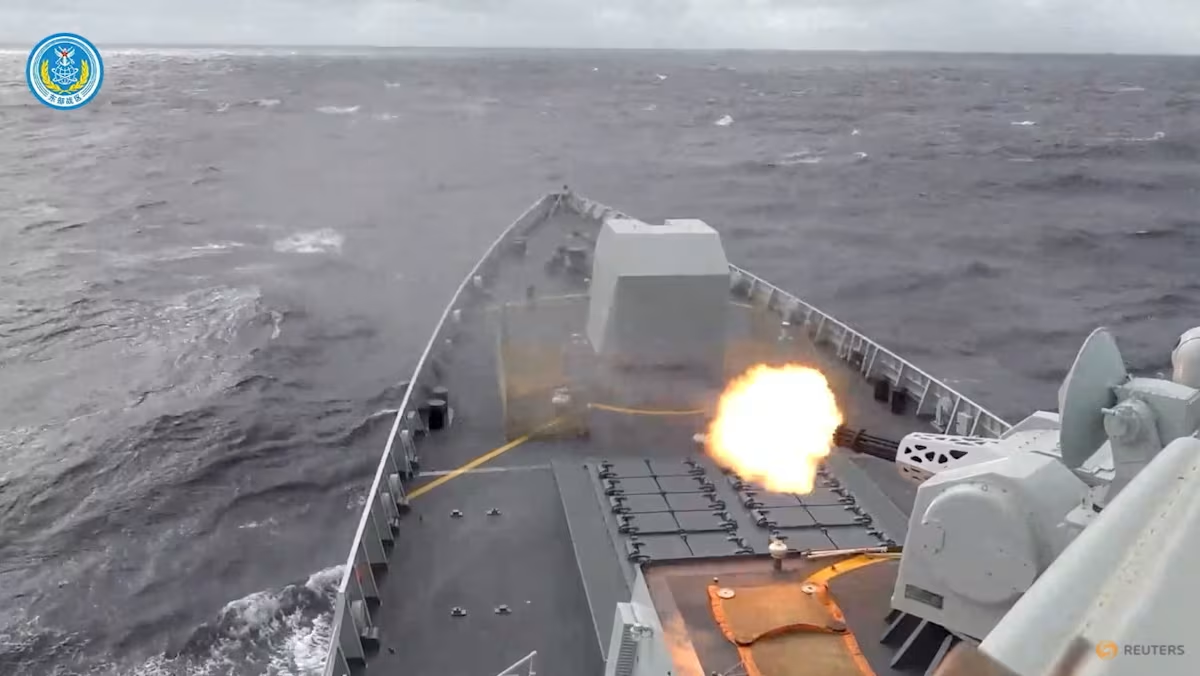
China has carried out a new round of large-scale military exercises around Taiwan, signaling a notable escalation in both intensity and intent compared with earlier drills. While Beijing has regularly used military maneuvers to assert its claims over the island, the latest exercises reflect a more advanced and operational approach that appears designed to rehearse real-world conflict scenarios.
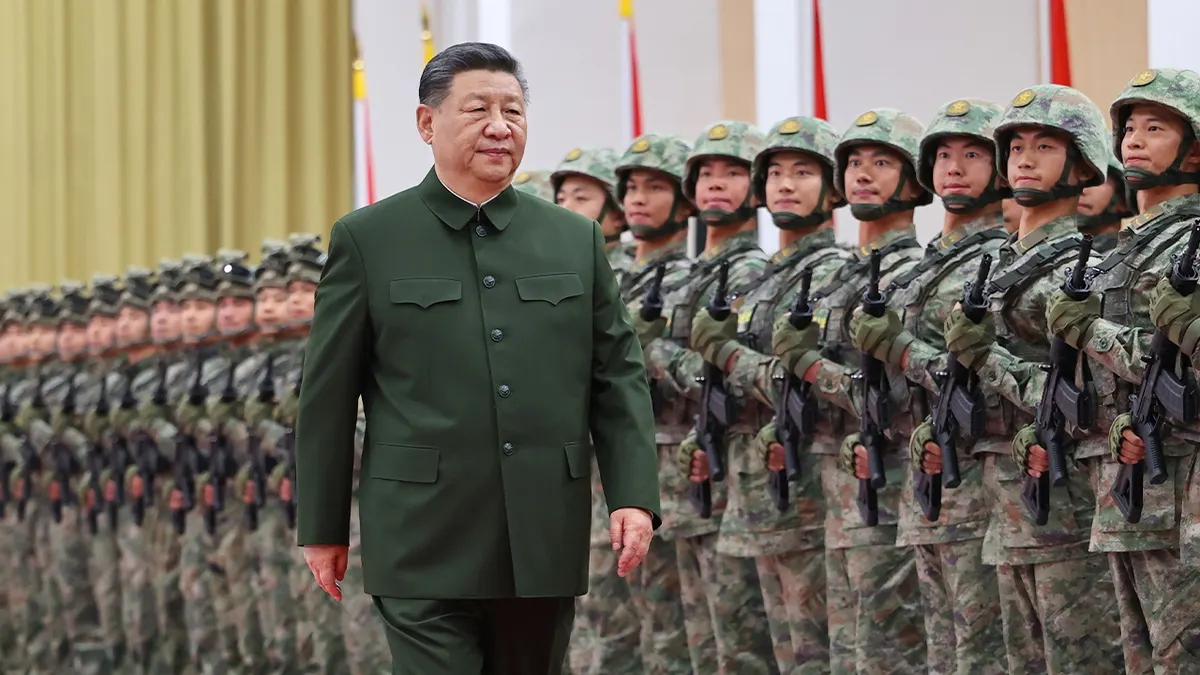
The drills involved a wide range of Chinese military assets, including fighter jets, strategic bombers, naval vessels, missile units and surveillance drones. Taiwanese defense authorities reported an unusually high number of aircraft movements in a single day, with many operating close to the island from multiple directions. This level of coordination suggests a growing emphasis on joint operations across air, sea and missile forces.
What sets these exercises apart is their geographic breadth. Earlier drills were often confined to specific areas near Taiwan, serving mainly as demonstrations of force. The newest maneuvers extended across the north, south, east and southwest of the island, effectively simulating a full encirclement. Military analysts view this as a clear message that China is capable of exerting pressure from all major approaches at once.
Another key difference is the focus on blockade-style operations. Rather than emphasizing rapid invasion tactics, the drills highlighted efforts to control airspace and sea lanes around Taiwan. Such a strategy would allow China to isolate the island by disrupting trade, energy supplies and transportation links, applying sustained pressure without immediately triggering a large-scale war.
Live-fire elements also played a more prominent role than in previous exercises. Chinese forces conducted extended firing drills in surrounding waters, increasing realism and heightening regional concern. These actions reduce the margin for error and raise the risk of accidental incidents, especially given the dense civilian air and maritime traffic in the area.
The timing of the exercises adds further weight to their message. They took place amid rising political tension between China and countries that support Taiwan militarily and diplomatically. Beijing has framed the drills as a response to what it describes as external interference and separatist activity, reinforcing its long-standing position that Taiwan is an internal matter.
For Taiwan, the drills led to flight disruptions and heightened military alert levels. Officials condemned the exercises as destabilizing but maintained a restrained response, aiming to avoid escalation while ensuring defensive readiness. The situation underscores the delicate balance Taipei must maintain as pressure from Beijing continues to grow.
Experts say the latest drills reflect China’s evolving military doctrine, which increasingly prioritizes precision, coordination and sustained coercion. By practicing encirclement and isolation rather than symbolic maneuvers, Beijing is signaling that it now possesses a broader set of military options.
As regional tensions persist, China’s newest war games mark a turning point in cross-strait dynamics. Compared with earlier drills, they suggest a more calculated, confident and strategically focused approach — one that could reshape the security landscape of East Asia in the years ahead.









Leave a Reply