

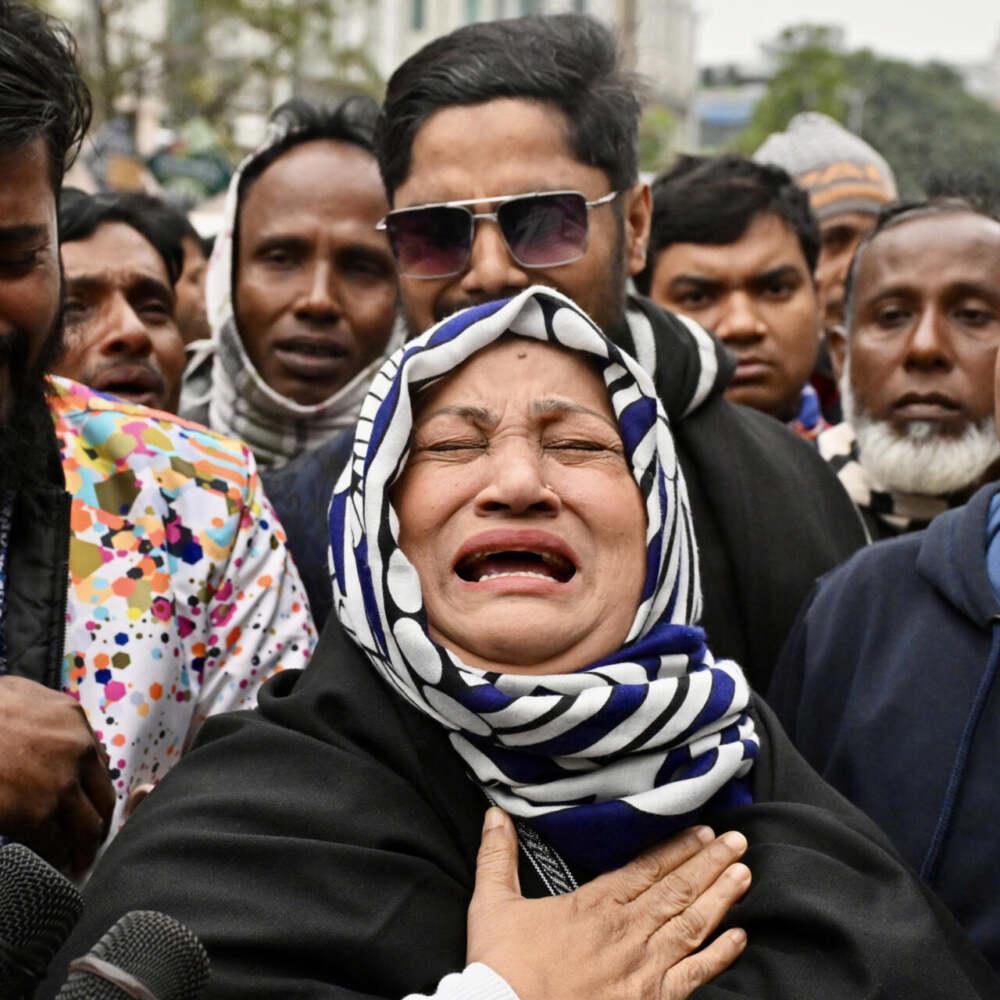
Bangladesh has entered a period of national mourning following the death of Begum Khaleda Zia, the country’s first female prime minister and one of its most influential political figures. She passed away at the age of 80 after a long battle with illness, marking the end of an era in Bangladeshi politics shaped by intense rivalry, democratic struggle, and transformative leadership.
Khaleda Zia had been suffering from multiple chronic health conditions for several years, including liver, heart, and respiratory complications. Her condition worsened in recent weeks, and she was receiving advanced medical care in the capital when she died. Her passing was confirmed by senior leaders of the Bangladesh Nationalist Party (BNP), which she led for decades and helped transform into one of the country’s dominant political forces.
Born into a modest family, Khaleda Zia rose to national prominence following the assassination of her husband, President Ziaur Rahman, in 1981. Stepping into politics at a time of personal tragedy, she quickly emerged as a central figure in the movement to restore democracy after years of military rule. Her leadership of the BNP played a key role in the political transition that led to parliamentary elections in the early 1990s.
She became prime minister for the first time in 1991, making history as Bangladesh’s first woman to hold the office. She later served a second term from 2001 to 2006. During her time in power, her government oversaw economic liberalization, expansion of education programs, and efforts to strengthen democratic institutions. Supporters credit her with helping stabilize the country during periods of political uncertainty.
Khaleda Zia’s career, however, was also marked by deep controversy and fierce rivalry with Sheikh Hasina, leader of the Awami League. Their long-running political struggle dominated Bangladesh’s public life for decades, often resulting in strikes, protests, and political deadlock. This rivalry, sometimes described as defining modern Bangladeshi politics, left a deeply polarized nation.
In later years, Khaleda Zia faced multiple corruption cases that led to imprisonment. She consistently denied wrongdoing, and her party maintained that the charges were politically motivated. Her declining health became a major political issue, drawing international attention and calls for her release on humanitarian grounds. Earlier this year, she was cleared of all remaining legal cases, reviving speculation about her potential return to active politics.
Despite her frailty, Khaleda Zia remained a symbol of resistance and resilience for her supporters. Her death comes at a critical moment for Bangladesh, as the country prepares for upcoming national elections and navigates a changing political landscape. BNP leaders announced a period of mourning and vowed to honor her legacy by continuing what they described as her struggle for democratic governance.
Tributes have poured in from across Bangladesh, reflecting both admiration and debate over her legacy. While opinions remain divided, there is widespread recognition that Khaleda Zia was one of the most consequential figures in the nation’s history.
As Bangladesh reflects on her life and leadership, Khaleda Zia’s impact on the country’s political evolution is undeniable. Her story — from reluctant political entrant to prime minister and enduring opposition leader — will remain a defining chapter in Bangladesh’s modern history.










Leave a Reply