

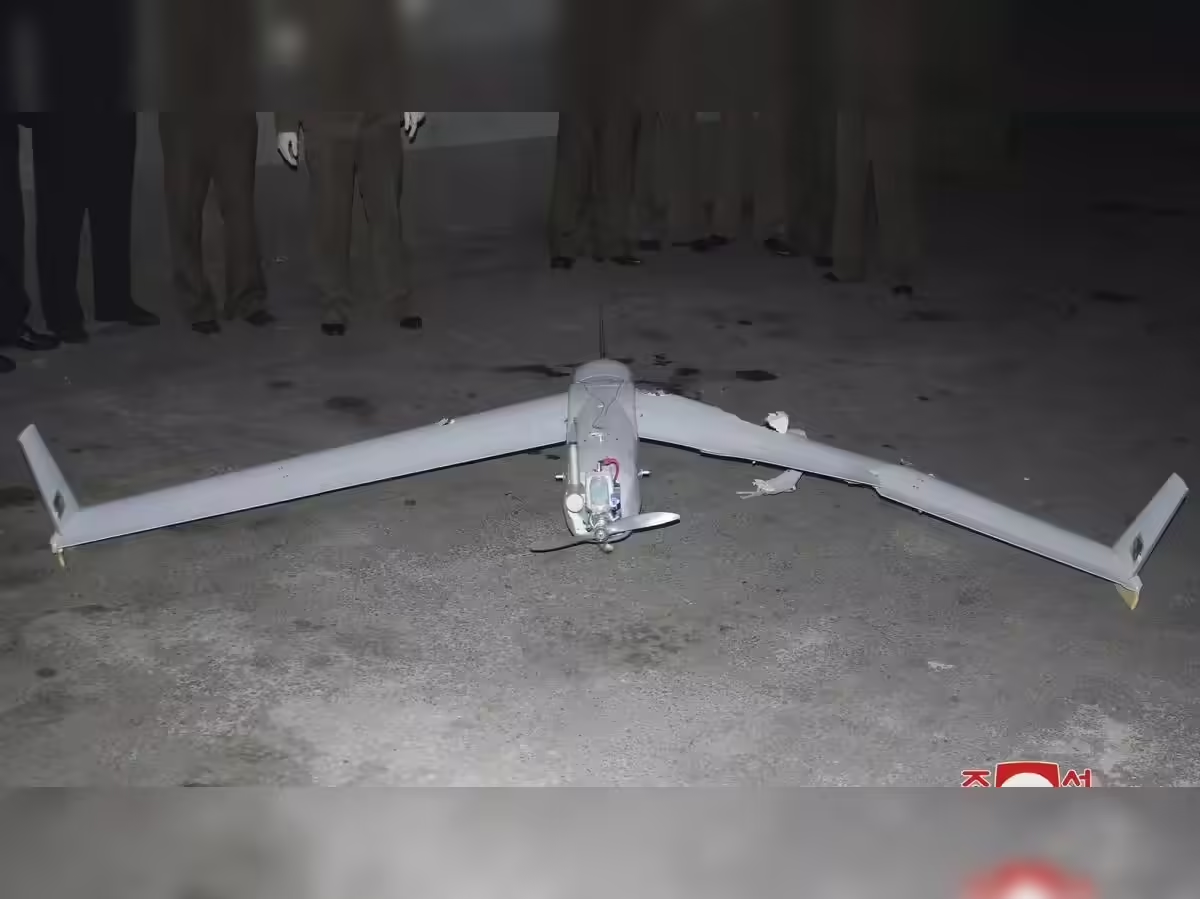
Relations between North and South Korea have taken a sharp turn toward confrontation after Pyongyang publicly accused Seoul of repeatedly flying unmanned aerial vehicles into its territory — allegations that Seoul firmly denies. The latest statements from the North Korean government, delivered through state media and the armed forces, signal a renewed cycle of tension that could complicate diplomatic efforts in the region.
Pyongyang’s Claims of Incursions
North Korea’s military leadership has declared that several drones — described as reconnaissance aircraft — crossed the heavily fortified land border from the South into northern territory. According to Pyongyang, one such drone was forced down on a recent occasion after entering restricted airspace, while another was allegedly shot down last year under similar circumstances. The North claims that these drones carried recording equipment and were attempting to gather intelligence on sensitive military sites.
In its statement, North Korea framed the alleged incursions as blatant violations of sovereignty and warned that Seoul would “pay a price” if such operations continue. The rhetoric from Pyongyang included sharp criticism of South Korean defense forces, accusing them of escalating tensions and undermining stability on the peninsula.
Seoul’s Firm Denial
South Korea’s defense authorities have categorically rejected the accusations, asserting that no official military drones have crossed into North Korean airspace on the dates in question. Officials in Seoul have stressed that the images and footage shared by Pyongyang do not match the models and specifications of drones used by the South Korean military.
South Korean defense officials have launched their own internal review to determine whether any civilian drone activity near the border could have been misinterpreted, but so far there is no evidence linking the incidents to official military operations. Leaders in Seoul have reiterated that the government has no intention of provoking conflict and remains committed to maintaining peace and stability.
A History of Mistrust
The newfound escalation follows months of diplomatic strain between the two Koreas. Although South Korea’s current leadership has expressed openness to dialogue and peaceful engagement, lingering mistrust has hampered progress. North Korea, for its part, has continued to develop its military capabilities and test missiles, drawing international criticism and heightening fears in Seoul and beyond.
Drone activity — real or perceived — has long been a flashpoint in inter-Korean relations. In previous years, both sides have accused one another of using unmanned aircraft for surveillance missions, triggering military alerts and official protests. Though such incidents have not led to open conflict, they have repeatedly tested communication channels and mechanisms meant to prevent misunderstandings.
Strategic and Regional Impacts
While drone incursions may seem small compared to missile tests or troop deployments, they carry symbolic weight and practical implications. The Korean Peninsula remains one of the most heavily militarized regions in the world, and even minor airspace violations can trigger heightened military readiness and rapid escalation.
International security analysts observing the situation note that North Korea’s strong response may be aimed at both domestic and foreign audiences. By framing the issue as an infringement on sovereignty, Pyongyang strengthens its narrative of external threat and justifies its continued military buildup. For Seoul, managing the diplomatic fallout while maintaining covert and overt surveillance capabilities is a delicate balancing act.
Diplomacy Under Strain
The current standoff over alleged drone flights complicates ongoing efforts to restart meaningful dialogue between the two countries. South Korea has been pushing for renewed negotiations that could address economic cooperation, family reunions, and peace initiatives, but progress has been slow amid persistent disagreements on security issues.
North Korea’s latest statements suggest a hardening of its position, with threats of a “response” if provocations continue. What form that response might take — whether increased border patrols, further military posturing, or public denunciation — remains unclear. What is evident is that both governments are now navigating a tense moment that could influence broader Northeast Asian stability.
Looking Ahead
As both Seoul and Pyongyang hold their ground, regional and global powers are watching closely. The United States, China, Japan and Russia all have strategic interests in the Korean Peninsula, and any escalation could draw in diplomatic pressure from multiple directions. For now, however, the situation remains a reminder of how quickly mistrust and accusations — even over relatively limited technologies like drones — can erode tenuous peace and rekindle deep-seated tensions.












Leave a Reply