

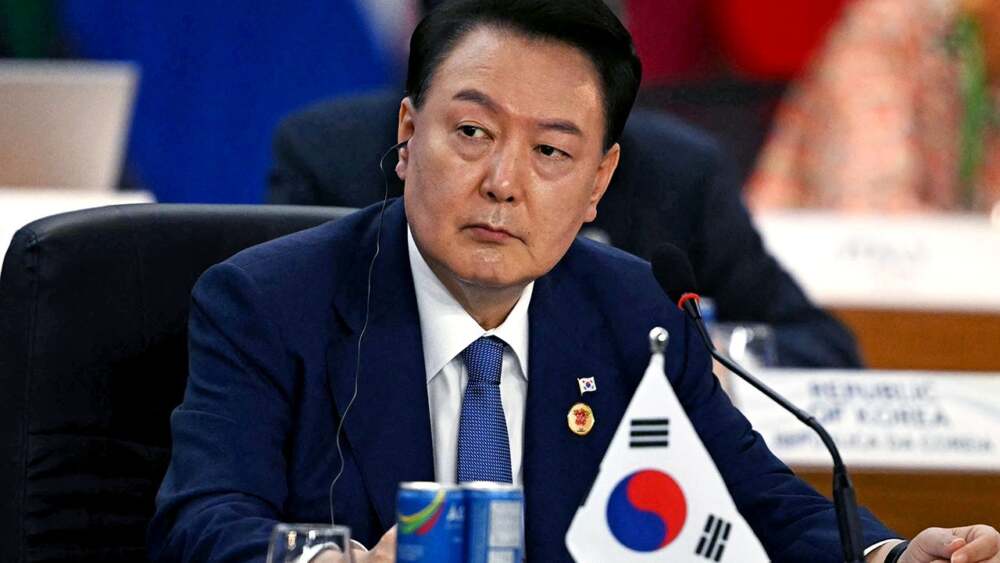
In a historic ruling that underscores South Korea’s commitment to constitutional governance, a Seoul court has sentenced former president Yoon Suk Yeol to five years in prison over his role in a failed attempt to impose martial law, a move that triggered one of the country’s most serious political crises in decades. The verdict marks the first judicial decision stemming from the controversial events that ultimately ended Yoon’s presidency.
The case centers on Yoon’s decision to declare martial law during a period of intense political confrontation, arguing that extraordinary measures were necessary to restore order and overcome legislative deadlock. The announcement immediately sparked public outrage, mass protests, and swift resistance from lawmakers, who voted to overturn the decree within hours. The episode revived painful memories of South Korea’s authoritarian past, when martial law was used to suppress political opposition.
Following the backlash, Yoon was impeached by the National Assembly and later removed from office by the Constitutional Court. Prosecutors then launched multiple criminal investigations, accusing him of abusing presidential authority and violating constitutional procedures designed to safeguard democracy.
In its ruling, the court found Yoon guilty of several offenses linked to the martial law declaration and its aftermath. Judges concluded that he bypassed mandatory cabinet consultations, attempted to obstruct law enforcement from executing a lawful arrest warrant, and authorized the creation of misleading official records to legitimize the declaration after the fact. The court stressed that martial law is an extreme and exceptional measure, and that Yoon’s actions showed a serious disregard for constitutional limits and democratic norms.
Sentencing Yoon to five years in prison, the court cited the gravity of his actions and their potential to destabilize the nation. Judges also noted the absence of remorse, emphasizing that the former president failed to acknowledge the harm caused to public trust and democratic institutions.
The ruling does not mark the end of Yoon’s legal troubles. He is still facing several additional trials, including a more serious case in which prosecutors argue that his actions amounted to an attempted insurrection. In that proceeding, they are seeking a much harsher penalty, potentially including life imprisonment. Legal experts note that while South Korea maintains a moratorium on executions, long prison terms remain a realistic possibility if further convictions are secured.
Public reaction to the verdict has been deeply divided. Many citizens and civil society groups welcomed the sentence as a powerful affirmation that no one, not even a former president, is above the law. Others, including Yoon’s supporters, condemned the decision as politically motivated and warned that it could deepen divisions within society. His legal team has announced plans to appeal the ruling.
The sentencing of Yoon Suk Yeol represents a defining moment for South Korean democracy. It highlights both the resilience of the country’s legal institutions and the enduring sensitivity surrounding the use of emergency powers. As additional trials continue, the case is likely to shape political discourse for years to come, serving as a cautionary tale about the consequences of overstepping constitutional authority.












Leave a Reply