

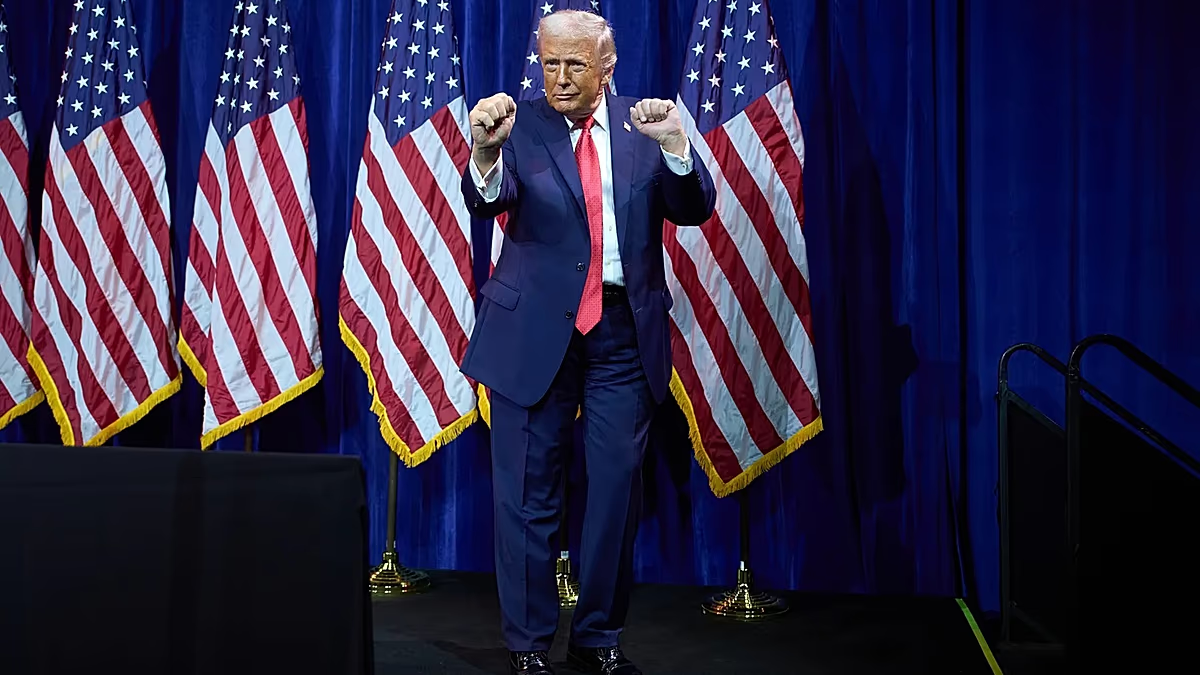
A fresh wave of diplomatic tension has emerged between the United States and its European allies after former President Donald Trump suggested using trade tariffs as leverage to pressure countries into supporting greater U.S. control over Greenland. The remarks have triggered strong reactions from Denmark, raised alarms across NATO, and prompted bipartisan concern within the U.S. Congress.
Greenland, an autonomous territory within the Kingdom of Denmark, has long held strategic importance due to its location in the Arctic and its vast reserves of rare earth minerals. As climate change accelerates the melting of Arctic ice, the region has gained renewed geopolitical significance, opening new shipping routes and increasing competition among global powers. Trump has repeatedly argued that Greenland is critical to U.S. national security, citing growing Russian and Chinese interest in the Arctic.
In his latest comments, Trump suggested that economic tools, including tariffs, could be used against nations that oppose Washington’s ambitions regarding Greenland. While no formal policy proposal has been announced, the language alone has unsettled allies and reignited memories of Trump’s earlier trade confrontations, when tariffs were frequently used as a negotiating weapon.
Denmark’s response has been swift and firm. Danish officials have reiterated that Greenland is not for sale and that its future must be decided by Greenlanders themselves in accordance with international law. Copenhagen has described any attempt to apply economic pressure over the territory as unacceptable, stressing that relations between allies should be based on cooperation rather than coercion.
Within the United States, Trump’s remarks have also drawn criticism from lawmakers across party lines. Members of Congress have emphasized that Denmark is a long-standing NATO ally and that threatening trade penalties could damage trust at a time when Western unity is seen as essential. Several lawmakers have underscored that Greenland’s status is a matter of sovereignty and self-determination, not something to be reshaped through economic threats.
A bipartisan group of U.S. legislators has recently traveled to Denmark in an effort to ease tensions and reaffirm congressional support for the U.S.–Denmark alliance. These lawmakers have sought to distance Congress from Trump’s rhetoric, signaling that there is little appetite on Capitol Hill for policies that could destabilize relations with European partners or undermine NATO cohesion.
Greenland’s own leaders have been equally vocal. Local officials and community representatives have made it clear that decisions about the island’s future must involve the people who live there. Many Greenlanders view external pressure as dismissive of their autonomy and democratic rights, reinforcing calls for respect and dialogue rather than power politics.
The controversy highlights a broader debate over the use of tariffs as instruments of foreign policy. Critics argue that while tariffs can be effective in certain trade disputes, deploying them against allies risks long-term diplomatic damage. Supporters of Trump’s approach counter that economic pressure is a legitimate tool to protect U.S. strategic interests in an increasingly competitive world.
As Arctic competition intensifies, the Greenland issue is likely to remain a sensitive topic in international politics. Whether Washington can balance its strategic ambitions with alliance management and respect for sovereignty will shape not only its relationship with Denmark, but also its credibility among allies watching closely from across the globe.











Leave a Reply