

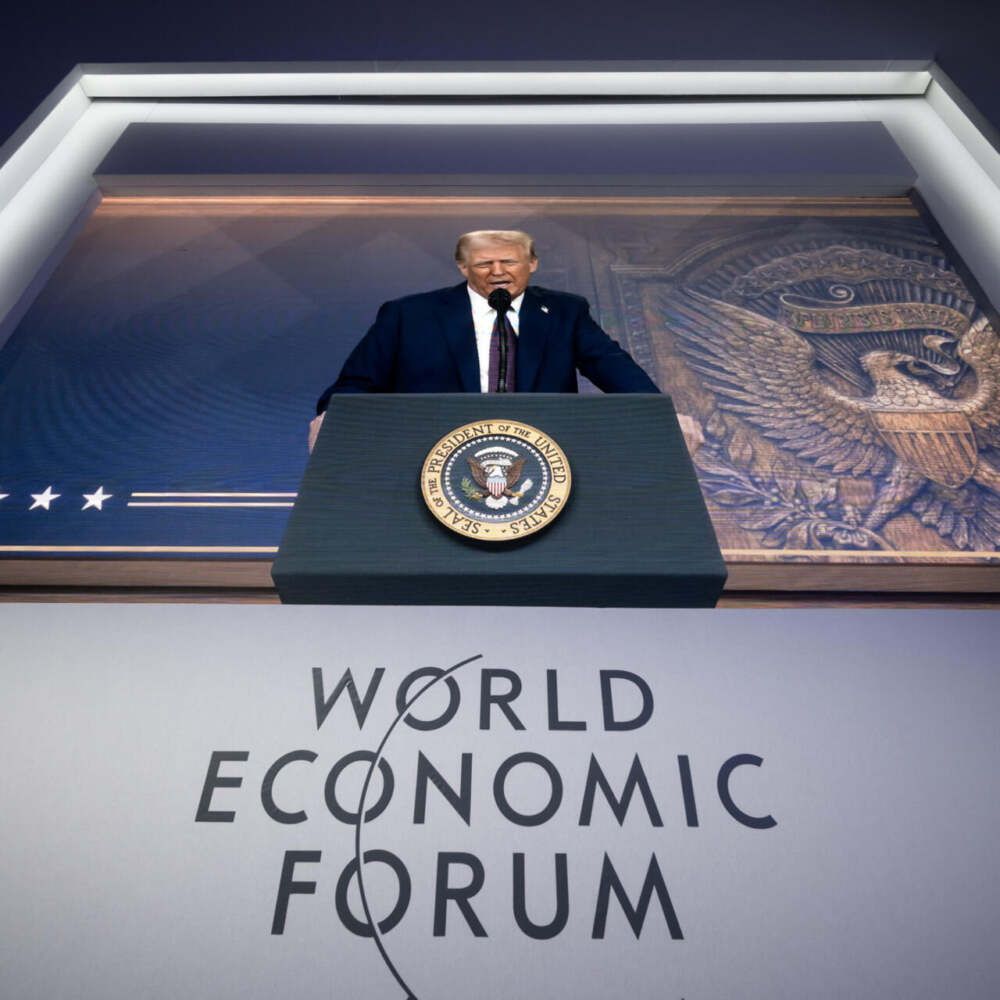
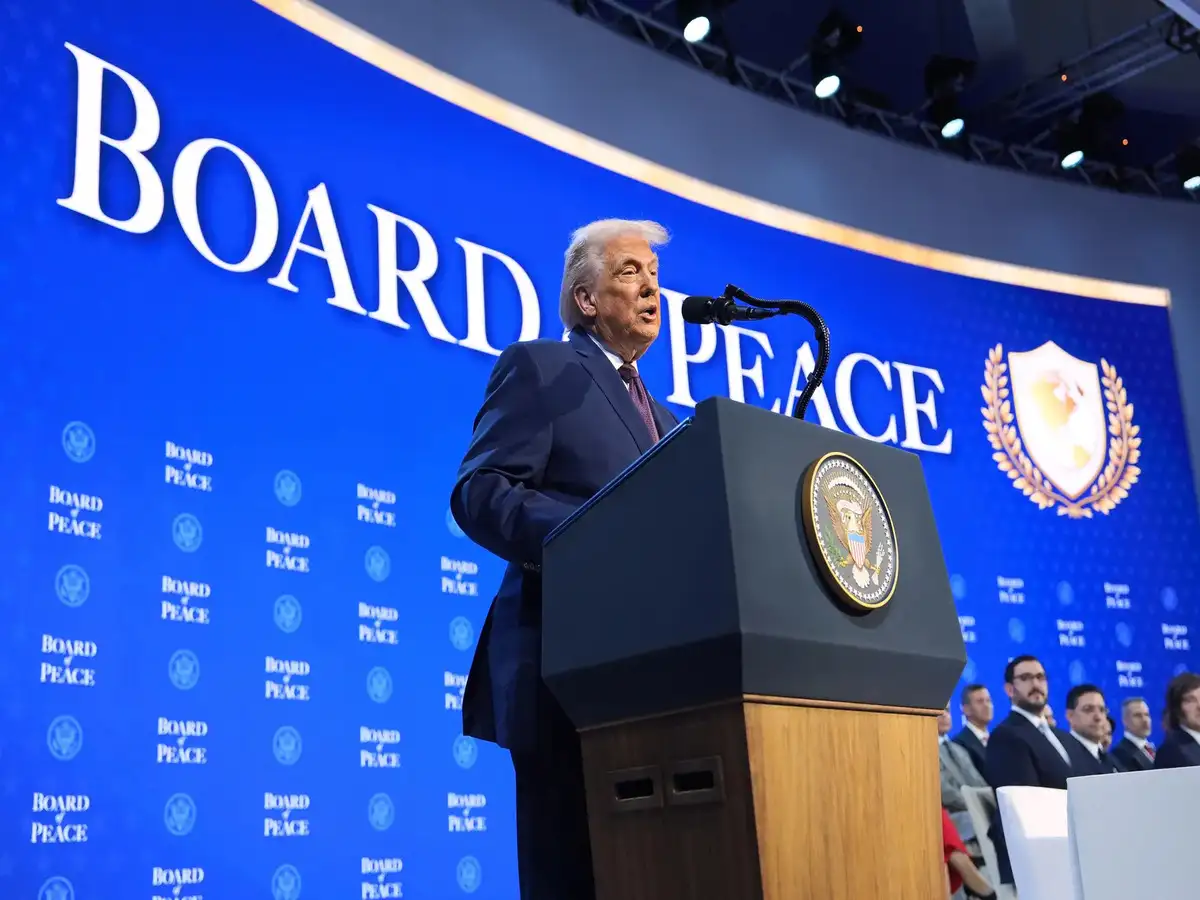
The 2026 World Economic Forum (WEF) Annual Meeting in Davos, Switzerland has drawn global attention as U.S. political and economic influence takes a leading role, led by former President Donald Trump. The summit, known as a premier gathering of world leaders, corporate executives, and policy influencers, is shaping up to be one of the most watched in recent years, with the American delegation expected to be larger and more prominent than ever before.
Trump’s presence at Davos marks his return to the international stage following his presidency in Washington. His participation has shifted expectations for the forum — traditionally a venue for cooperative economic dialogue — towards discussions shaped by geopolitical tensions, national strategic interests, and the future of global trade.
U.S. Delegation and Strategic Priorities
The United States delegation arriving in Davos is reportedly the largest in the event’s history. Alongside Trump, numerous senior political figures, cabinet officials, and business leaders are attending, underscoring Washington’s intent to steer key debates on economic policy, trade frameworks, and security cooperation.
Trump’s agenda focuses on reasserting American economic leadership and promoting policies that align with his “national interest first” philosophy. He is expected to emphasize economic sovereignty, fairer trade terms, and stronger national supply chains, reflecting decades‑long tensions between globalization advocates and proponents of economic nationalism.
Geopolitical Themes Dominate Discussions
While Davos is often associated with economic cooperation, many of this year’s sessions are framed around geopolitical fault lines and the challenges of navigating a fragmented international landscape. Key topics include:
- Renewed tensions between major powers and their impact on global markets
- Trade policy shifts and tariff frameworks
- The role of national strategy in shaping international economic rulemaking
These discussions are colored by recent global events — from trade disputes to shifting alliances — that have prompted policymakers to rethink long‑standing assumptions about cross‑border economic integration.
Business Leaders Weigh In
Executives from major multinational corporations are attending alongside political leaders, seeking clarity on how future trade and regulatory environments may evolve. Many corporate participants are particularly interested in how U.S. policy priorities might influence global supply chains, investment flows, and technological cooperation.
There is notable engagement on issues such as artificial intelligence regulation, sustainability investments, and climate‑related finance, but these topics are increasingly being discussed within the context of geopolitical competition rather than purely collaborative frameworks.
Mixed Reactions From the International Community
Trump’s prominence at Davos has elicited varied responses:
- Supporters argue that his focus on national economic strength and clearer terms for global cooperation brings a practical realism to policy debates. Some business leaders believe this could help recalibrate international systems that they view as outdated or unfairly skewed.
- Critics worry that an emphasis on national priorities over multilateral cooperation could undermine the foundational spirit of Davos. They caution that overly nationalist rhetoric might erode trust among global partners and shift the forum’s tone from dialogue to competition.
Despite differing perspectives, many observers note that this year’s summit reflects broader global dynamics: a world balancing between cooperation, competition, and strategic realignment.
Looking Ahead: Davos as a Barometer of Global Shifts
As the forum progresses, it is expected to serve not just as a venue for speeches, but as a barometer of international priorities. The blend of economic, geopolitical, and strategic discussions indicates that the world — and its influential actors — are increasingly grappling with interconnected challenges that transcend traditional economic diplomacy.
For many attendees, the core question remains: Can global cooperation adapt to rising national interests without sacrificing stability and growth? The outcomes and dialogues at Davos 2026 will likely influence international policy debates well beyond the Swiss Alps, shaping political, economic, and strategic decisions in the months to come









Leave a Reply