

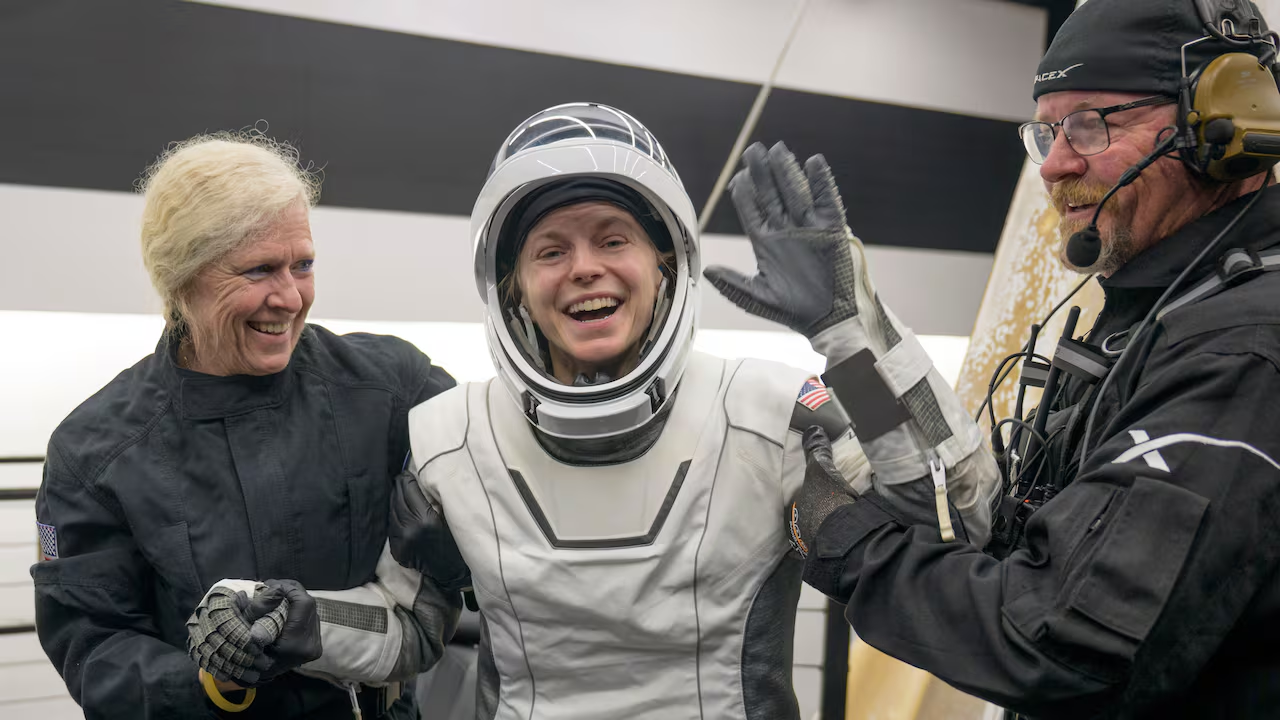
In a landmark operation for human spaceflight, NASA’s Crew‑11 astronauts have safely returned to Earth, touching down in Houston, Texas after a mission that included the first‑ever medical evacuation (medevac) from the International Space Station (ISS). The successful return marks a significant milestone in space operations, underscoring the growing importance of crew health protocols and emergency preparedness as humans spend longer durations in orbit.
The Crew‑11 mission, originally planned as a routine long‑duration rotation aboard the ISS, took an unexpected turn when one of the crew members experienced a medical condition requiring urgent attention that could not be fully managed in orbit. This development triggered unprecedented coordination among NASA flight surgeons, international partners, and mission control teams to initiate a medical evacuation procedure, bringing the astronaut home sooner than originally scheduled.
Swift Response to Medical Emergency
During their stay on the station, routine health monitoring detected a condition that warranted immediate evaluation by Earth‑based medical specialists. While the ISS is equipped to handle a broad range of medical scenarios, NASA determined that the best‑possible care required terrestrial assessment and treatment.
In response, NASA activated its contingency protocols with remarkable precision. The crew boarded their return vehicle — a spacecraft with specialized life support systems and medical accommodations — and executed an expedited departure from the station. This marked the first time in history that a space station crew member has been evacuated early for medical reasons.
Safe Touchdown in Houston
After re‑entry and a controlled landing at a designated site in Houston, all Crew‑11 astronauts — including the member who required medical attention — were met by medical teams and recovery crews. Preliminary health assessments indicated that the astronaut is stable and under careful observation, with further examinations underway at a medical facility equipped to support returning spaceflight personnel.
NASA officials emphasized that the evacuation and recovery were conducted without injury or additional complications, a testament to the training, technology, and international coordination supporting modern spaceflight missions.
The Crew‑11 Team and Their Mission Achievements
The Crew‑11 team consisted of a diverse group of astronauts with backgrounds in science, engineering, and exploration. During their time aboard the ISS, they participated in a wide range of scientific research spanning life sciences, materials science, and technology demonstrations intended to benefit future lunar and Mars missions.
Among their achievements were:
- Biological experiments exploring cellular behavior in microgravity
- Advanced materials testing for future spacecraft components
- Earth observation campaigns contributing to climate science
- Maintenance and upgrades to ISS systems
These contributions will continue to benefit space science long after the crew’s return.
A New Era in Spaceflight Safety
The successful medevac and recovery of a Crew‑11 astronaut set a precedent for future long‑duration missions, particularly as space agencies prepare for ambitious endeavors such as extended stays on the lunar Gateway station and eventual crewed missions to Mars.
NASA Administrator officials highlighted that this event demonstrates the agency’s capability to protect astronaut health even in remote environments. Lessons learned will inform enhanced medical training, telemedicine systems, and spacecraft design to better support crew well‑being on deep‑space missions.
Global Collaboration and Context
The ISS represents a partnership among NASA, Roscosmos (Russia), ESA (Europe), JAXA (Japan), and CSA (Canada). In this case, collaborative communication was crucial. International partners offered medical consultations, logistical support, and operational expertise that contributed to the mission’s successful resolution.
This multinational cooperation continues to be a cornerstone of human space presence, strengthening ties across space agencies as they tackle the challenges of long‑duration exploration together.
Public and Scientific Community Response
News of the medevac spread rapidly through the global scientific and space communities, prompting widespread praise for NASA’s transparent handling and the resilience shown by the Crew‑11 team. Spaceflight advocates noted that the operation reinforces the importance of adaptable mission planning and comprehensive medical protocols as humanity ventures further from Earth.
Social media and aerospace forums highlighted the emotional relief of seeing the astronauts return safely, with many users emphasizing public trust in space agencies to safeguard their crews.
Looking Ahead
As the Crew‑11 members recover and debrief, space agencies are already applying the insights gained to future missions. The success of this medevac reinforces confidence in NASA’s ability to protect astronaut health and safety under exceptional circumstances — a critical requirement for the next generation of human space exploration.
Analysts believe that this operation will shape future crewed mission planning, not only for the ISS but also for upcoming lunar and Martian expeditions where medical autonomy and emergency responsiveness will be paramount.

















Leave a Reply