

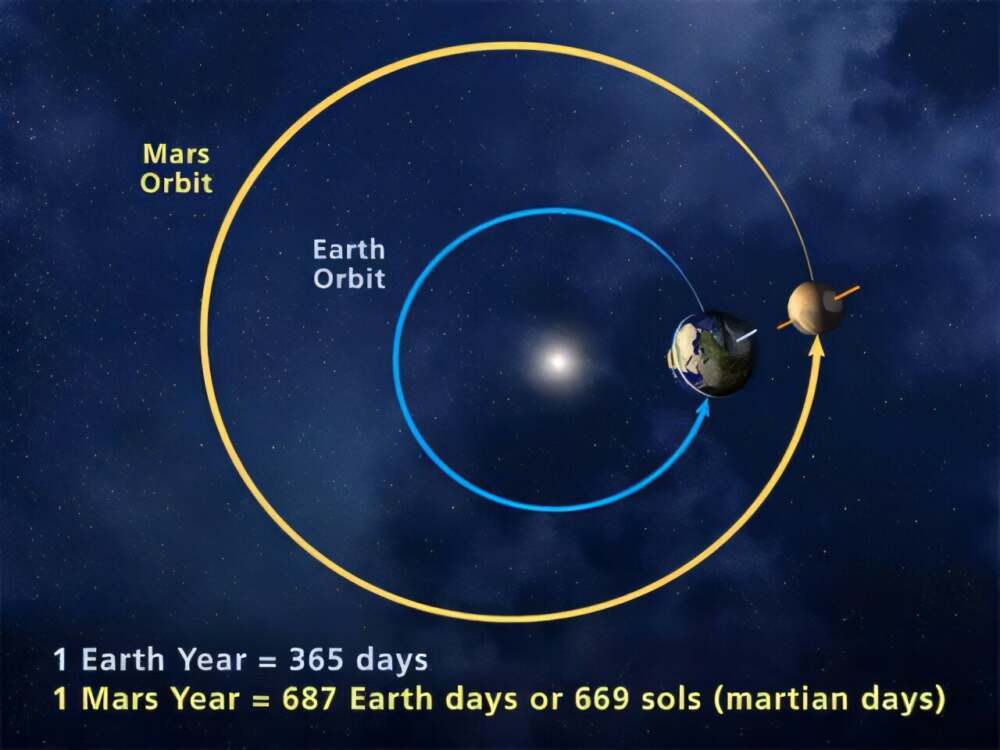
Recent scientific research has revealed that Mars, long seen as a distant and largely inert neighbor, plays a surprisingly significant role in shaping Earth’s long-term climate patterns. Advanced orbital simulations show that the Red Planet’s gravitational pull subtly influences Earth’s orbit and axial tilt, contributing to major climate rhythms that have persisted for millions of years.
Mars: Small but Influential
Although Mars is only about half the size of Earth and roughly one-tenth its mass, its gravitational effects are far from negligible. Researchers have found that the planet’s presence helps stabilize certain aspects of Earth’s orbit. Simulations removing Mars from the solar system demonstrate that some long-term climate cycles disappear entirely, while increasing Mars’ mass amplifies and shortens these cycles. This indicates that even a relatively small planet can significantly affect the climate of a much larger neighboring world.
Driving Earth’s Long-Term Climate Cycles
Mars contributes to the so-called Milankovitch cycles — slow variations in Earth’s orbit and axial tilt that govern ice ages and other major climate changes. While other planets, such as Venus and Jupiter, also influence these cycles, Mars’ contribution is critical for certain longer-period patterns. One notable example is a multi-million-year cycle linked to resonances between Earth and Mars’ orbits, which disappears when Mars is absent in simulations.
In addition to affecting orbital eccentricity, Mars’ gravitational pull helps maintain the stability of Earth’s axial tilt. This “cosmic balancing act” prevents extreme swings in tilt that could otherwise trigger drastic climate fluctuations, such as prolonged glaciations or runaway warming. Interestingly, simulations suggest that slightly increasing Mars’ mass could further stabilize Earth’s tilt over geological timescales.
Implications for Earth’s Climate and Life
While Mars does not drive short-term climate changes, its influence modulates long-term background climate rhythms. These slow cycles affect glacial expansion and retreat, ocean circulation patterns, and global climate stability, all of which have played crucial roles in shaping ecosystems and the course of evolution on Earth. Geological evidence shows that past climate shifts correspond with patterns predicted by Mars-linked orbital cycles, offering a window into Earth’s deep climate history.
Looking Beyond the Solar System
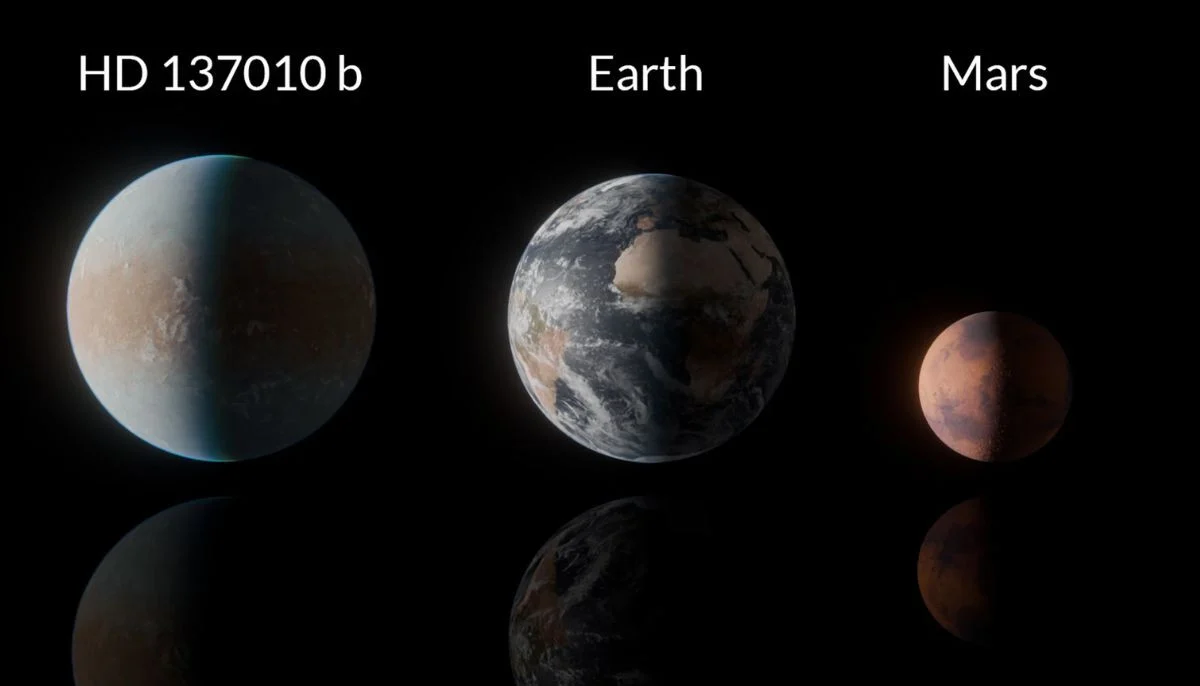
These findings also have implications for the search for habitable exoplanets. The long-term climate stability of an Earth-like planet may depend not just on its distance from its star, but on the presence and arrangement of neighboring planets. Mars-like companions could help stabilize a planet’s orbit and axial tilt, enhancing the prospects for life over millions of years.
Conclusion: A Cosmic Connection
Mars is far more than a barren neighbor; it is an active participant in the delicate gravitational dance that has shaped Earth’s climate for eons. This research underscores the interconnectedness of planetary systems and reminds us that even distant worlds can exert profound effects on our own planet’s long-term habitability.















Leave a Reply