

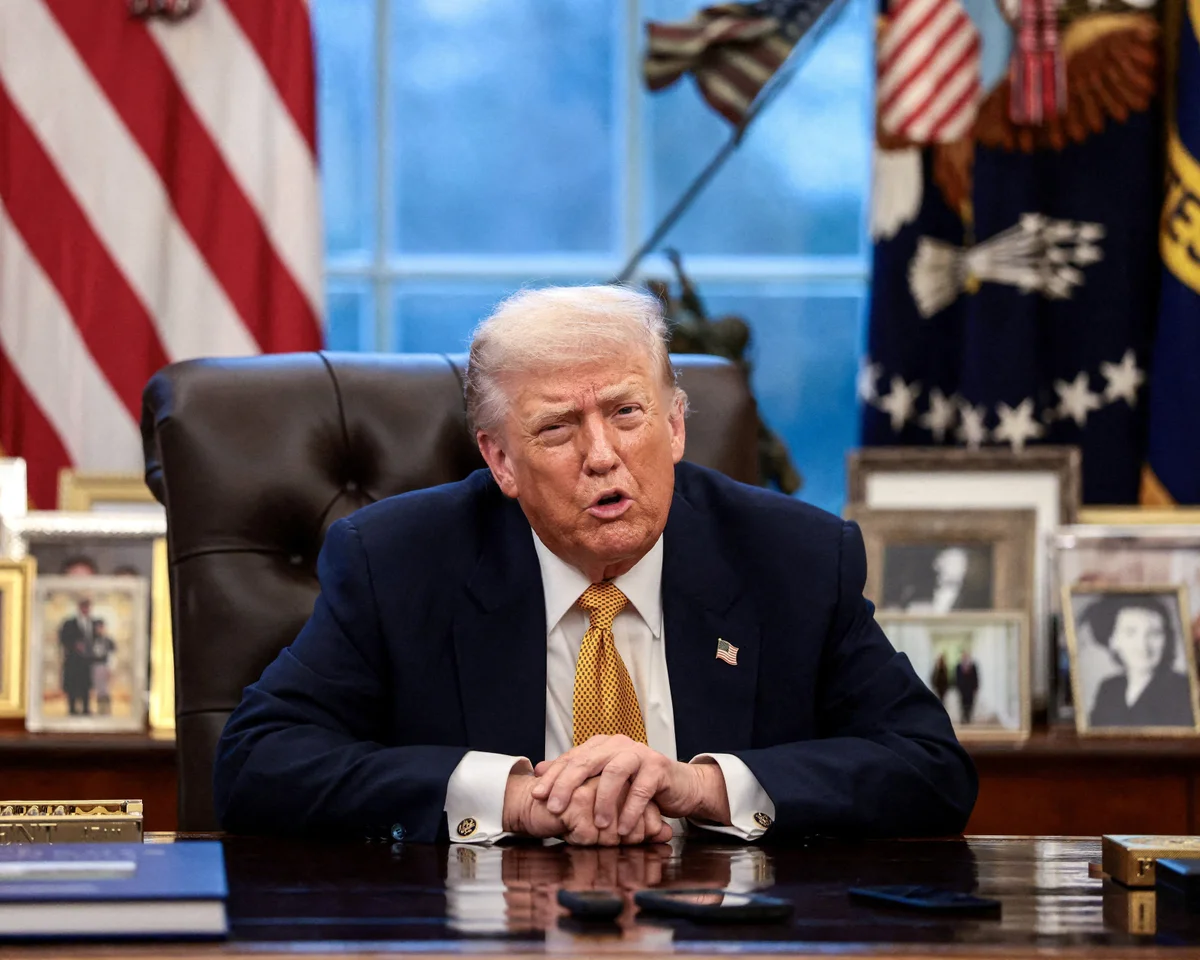
European financial markets came under renewed pressure as investors reacted nervously to fresh tariff threats from U.S. President Donald Trump, reviving memories of past trade conflicts and unsettling already fragile market sentiment. The warnings, aimed at several European countries, injected uncertainty into global markets and prompted a broad shift away from risk-heavy assets.
Major stock indexes across Europe opened lower, with selling pressure intensifying as the trading session progressed. Investors appeared increasingly cautious, weighing the possibility that heightened political rhetoric could translate into real economic consequences. Market analysts noted that the renewed tariff language has arrived at a sensitive moment, with Europe already grappling with sluggish growth, tight monetary conditions, and geopolitical strain.
The prospect of higher trade barriers between the United States and Europe has raised concerns about disrupted supply chains, increased costs for exporters, and reduced corporate earnings. Companies with heavy exposure to transatlantic trade were among the hardest hit, particularly in the automotive and luxury goods sectors. These industries rely heavily on U.S. demand and are considered especially vulnerable to any escalation in tariff policy.
Automakers saw notable declines as investors assessed the risk of higher import duties on vehicles and components. Luxury brands also faced selling pressure, reflecting fears that tariffs could dampen consumer demand and erode profit margins. Together, these sectors acted as a drag on broader European benchmarks.
In contrast, traditionally defensive areas of the market showed relative resilience. Shares linked to defense and security attracted increased interest, benefiting from heightened geopolitical uncertainty. Safe-haven assets, including government bonds and precious metals, also saw increased demand as investors sought protection from potential market turbulence.
Currency markets reflected a similar mood of caution. The euro weakened modestly against the U.S. dollar, while volatility indicators rose, signaling growing investor anxiety. Analysts said the shift suggests traders are preparing for prolonged uncertainty rather than a quick resolution.
Political leaders across Europe pushed back strongly against the tariff threats, emphasizing that economic pressure would not influence sovereignty or policy decisions. Senior officials signaled that the European Union is prepared to respond collectively if trade measures are enacted, including the possibility of counter-tariffs designed to protect European industries.
Despite the sharp reaction in markets, some economists urged caution, noting that tariff threats do not always translate into immediate policy action. They stressed that negotiations and diplomatic channels could still ease tensions before concrete measures are implemented. However, until greater clarity emerges, markets are likely to remain volatile.
As investors look ahead, attention will focus on official statements from Washington and Brussels, as well as upcoming economic data that could either amplify or calm market concerns. For now, the renewed tariff rhetoric has served as a stark reminder of how quickly political developments can rattle global financial markets.













Leave a Reply