
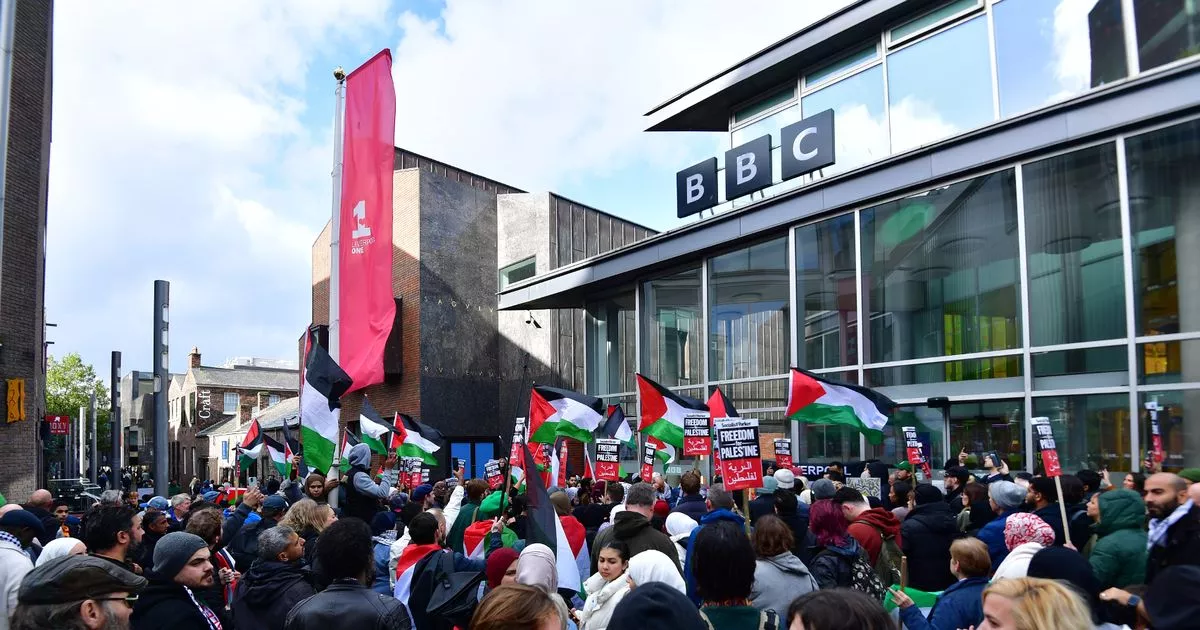
A British A-Level student in Liverpool has ignited a national conversation about media impartiality and youth activism after seizing a live television moment to criticise the BBC’s coverage of the war in Gaza. What began as a routine broadcast about academic results ended in an impassioned political protest that quickly spread across social media and sparked debate about journalistic responsibility and public trust.
The incident occurred outside a results day broadcast, where BBC reporters were interviewing students about their A-Level results — a milestone in the British education system that often determines university placements. As the camera rolled, the Liverpool student stepped into the frame and delivered an unexpected message: calling for freedom for Palestine and accusing the BBC of being “complicit” in what he described as a genocide in Gaza.
“I just want to say Free Palestine, end the genocide,” he said, then turned his critique directly on the broadcaster before being swiftly cut off by the presenter. The presenter attempted to steer back to the original topic of exam results, underlining that the segment was intended to cover students’ achievements, not geopolitical conflict.
Despite the brief appearance, clips of the moment spread rapidly online, accumulating millions of views and eliciting strong reactions from diverse groups. Supporters of the student’s actions praised his courage and saw his intervention as a symbol of generational frustration with mainstream media coverage of the Middle East conflict. Social media posts applauded his willingness to use airtime to draw attention to global issues, and many commentators highlighted a broader trend of young people engaging politically through unconventional means.
However, others criticised the interruption as inappropriate and unfair to the presenter and other students who were there to share their academic successes. Some viewers argued that broadcasters should maintain clear boundaries between news reporting and activist statements, particularly during segments not intended for political debate.
The episode has also reignited long-running discussions about the BBC’s reporting on the Israel-Gaza war — a conflict that has drawn global attention and fierce debate over media narratives. Critics on both sides of the political spectrum have accused the broadcaster of bias: some argue it underplays Palestinian suffering, while others claim it does not sufficiently critique militant groups. These debates underscore wider concerns about how major media organisations frame complex international events and the challenges of maintaining perceived neutrality in a deeply polarised environment.
The BBC, as Britain’s public broadcaster funded primarily through a licence fee, faces ongoing scrutiny over its editorial decisions and accountability to the public it serves. The broadcaster consistently defends its commitment to impartiality and rigorous reporting, but incidents like the Liverpool protest highlight how public trust can be vulnerable when coverage intersects with sensitive geopolitical issues.
Meanwhile, the student’s actions have triggered calls for a broader conversation about the role of young people in public discourse, the boundaries of free expression in media settings, and how news organisations might better respond when their reporting is publicly questioned. While some see the Liverpool protest as a spontaneous act of youthful courage, others view it as a reminder of the deep societal divides that shape how major global stories are interpreted and understood.
As the debate continues, the incident has become a flashpoint in wider discussions about media responsibility, political expression, and the evolving dynamics between traditional broadcasters and an increasingly vocal, digitally engaged public.





Leave a Reply