

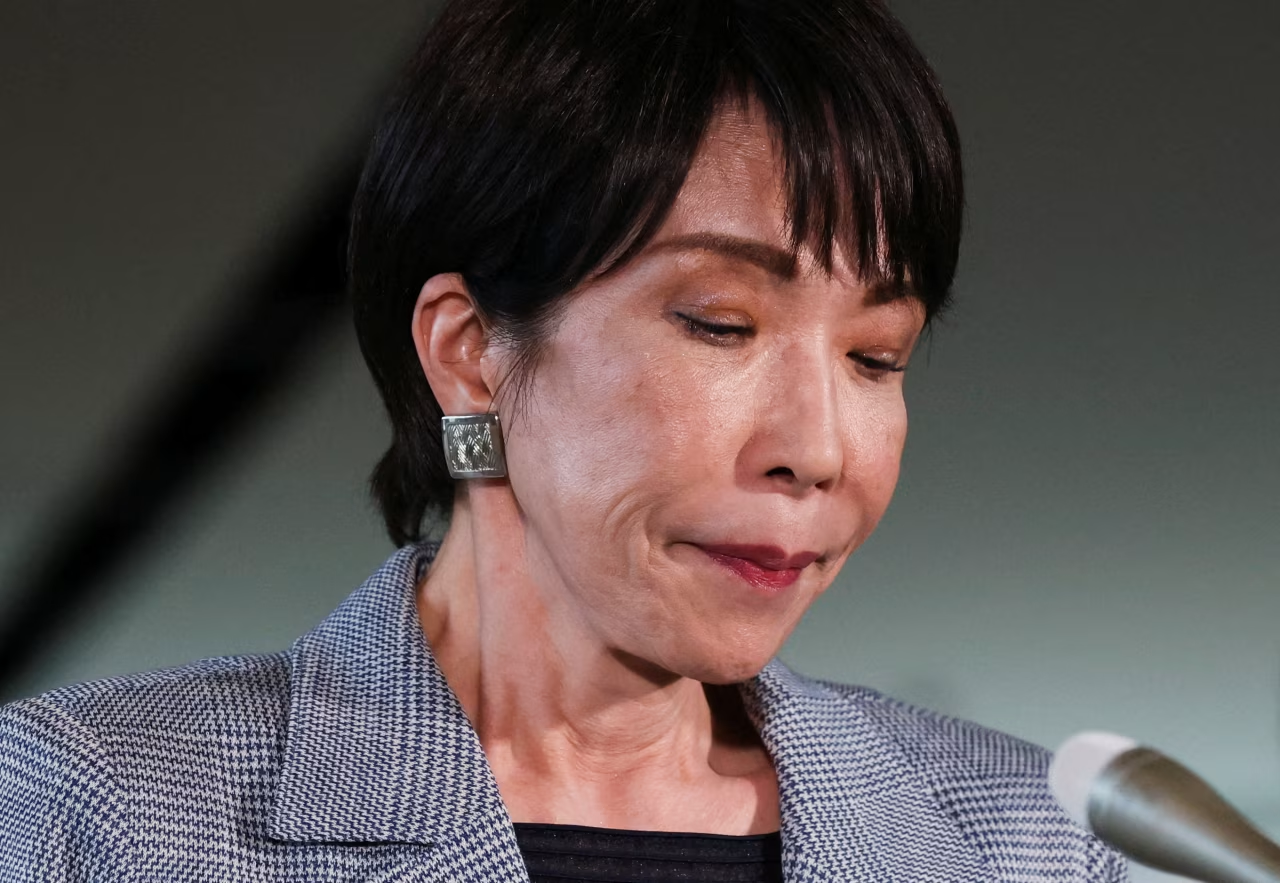
Japan’s newly appointed Prime Minister Sanae Takaichi has announced a snap general election, setting a February 8, 2026 vote that is expected to reshape the nation’s political landscape. In a surprise move, Takaichi dissolved the House of Representatives — Japan’s lower house of parliament — asserting that the public should be given a direct say on her leadership and the policy direction she intends to pursue.
The election comes only weeks after Takaichi became Japan’s first female prime minister, following a leadership transition within the long-dominant Liberal Democratic Party (LDP). Her decision to seek a public mandate so early in her tenure underscores both confidence in her leadership and the challenges her government faces amid economic headwinds, regional security concerns, and shifting political alliances.
In announcing the dissolution of the lower house, Takaichi emphasised that the national election would allow voters to decide whether her agenda has the legitimacy needed to confront pressing domestic and international issues. She framed the campaign as a choice between continuity and stability versus uncertainty and partisan gridlock.
Policy Issues Drive the Campaign
At the centre of Takaichi’s campaign strategy is her economic policy. She has championed measures intended to ease the financial burden on ordinary Japanese families, including plans to temporarily suspend the consumption tax on food items. This proposal is aimed at boosting consumer spending and easing cost-of-living pressures, particularly for low- and middle-income households. However, critics argue the tax break could further strain government finances, which are already under pressure from Japan’s ageing population and high public debt.
Takaichi’s economic platform also includes promises of enhanced fiscal stimulus through targeted infrastructure investment and social welfare spending, aimed at revitalising regional economies and supporting long-term growth. The prime minister insists that her policies will strengthen Japan’s economic resilience in the face of global uncertainties.
Security issues are also a key theme in the impending election. With China’s growing military assertiveness and North Korea’s frequent missile tests, Takaichi has underscored a commitment to bolster Japan’s defence capabilities. She advocates for increased defence spending and deeper cooperation with allies, framing this as essential to safeguarding national sovereignty and regional stability.
Political Risks and Opposition Strategies
Despite her strong public profile, Takaichi faces significant political risks. The LDP, long Japan’s dominant party, is grappling with internal divisions and has lost its traditional coalition partner, creating uncertainty about its capacity to maintain a stable majority in the Diet. Opposition parties have seized on this moment to coordinate more closely, forming alliances aimed at challenging LDP dominance and offering alternative policy visions on economic reform, social welfare, and foreign policy.
The emergence of a united opposition bloc could complicate the LDP’s efforts to secure victory, especially if smaller parties siphon off support in key districts. Political analysts note that voter sentiment remains fluid, with many undecided voters weighing economic anxieties against the appeal of continuity and experienced leadership.
Japan’s electoral system adds another layer of complexity. With a mix of single-member districts and proportional representation seats, the outcome will depend not only on national poll numbers but also on strategic candidate placements and local campaigning strength.
Public Response and Campaign Outlook
Public reaction to the snap election has been mixed. Supporters of Takaichi commend her willingness to seek a clear mandate and applaud her focus on economic relief and national security. Others, however, express concern that a sudden election could distract from urgent policy implementation, particularly on economic reform and climate challenges.
The official campaign period will unfold over the coming weeks, with parties intensifying efforts to win voter support through public debates, policy announcements, and grassroots engagement. As February 8 approaches, political observers agree that the election’s outcome will not only determine the next government but also signal broader shifts in Japan’s political dynamics.















Leave a Reply