

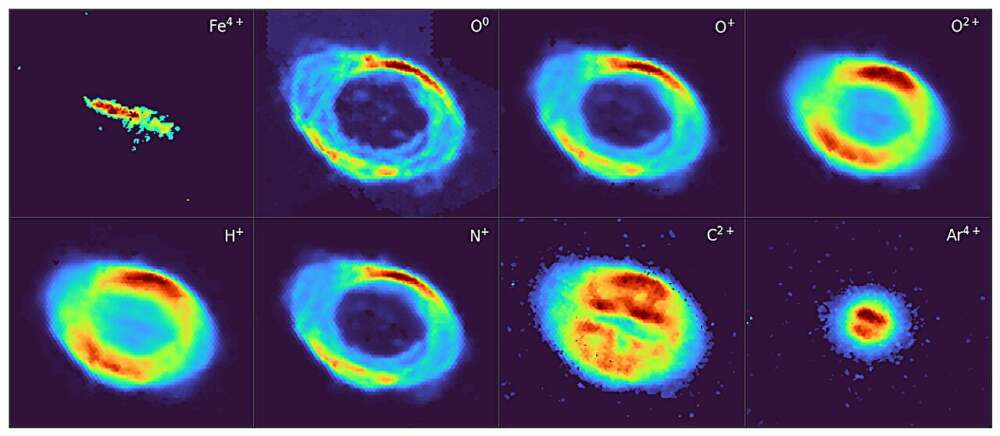
In an extraordinary astronomical discovery, scientists have identified a massive structure made of ionized iron running through the heart of the Ring Nebula, one of the most iconic planetary nebulae in the night sky. This surprising find reveals a previously unseen “iron bar” that could reshape our understanding of how stars die and how planetary systems are destroyed in the final stages of stellar evolution.
The Ring Nebula, also known as Messier 57, is located about 2,600 light-years from Earth in the constellation Lyra. Despite being extensively studied for centuries, this nebula still holds secrets. Planetary nebulae like the Ring Nebula form when stars similar in mass to our Sun reach the end of their lives. They expel their outer layers into space, creating colorful gaseous shells, while leaving behind a dense core called a white dwarf.
The discovery of the iron-rich structure was made possible through high-resolution spectroscopy, allowing astronomers to map the chemical composition of the nebula in unprecedented detail. The iron “bar” is an elongated strip of four-times-ionized iron atoms that cuts across the inner region of the nebula. This structure is astonishingly large: its estimated length spans trillions of miles, and the total mass of iron could rival that of the planet Mars.
The origin of this mysterious bar is still unclear. One possibility is that it reflects asymmetries in the way the dying star ejected its outer layers, potentially influenced by magnetic fields or a companion star. Another exciting hypothesis is that the iron may be the remnants of a rocky planet that was engulfed by the star during its red giant phase. If this is true, it would provide an unprecedented glimpse into how planetary systems can be dismantled as stars die.
Astronomers were particularly surprised because no other elements seem to form a similar structure in the nebula. The unique presence of iron raises intriguing questions about the physical processes at work in the dying star’s environment.
Future studies aim to observe the bar in even greater detail to determine if other elements coexist with the iron and to better understand its origin. Scientists are also beginning to look at other planetary nebulae to see whether similar iron structures exist elsewhere. If such features are common, it could revolutionize our knowledge of stellar death and the fate of planets orbiting aging stars.
This discovery not only highlights the ongoing surprises of well-known nebulae but also underscores the importance of advanced astronomical instruments in revealing hidden structures in space. The Ring Nebula, already a favorite for both amateur and professional astronomers, now presents a fresh mystery waiting to be unraveled.













Leave a Reply