

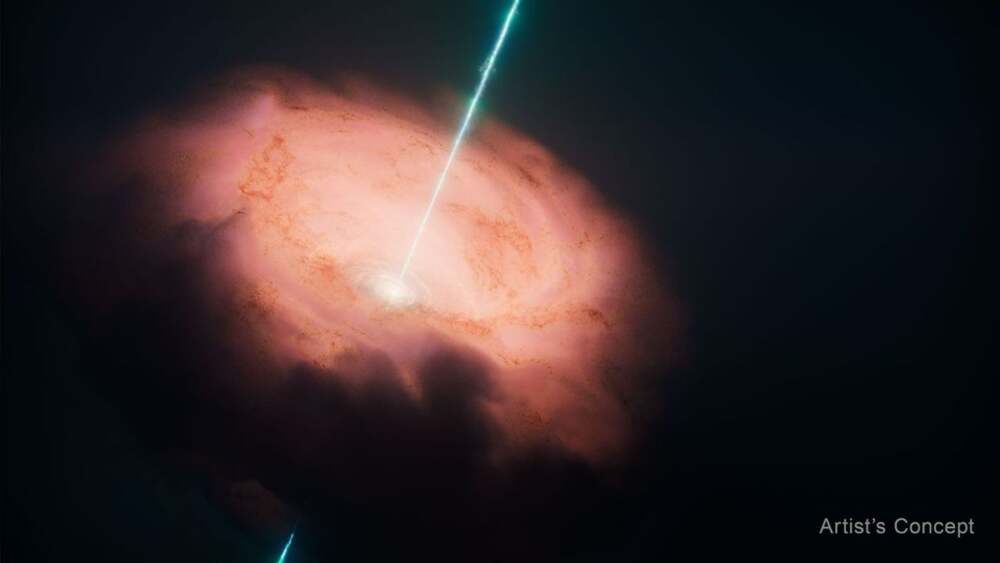
Astronomers using the James Webb Space Telescope (JWST) have captured the most detailed infrared view ever of the dusty environment surrounding a supermassive black hole, offering unprecedented insight into how these cosmic giants feed and influence their host galaxies. The observation focuses on the Circinus galaxy, a spiral galaxy located approximately 13 million light-years from Earth, revealing the inner workings of its active galactic nucleus with unmatched clarity.
A Closer Look at Black Hole Feeding
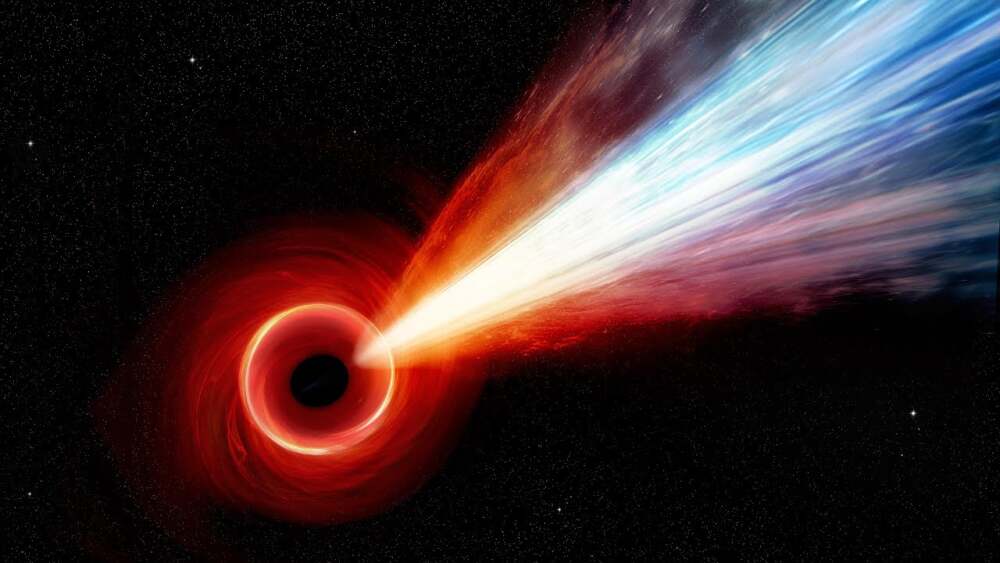
Black holes themselves emit no light, but the matter spiraling into them heats up and glows intensely in infrared and other wavelengths. Until now, much of the infrared emission from active black holes was thought to come from dust being pushed away by energetic winds or from surrounding starlight. The new JWST observations challenge this view.
Using a technique called Aperture Masking Interferometry, researchers effectively increased the telescope’s resolution, allowing them to distinguish structures extremely close to the black hole. The data reveal that most of the infrared light comes from hot dust at the inner edge of a donut-shaped, or toroidal, dusty disk surrounding the black hole — not from outflowing material as previously assumed.
Rewriting Black Hole Models
This discovery fundamentally changes our understanding of how black holes interact with their surroundings. By pinpointing the source of the emission to the innermost dust, astronomers now know that the accretion process is more focused and efficient than earlier models suggested. This torus of dust acts as a funnel, guiding material into the black hole while also regulating the radiation it emits, which in turn affects the surrounding galaxy.
The findings also indicate that over 85% of the infrared emission originates from the inner edge of the dusty disk, with only a tiny fraction coming from material being expelled. This challenges previous assumptions and will require astronomers to revise models of black hole feeding and feedback, which are key to understanding galaxy evolution over billions of years.
How Webb Achieved This Breakthrough
The James Webb Space Telescope’s Near-Infrared Imager and Slitless Spectrograph (NIRISS) was used in interferometric mode to achieve this extraordinary resolution. By carefully combining light from different parts of the telescope’s mirror, astronomers simulated a much larger aperture, effectively doubling the telescope’s resolving power. This allowed them to separate the glowing inner dust from surrounding structures and see details smaller than previously possible.
Implications for Galaxy Evolution
Supermassive black holes sit at the centers of most galaxies, and their feeding and feedback processes can dramatically influence star formation and galactic growth. The ability to precisely map where dust heats up near a black hole provides a critical piece of this puzzle. It helps scientists understand how black holes regulate their environment and sheds light on the connection between a galaxy’s core and its outer regions.
The Future of High-Resolution Black Hole Studies
The success of this observation opens new doors for studying other nearby active galaxies. By applying these high-resolution infrared techniques to more supermassive black holes, astronomers hope to uncover patterns that reveal how black holes grow, interact with surrounding material, and shape the evolution of their host galaxies.
The James Webb Space Telescope continues to demonstrate its extraordinary capabilities, offering an unprecedented window into some of the universe’s most enigmatic and influential objects. With every new observation, scientists are rewriting what we know about black holes and the galaxies they inhabit.










Leave a Reply