

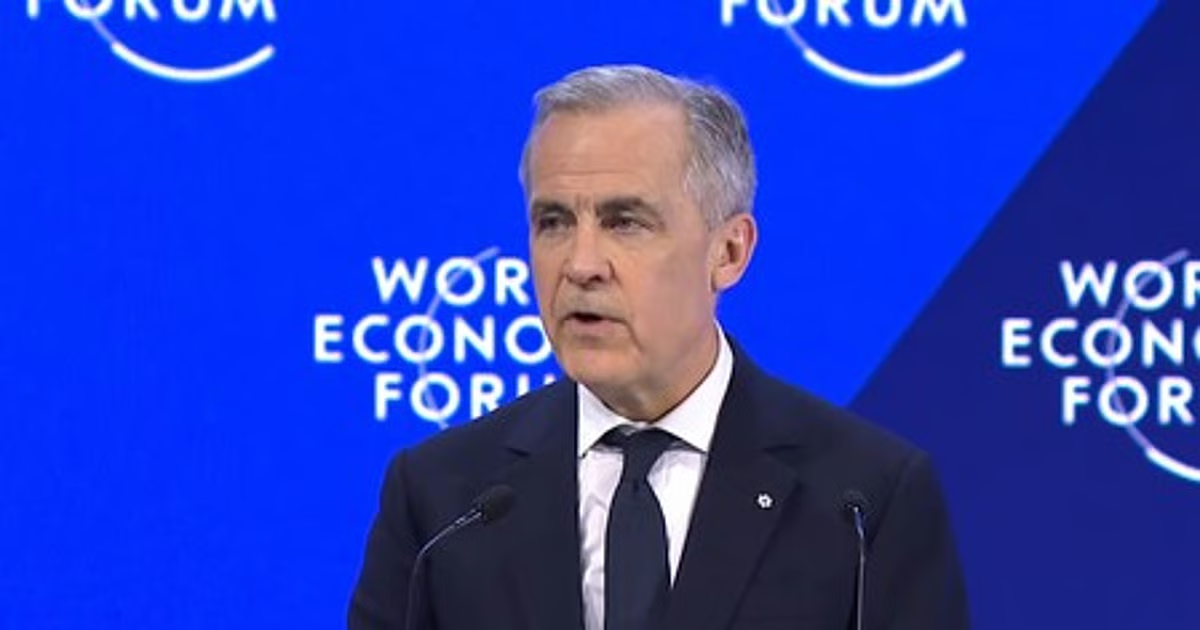
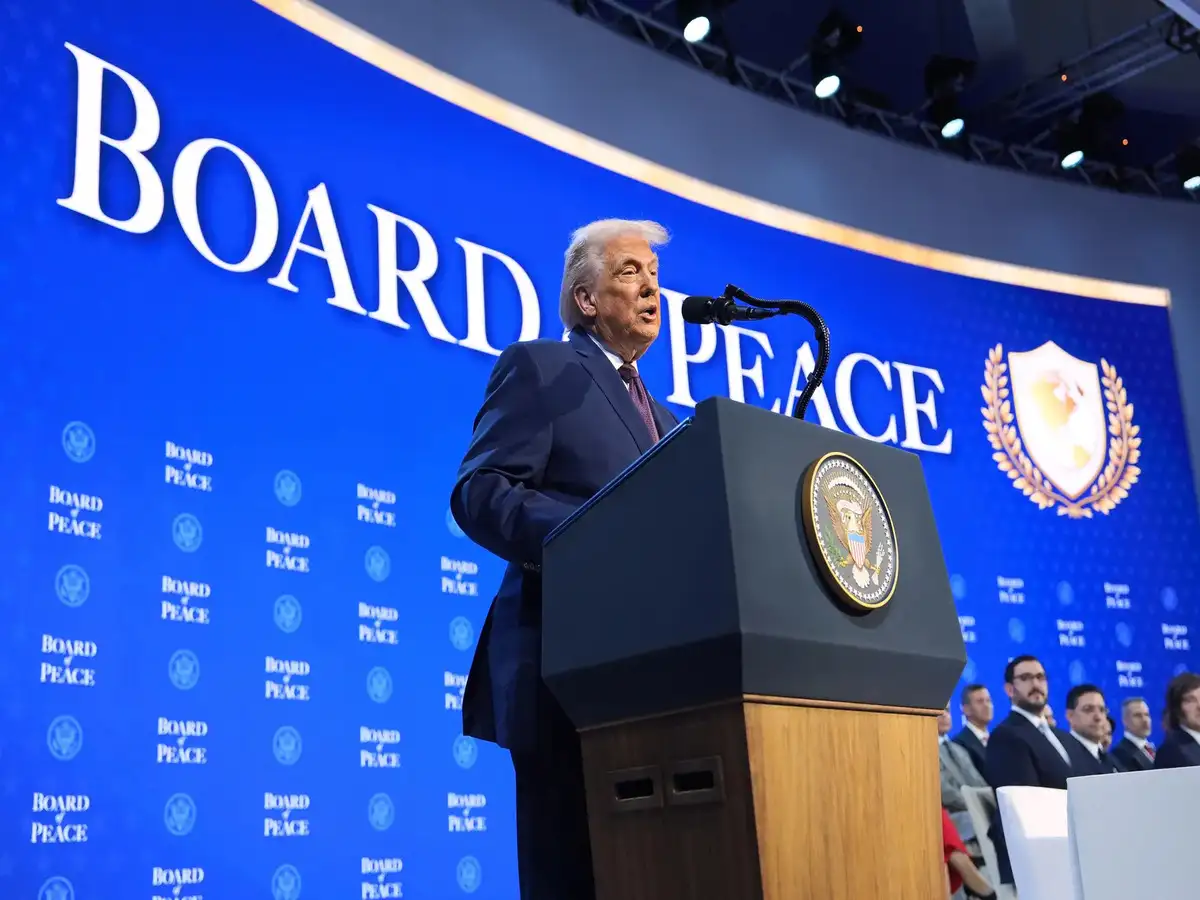
In a move that has rattled diplomatic relations between Ottawa and Washington, U.S. President Donald Trump announced this week that he is withdrawing Canada’s invitation to participate in the newly established Board of Peace, a high-profile international initiative aimed at advancing global conflict resolution. The decision, communicated via Trump’s social media platform and directly addressed to Canadian Prime Minister Mark Carney, reflects a sharp deterioration in bilateral rapport and highlights broader ideological divides in international engagement.
The controversy began at the World Economic Forum in Davos, where Carney delivered remarks perceived as critical of major powers’ use of economic coercion and the erosion of the rules-based international order. Carney’s speech, which underscored the need for middle powers to uphold established norms, reportedly drew ire in Washington — particularly from Trump, who has championed a distinctive, transactional approach to foreign policy. Within days, Trump publicly challenged Canada’s commitment to the Board of Peace concept, culminating in his decision to retract the invitation.
The Board of Peace, unveiled by Trump at Davos as a U.S.-led diplomatic body, was designed to bring together world leaders and influential states to address pressing global conflict issues. Initially conceived with a focus on advancing ceasefire efforts and stability in the Gaza region, the initiative was promoted by Trump as a potential model for future peacebuilding frameworks. However, the concept has been met with mixed reactions internationally, with several traditional U.S. allies — including major European states — expressing reservations or declining formal participation.
Central to the debate has been the financial expectations accompanying Board of Peace membership. Trump’s administration has proposed significant contributions from participating countries, with figures around the one-billion-dollar range bandied about as a benchmark for permanent engagement. This fundraising model, coupled with uncertainty about the Board’s legal status and operational mechanisms, has amplified skepticism among potential partners.
Canada had been one of the countries initially invited to join the initiative, and Ottawa signaled cautious interest pending more detailed information. Rather than being a straightforward acceptance, Canada’s posture was one of measured evaluation, reflecting both its strong commitment to multilateralism and a desire to ensure alignment with its diplomatic priorities. That posture, however, apparently frustrated Trump’s camp, which interpreted Ottawa’s quest for clarification as lukewarm commitment.
Trump’s announcement this week did not merely convey the withdrawal of an invitation; it also included combative rhetoric targeting Canada’s global standing. In his statements, Trump suggested that Canada benefited disproportionately from its relationship with the United States, a characterization that drew swift rebuttals from Canadian officials. Ottawa reaffirmed its status as a sovereign nation with a robust economy and distinct foreign policy agenda, dismissing Trump’s comments as inaccurate and diplomatically unhelpful.
The fallout from this episode extends beyond bilateral tensions. Observers note that the broader international community is watching closely to see how the Board of Peace initiative evolves — and whether the controversy with Canada will deter other countries from engaging. Some analysts argue that Trump’s approach may undermine the very objectives the Board seeks to achieve, particularly if participation becomes associated with political brinkmanship rather than collaborative problem-solving.
For Canada, the incident underscores the challenges of navigating a complex global landscape where traditional alliances and new strategic initiatives intersect. For the United States, it raises questions about the efficacy of unilateral diplomatic gestures in fostering long-term cooperation. As both capitals assess next steps, the episode is likely to remain a defining chapter in Canada–U.S. relations in the year ahead.










Leave a Reply