

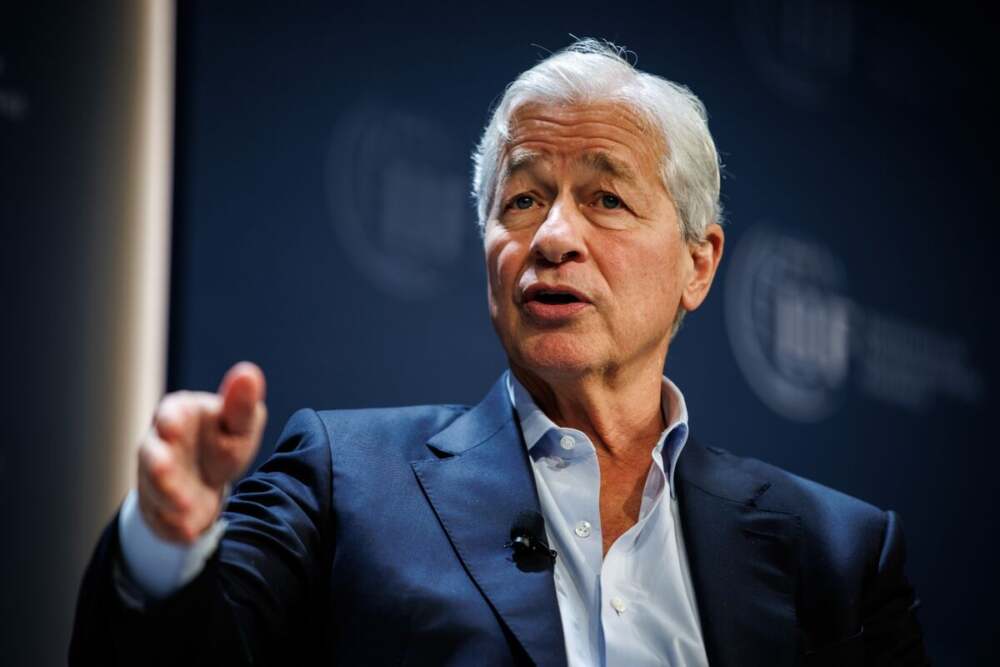
Former U.S. President Donald Trump has launched a major lawsuit against banking giant JPMorgan Chase and its chief executive, Jamie Dimon, seeking $5 billion in damages and alleging that the institution engaged in politically motivated “debanking.” Filed in a Florida state court, the case marks one of the most dramatic clashes between a public figure and a major financial institution in recent years, touching on issues of corporate power, political bias, and the role of banks in public life.
Allegations at the Core of the Case
The lawsuit centers on actions taken by JPMorgan Chase in the wake of the January 6 attack on the U.S. Capitol. Trump’s legal team claims that the bank abruptly closed several accounts held by him and companies linked to his business interests without a valid financial explanation. According to the complaint, the bank provided only a brief notice before terminating the accounts and did not cite legitimate regulatory or risk‑based reasons for doing so.
Instead, Trump’s attorneys argue, the closures were driven by political animosity — a punitive reaction to his role in American politics. The complaint asserts that JPMorgan and Dimon effectively placed Trump and his affiliated entities on a form of internal “blacklist,” which discouraged other banks from doing business with them. Trump’s team frames this as a violation of Florida law prohibiting discrimination based on political opinion and contends that the conduct inflicted significant financial harm and reputational damage.
The “Debanking” Narrative
Central to the lawsuit is the concept of “debanking” — a charged term used by Trump and his allies to describe situations where financial institutions sever ties with customers due to ideological differences. In recent years, the term has been invoked by conservative leaders who argue that banks and financial platforms have too much discretion to cut off services to individuals, industries, or causes that fall out of political favor.
Trump’s complaint paints JPMorgan’s actions as symptomatic of a broader trend, suggesting that major banks have become arbiters of acceptable political speech and association. The suit seeks not only monetary compensation but also symbolic vindication by challenging what Trump portrays as unchecked corporate influence in public discourse.
JPMorgan Chase Pushes Back
JPMorgan and its leadership have rejected the allegations. The bank maintains that decisions to close accounts were based on legitimate internal risk assessments and compliance criteria, not political considerations. In public statements, the institution emphasized that it does not terminate customer relationships on the basis of political affiliation or viewpoints.
Jamie Dimon, widely regarded as one of the most influential figures in global banking, has not personally addressed the lawsuit. However, his leadership style and past disagreements with Trump — particularly over regulatory and economic policies — have been scrutinized in the context of the case.
Political and Legal Stakes
Legal experts note that this lawsuit could have wide‑ranging implications. If courts entertain claims that banks can be held liable for allegedly politicized decisions, financial institutions could face new uncertainties about how they manage customer relationships. Conversely, Trump’s critics argue that banks must retain the ability to make independent business decisions without fear of politically charged litigation.
The lawsuit also highlights the broader cultural battle over the power of corporations in American society, especially as social media platforms, payment services, and banks find themselves navigating politically sensitive terrain.
A High‑Profile Legal Chapter
For Trump, the lawsuit adds another chapter to a pattern of legal and political confrontations with powerful institutions. Whether the case succeeds in court or not, it underscores how disputes over banking and politics are increasingly intersecting in a polarized national climate.















Leave a Reply