

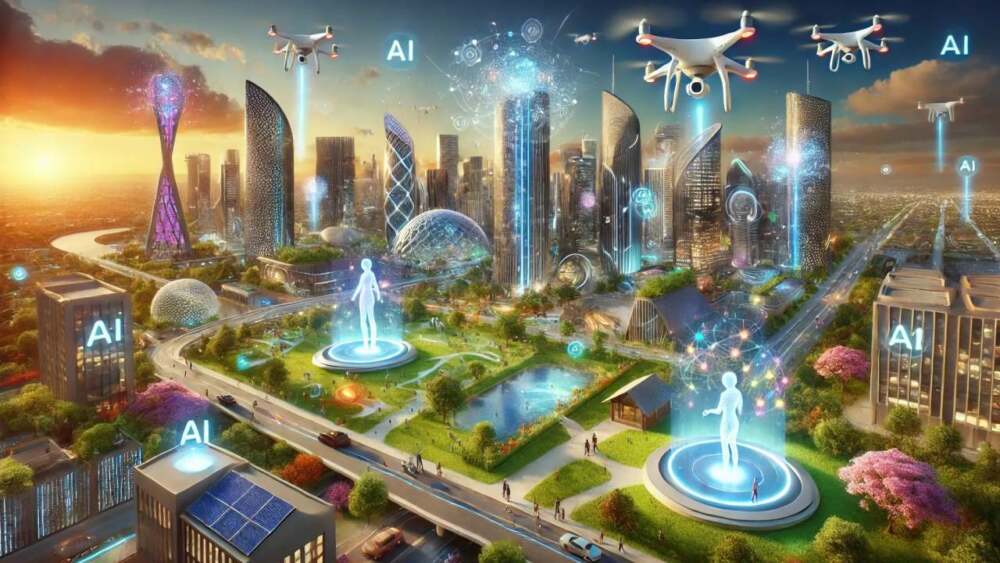
Google’s latest AI innovation is turning imagination into interactive landscapes — and early users are already creating whimsical environments such as edible marshmallow fortresses, glowing bioluminescent forests and surreal dreamscapes that blend fantasy with everyday life. The new tool, known internally as Project Genie, aims to democratize world‑building by letting people design richly detailed virtual settings using natural language prompts and intuitive controls.
What Project Genie Is All About
At its core, Project Genie is an AI‑powered world generator that translates user descriptions into coherent, explorable digital worlds. Unlike traditional game engines or 3D editors that require technical skill and time‑intensive design work, this platform lets people generate scenes and environments simply by telling the system what they want.
For example, a prompt like “a castle made entirely of toasted marshmallows under a cotton‑candy sky” immediately becomes a fully rendered environment, complete with physics‑based textures, lighting and environmental effects. Users can then walk through their creations, interact with elements, and even modify them with additional instructions.
How It Works: From Text to Tangible Worlds
Project Genie combines state‑of‑the‑art generative AI models, real‑time rendering technologies and intuitive user interfaces to deliver immersive results. Users start by entering a natural language description. The system interprets context, objects, materials and spatial relationships from the text, and synthesizes a digital world that matches that vision.
Once an environment is generated, users can:
- Explore interactively using first‑ or third‑person views.
- Customize features by issuing follow‑up commands like “add floating lanterns above the castle,” or “turn the river into sparkling lemonade.”
- Export scenes for use in game engines or creative projects.
- Share worlds with others who can explore, remix or build upon them.
AI‑assisted controls ensure that even complex changes, such as altering terrain topology or lighting dynamics, can be performed with simple descriptive language rather than traditional 3D‑modelling skills.
The Appeal: Creative Freedom Without Barriers
Early users have embraced Project Genie for its accessibility and creative flexibility. For creators who lack technical backgrounds in design or development, the platform offers a low‑friction entry point into world building. Artists, storytellers, educators and hobbyists alike are experimenting with environments ranging from enchanted forests to ultra‑modern cities powered by imaginary technologies.
One community contributor described crafting an “infinite desert city with bioluminescent spiral towers” and watching others explore the scene in real time. Another user generated a “steam‑powered sky realm hanging over a lavender sea,” complete with floating bridges and mechanical albatrosses.
Educators are also exploring its potential as a teaching tool — imagining historical settings, ecological ecosystems, or physics simulations that students can interact with and learn from in immersive ways.
Beyond Play: Practical and Professional Uses
While much of the early buzz centers on whimsical creations, Project Genie has attracted attention from professional creators and developers. Game designers are experimenting with it to prototype levels and environmental concepts quickly, significantly reducing the time required to test ideas. Film and animation studios are evaluating it as a new tool for storyboarding and scene ideation.
Architects and urban planners are even seeing potential in rapid visualization of conceptual spaces, allowing clients to “walk through” proposed designs without complex modelling software.
AI, Ethics and Creative Control
The launch of Project Genie has also brought discussion about AI’s role in creative workflows. Google has emphasised that users maintain ownership of the worlds they generate, and the company is exploring robust frameworks for attribution, content sharing and moderation.
There are ongoing conversations among creators about ensuring diversity of input sources and avoiding over‑reliance on AI‑generated defaults. Google’s team says they are actively refining the system to encourage originality rather than repetitive patterning, and pledges continued investment in user agency.
Outlook: A New Canvas for Imagination
Project Genie represents a shift in how digital worlds are created — lowering barriers for everyone from casual users to seasoned designers. By blending powerful AI with intuitive interaction, the platform is turning imagination directly into experience, enabling people to express ideas that once required specialized tools and skills.
As more people experiment with building their own marshmallow fortresses, surreal biomes and fantastical cities, the broader creative community is watching closely. The promise of AI world generation lies not just in its technical prowess, but in its potential to unlock creativity — transforming how humans envision, design and interact with imagined spaces.








Leave a Reply