

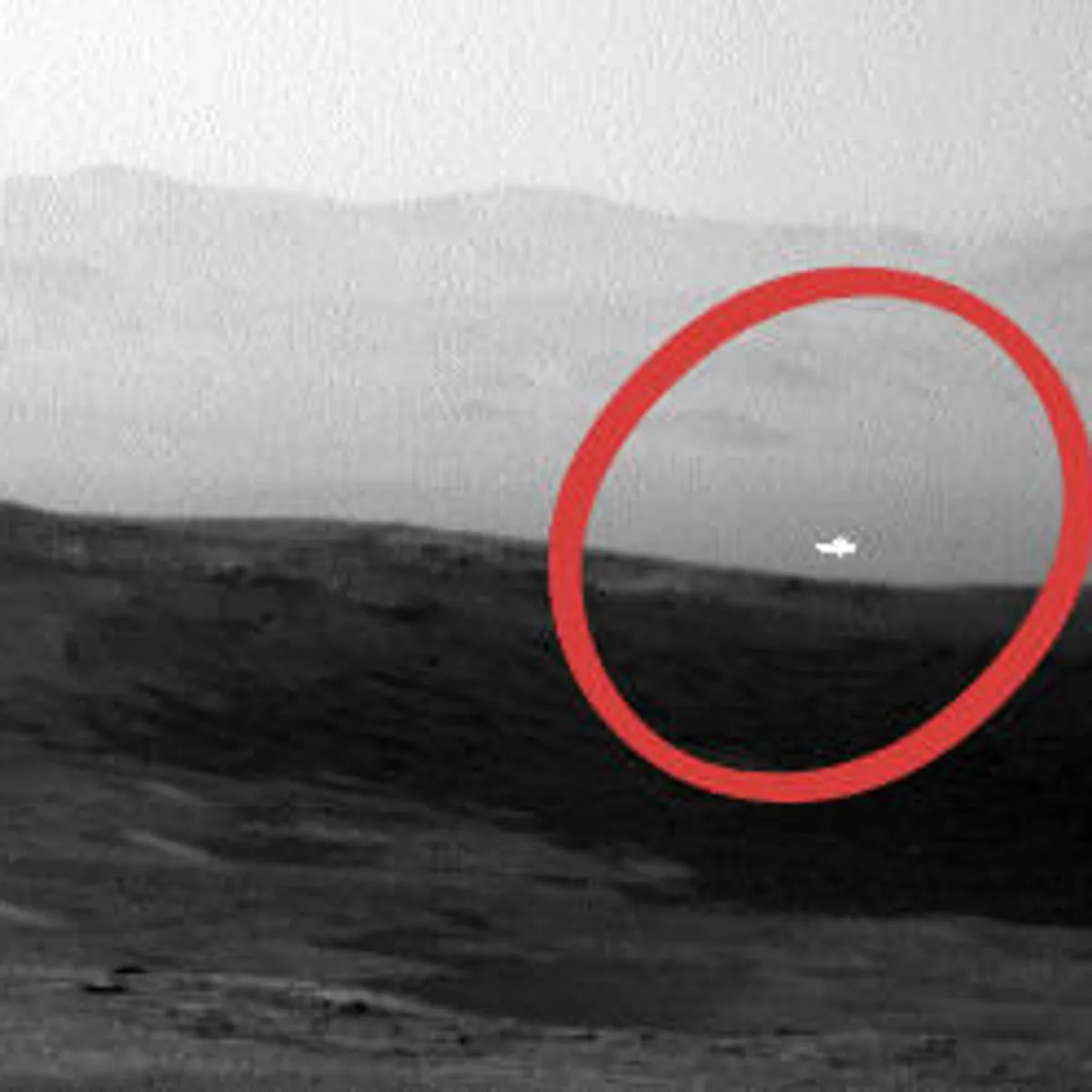
NASA’s Curiosity rover has achieved a first on Mars: it illuminated the planet’s surface at night, revealing features that had never been seen before. This innovative experiment demonstrates a new way to study Martian geology, allowing scientists to explore terrain even when sunlight is absent.
Curiosity, exploring Gale Crater since 2012, typically relies on daylight for imaging and analysis. But in a recent experiment, the rover’s LED lights were activated to shine onto a freshly drilled rock target named Nevado Sajama. By capturing images after sunset, researchers were able to observe textures and structures that are normally hidden in shadows or obscured by the Martian dust.
Shedding Light on Hidden Details
The rover used its Mars Hand Lens Imager (MAHLI) LED array as a spotlight to illuminate the drill hole and surrounding rock surfaces. This allowed scientists to study fine details such as grain patterns, layering, and subtle mineral variations. The Nevado Sajama target, chosen for its smooth drilled interior, proved ideal for capturing high-contrast nighttime images.
This method has several advantages: it removes sunlight-related shadows, reduces interference from airborne dust, and provides consistent lighting conditions for precise analysis. Researchers can now better understand rock textures, sedimentary structures, and mineral compositions — critical clues to the planet’s geological history.
Why This Experiment Matters
Nighttime imaging represents a new tool in planetary exploration. It allows scientists to maximize the capabilities of existing rovers, extending their scientific reach without requiring new instruments. By using artificial lighting, Curiosity can study rocks and surfaces in ways that were not previously possible, enhancing the mission’s ability to uncover Mars’ secrets.
Curiosity’s success highlights the ingenuity of the mission team in adapting technology to new challenges. Even after more than a decade on the Red Planet, the rover continues to innovate, demonstrating that even well-established missions can make groundbreaking discoveries with creative approaches.
This achievement may also inform future Mars missions, providing a blueprint for nighttime studies and expanding our understanding of the planet’s hidden landscapes. By shedding light on the darkness, Curiosity continues to deepen humanity’s knowledge of Mars in remarkable ways.













Leave a Reply