

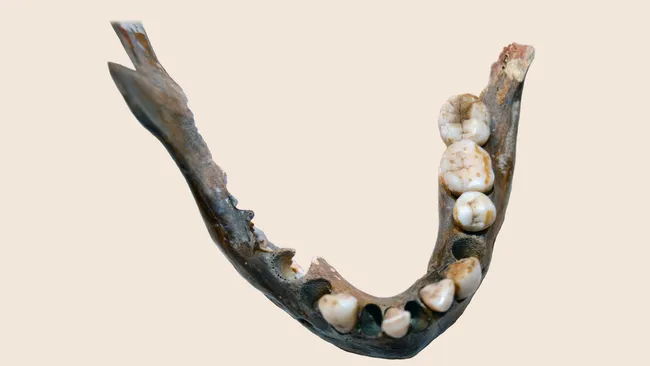
Newly sequenced ancient genomes from southern Africa are offering unprecedented insight into what makes Homo sapiens uniquely human. The analysis, drawn from remains thousands of years old, sheds light on evolutionary changes that shaped modern humans’ biology, cognition, and adaptation long before migrations carried our species across the world.
Researchers studying these ancient genomes have identified genetic signatures that appear to be exclusive to Homo sapiens, distinguishing our lineage from other human groups such as Neanderthals and Denisovans. Southern Africa—already considered one of the deepest wellsprings of human origins—has now emerged as a critical region for understanding when and how these defining traits evolved.
The newly analyzed genomes belong to individuals who lived in diverse ecological zones, ranging from coastal regions to inland savannas. This geographic spread allowed scientists to explore how early humans adapted to varying environments. Many of the genetic variations uncovered relate to traits like brain development, immune response, and physical endurance—all areas believed to have played key roles in the rise of our species.
One of the groundbreaking findings is evidence that key Homo sapiens-specific adaptations arose earlier than previously thought. Instead of emerging after early humans migrated out of Africa, these traits appear to have begun taking shape deep within the continent’s southern regions. This challenges older theories that positioned East Africa or North Africa as the primary centers of early human evolution.
The genomes also reveal complex population histories, with ancient southern African groups showing deep genetic diversity that predates major global migrations. This diversity likely served as a reservoir of evolutionary innovations, some of which would later spread across the globe as modern humans dispersed.
Importantly, the study underscores the significance of African ancient DNA—an area long underrepresented in genetic research due to preservation challenges. As technological advances make genome extraction increasingly feasible in warmer climates, scientists expect even more discoveries that will reshape our understanding of the human story.
This latest research not only enriches our knowledge of Homo sapiens evolution but also highlights the intricate, multi-regional processes that shaped our species over hundreds of thousands of years. By illuminating previously unknown genetic pathways, the ancient genomes give us a clearer picture of how early humans adapted, survived, and ultimately came to dominate the planet.













Leave a Reply